
Taika Waititi adapts Ishiguro robot fable Klara and the Sun
Director jokes he would consider swapping a child for an AI companion, film about a discarded machine reaches cinemas as the industry discards human craft
Images
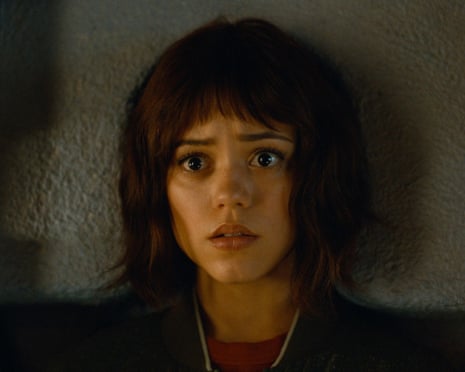 Misreading social cues, crashing the family car … Jenna Ortega as artificial friend Klara. Photograph: Sony Pictures Entertainment
theguardian.com
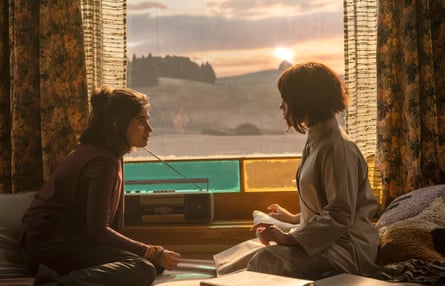 ‘In another version of this movie, Klara could be a murder-bot’ … Mia Tharia as Josie with Ortega as her artificial friend. Photograph: Matt Grace/Sony Pictures Entertainment
theguardian.com
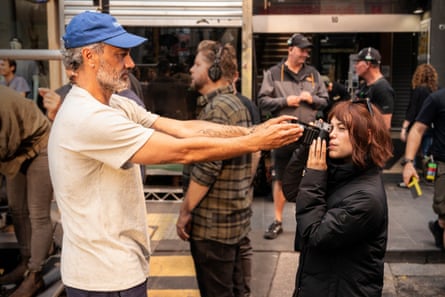 Tragicomic sci-fi caper … Waititi and Ortega shooting the film. Photograph: Matt Grace/Sony Pictures Entertainment
theguardian.com
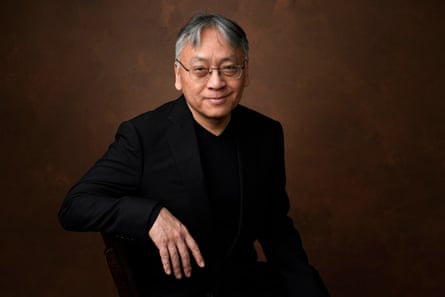 Ishiguro … surprised to hear that Google Deepmind is a fan of his story. Photograph: Chris Pizzello/Invision/AP
theguardian.com
Taika Waititi has adapted Kazuo Ishiguro's novel Klara and the Sun for the screen, and he is aware of the timing. Asked at the London film festival about the story of an artificial friend navigating a human world, the director deadpanned that when it comes to AI companions, he would consider replacing one of his children.
The film follows Josie, a 14-year-old who loves Klara, her discontinued robot doll — a solar-powered AI played by Jenna Ortega, who brings a perky menace to a machine that misreads social cues, steers the family car off the road and lives in fear of being shipped back to the factory and melted down for scrap. Mia Tharia plays Josie; the setting is a remote country house where the machine's loyalty meets human fragility.
Waititi, whose catalogue runs from Jojo Rabbit to Hunt for the Wilderpeople, insisted that filmmakers bring original ideas to an adaptation rather than simply covering the source material. Ishiguro is no stranger to the transfer: The Remains of the Day, Never Let Me Go and A Pale View of Hills have all reached screens, each taking a quiet, interior fable and finding its cinematic equivalent.
What distinguishes this one is that the novel's premise — a machine that observes humans more carefully than humans observe each other, and is discarded when convenient — has stopped being speculative. Hollywood studios are, by their own accounts, in the middle of an AI courtship, replacing craft tasks with tools of exactly the kind Klara fears becoming. The film arrives as the industry's own parable: a charming, capable machine, beloved by its household, awaiting a decision about whether it is a person or an inventory item.
Waititi's joke about trading a child for a robot lands because the industry around him is genuinely weighing versions of that trade. Klara, at least, gets a story told from her side of it.