
Papua New Guinea parliament set to reject Bougainville independence vote
Ratification threshold raised to three-quarters of MPs seven years after 98 percent backed secession, guerrilla-turned-president plans unilateral breakaway for 2030
Images
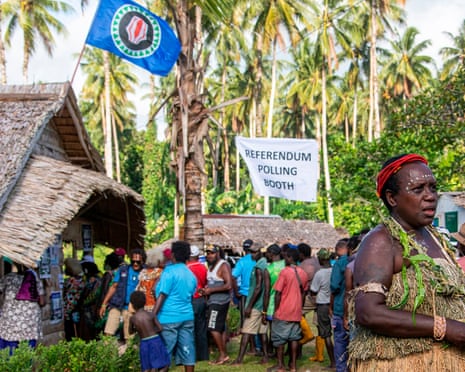 People queue to vote in Bougainville’s capital Buka during the 2019 independence referendum. Photograph: Ness Kerton/AFP/Getty Images
theguardian.com
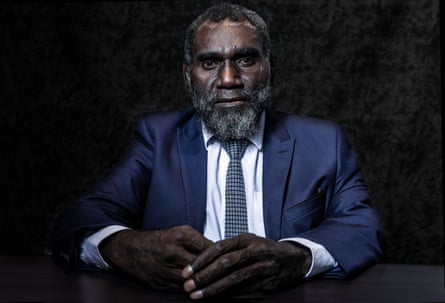 President Ishmael Toroama says Bougainville will enter a stage of ‘self-government’ from September 2027. Photograph: Jessica Hromas/The Guardian
theguardian.com
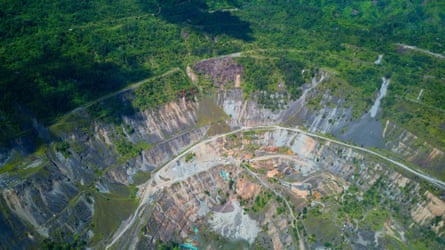 Aerial photo of Panguna open pit mine in Bougainville, Papua New Guinea. Photograph: Awol Imagery/Alamy
theguardian.com
Papua New Guinea's parliament is set this week to debate — and, according to sources in both Port Moresby and Buka, reject — the results of Bougainville's 2019 independence referendum, in which nearly 98 percent of voters on the Pacific islands chose to break away and form their own state.
The referendum was UN-sanctioned and formed a key element of the 2001 Bougainville Peace Agreement, which ended a decade-long civil war estimated to have killed as many as 15,000 people. But in the seven years since the vote, Port Moresby has declined to ratify it, and the rules of the game have shifted along the way. The threshold for ratification has been raised to three-quarters of all MPs, rather than the two-thirds usually required for constitutional amendments. Ezekiel Masatt, Bougainville's attorney-general and vice-president, called the new threshold 'crafted' by the national government to defeat the vote, and said in June: 'There is a national government strategy to poison the waters and make it impossible to come close to reach the voting threshold.'
Port Moresby's resistance is not hard to decode. Bougainville is resource-rich — the Panguna copper and gold mine, which served as the catalyst for the original conflict and has seen violence re-emerge around it, is now regarded as critical to the islands' independent financial future. Granting secession would also set a precedent for the break-up of PNG's sprawling archipelago, where Bougainville's roughly 300,000 people are culturally and ethnically distinct from the rest of the country.
Not everyone in the capital is on the government's side. Dr Allan Marat, chair of a bipartisan parliamentary committee on Bougainville, told parliament last month that Bougainville had met every condition of the 2001 peace agreement and deserved independence: 'It seems there is only one humane option for us members of this honourable house to do … to cut the umbilical cord connecting baby "Bougainville Independence" to PNG.' Former deputy prime minister Belden Namah, who served in the PNG army during the conflict, countered that the question was one of national sovereignty and 'the future survival of Papua New Guinea as one nation.'
Bougainville's president Ishmael Toroama, once a guerrilla commander, presented his government's 'final position' in June: self-government from 1 September 2027, and a declaration of independence 'separate from the state of PNG' in 2030. He insists the objective 'has never been confrontation.' The national parliament votes this week.