
US-funded hepatitis B trial on African newborns halted
Guinea-Bissau withholds approval after global backlash, researchers wanted to delay WHO-recommended birth dose to test a theory
Images
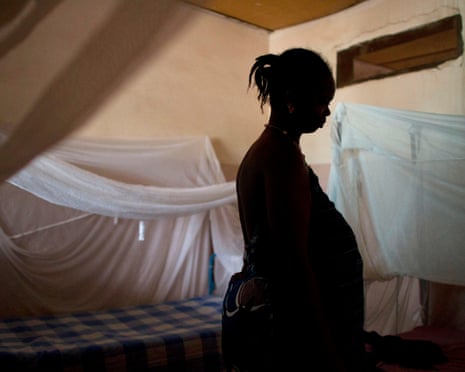 A woman stands in a shared room at a residential care facility for pregnant mothers in Gabu, Guinea Bissau, on 22 May 2012. Photograph: Rebecca Blackwell/AP
theguardian.com
 The Minister of health, Quinhin Nantote, at the presidential palace in Guinea-Bissau on 29 November 2025. Photograph: Patrick Meinhardt/AFP/Getty Images
theguardian.com
A US-backed vaccine trial that would have given some newborns in Guinea-Bissau a delayed hepatitis B dose has been halted after the country's government refused approval. Frederik Schaltz-Buchholzer, the Danish lead researcher, announced on LinkedIn that it was "now clear" the study "will not move forward in Guinea-Bissau", adding that "we were not given the necessary governmental approval". The health minister, Quinhin Nantote, had already told the Guardian the project would not proceed: "This is not even remotely true."
The study was to be funded with $1.6m from the US Centers for Disease Control and Prevention and another $1.6m from private partners including the Bill Ackman-backed Pershing Square Foundation. The researchers — led by Schaltz-Buchholzer, Christine Stabell Benn and Peter Aaby at the Bandim Health Project — hypothesized that live vaccines such as BCG may carry an overall mortality benefit beyond their target disease, and that giving a non-live vaccine like hepatitis B alongside could dampen that effect. The design would have required withholding the hepatitis B birth dose from some infants, in a country with high hepatitis B rates, to measure the difference.
The World Health Organization recommends all infants receive a first hepatitis B dose within 24 hours of birth. Paul Offit, a vaccines expert at the Children's Hospital of Philadelphia, called the hypothesis "fanciful" — the hepatitis B vaccine is a single protein among billions the immune system meets daily — and said the solution was simpler: "Take the money and vaccinate as many kids as you can." Experts noted that mothers who declined participation would have had no other route to the vaccine, making true informed consent impossible. On Monday, Guinean officials searched the Bandim project's offices and took control of the researchers' vaccine stocks.
Guinea-Bissau now plans to offer the universal hepatitis B birth dose in 2028. The CDC, asked whether the appropriated funds would instead go to rolling out that birth dose, did not respond by press time.