
Serbia's student movement contests Sunday's election with 250 candidates, two years of street protest meet Vučić's twelve-year machine
Slogan asks Serbia or Mafia
Images
 A mass student movement has rocked Serbia with two years of constant protests. Photograph: Aleksandar Jovicic/NurPhoto/Shutterstock
Shutterstock
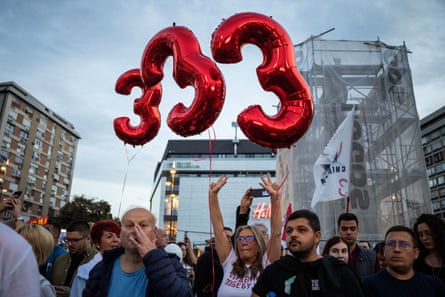 Student List supporters in Nis hold balloons shaped like the number three, their position on electoral ballots. Photograph: Marko Đurica/Reuters
theguardian.com
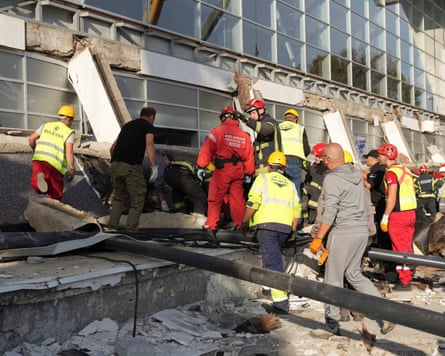 Rescue service workers inspect the collapsed roof at Novi Sad railway station. Photograph: Interior Ministry of Serbia/AP
theguardian.com
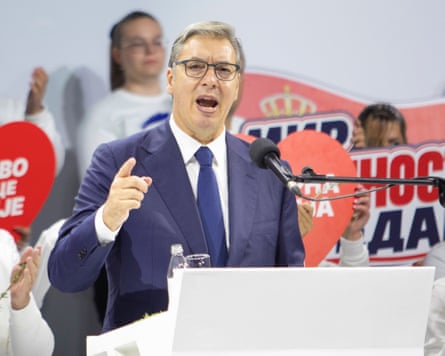 Aleksandar Vučić gives a speech at a campaign rally in Novi Sad last week. Photograph: Maxim Konankov/NurPhoto/Shutterstock
Shutterstock
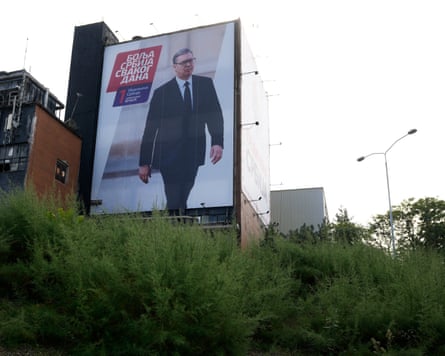 A billboard with a campaign poster of Aleksandar Vučić in Belgrade. Photograph: Darko Vojinović/AP
theguardian.com
A student protest movement that has gripped Serbia for two years enters Sunday's parliamentary elections with 250 candidates under the banner Student List, attempting to convert street power into seats. Its slogan is blunt: "Serbia or Mafia?"
The movement's target is Aleksandar Vučić, who has run the state for twelve years and stepped down as president last month — five months before his constitutional term expired — to continue as prime minister at the head of the Serbian Progressive party. His ally Viktor Orbán was defeated in Hungarian elections in April, and Student List campaigners invoke that result constantly. "Turnout is the key," one resident of Krnjača, a Belgrade suburb, told canvassers. "Orbán fell with 80 percent."
The campaign is deliberately horizontal: law student Zak Veličković and photographer Danijela Radojković knock doors with lanyards reading "victory", a stock list of questions and a mobile app mapping visited homes and support levels. Veličković opens each conversation by asking what Serbia's biggest problem is. The most frequent answer is corruption — on Transparency International's index, Serbia ranks as the most corrupt country in Europe apart from Belarus and Russia, with frequent allegations of SNS links to organised crime, which the government denies.
The local grievances in Krnjača are concrete: a road bridge badly repaired and a sewage system that fails in every heavy rain. Vučić visited the suburb years ago and personally promised to fix it. Meanwhile Porsche and Land Rover showrooms have opened there, and some Belgrade trams are more than fifty years old.
Opinion polls vary widely, experts call a close race plausible, and neither side is prepared to accept a loss as legitimate. Whether a leaderless movement can take power through an apparatus Vučić has personally staffed for a decade — or dissolves on contact with it — is Sunday's question.