
German ambassador to EU rules out common borrowing and EU-level taxes
Largest net contributor demands more cuts to two-trillion-euro budget, transfer union blocked by the member that would pay
Images
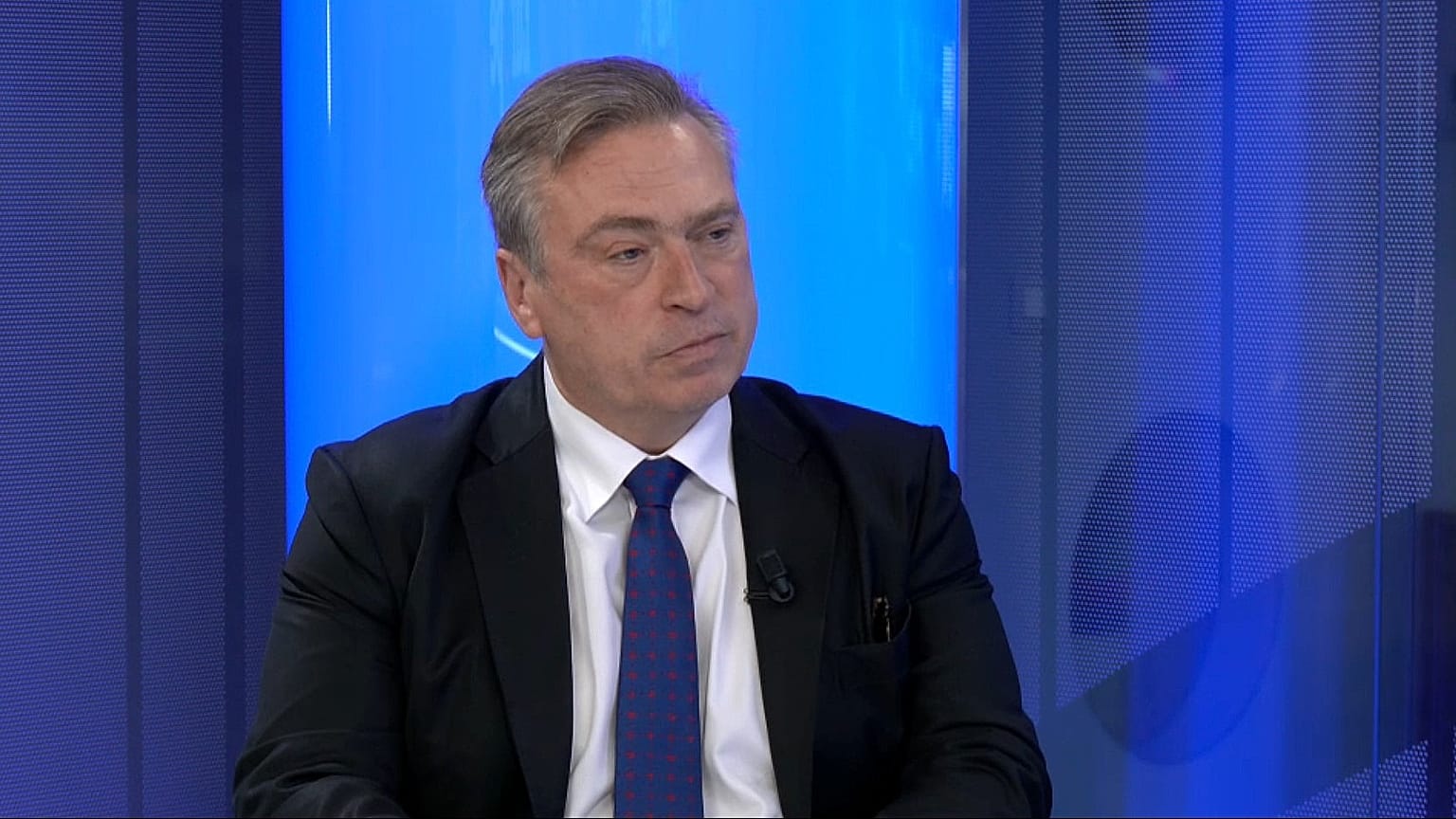 Thomas Hans Ossowski, German Ambassador to the EU
euronews.com
Germany's ambassador to the EU, Thomas Hans Ossowki, has ruled out new common borrowing and European-level taxation ahead of the union's budget negotiations, telling Euronews that "more cuts will be definitely necessary" in the commission's spending plans. His country, Europe's largest economy and the largest net contributor to the common budget, hopes the talks conclude "before Christmas."
The position lands a week after Le Pen and the AfD had already staked out opposition to the commission's two-trillion-euro spending plans, with the French right proposing to cut France's net contribution by 64 per cent. But the ambassador's interview makes clear that the real obstacle to a transfers union is not the populist fringe in national parliaments — it is the member state that would write the cheques. Berlin wants a "sustainable" budget described as a moderniser of the bloc's finances, not an expansion of it.
Ossowki was careful to separate Ukraine support from the budget fight, emphasising that upcoming aid is "outside" Germany's contribution to the EU budget and echoing European leaders' "continued support" for Kyiv. That distinction preserves the spending Germany wants — defence against Russia — while refusing the fiscal architecture the commission wants to fund everything else. It is a frugal position dressed as sovereignty: support for Ukraine, cuts for Brussels, no new taxes, no joint debt.
The commission now faces a negotiation in which its largest payer has rejected both revenue instruments it had counted on. Von der Leyen's budget was already designed under pressure from the right; the ambassador's remarks suggest the binding constraint on EU spending will be Berlin's treasury, not the European Parliament's arithmetic. Ossowki said the talks are "not there yet" — but the direction of travel is set by the country holding the wallet.