
UN report projects nearly three degrees of warming under current policies
Annual Emissions Gap study demands 18 percent cuts by 2030 while national climate plans deliver 5 to 8 percent, 1.5-degree target declared closed yet kept as centrepiece of Paris agreement
Images
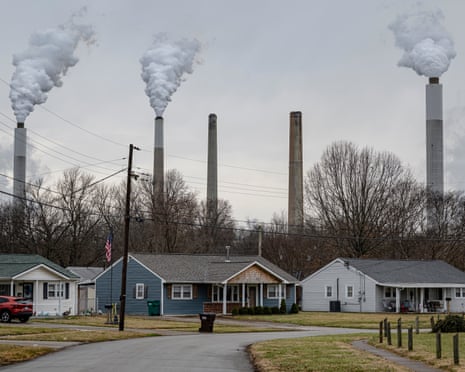 Global temperatures are forecast to rise to 2.8C above preindustrial levels if current government policies around the world remain unchanged. Photograph: Jon Cherry/Getty Images
theguardian.com
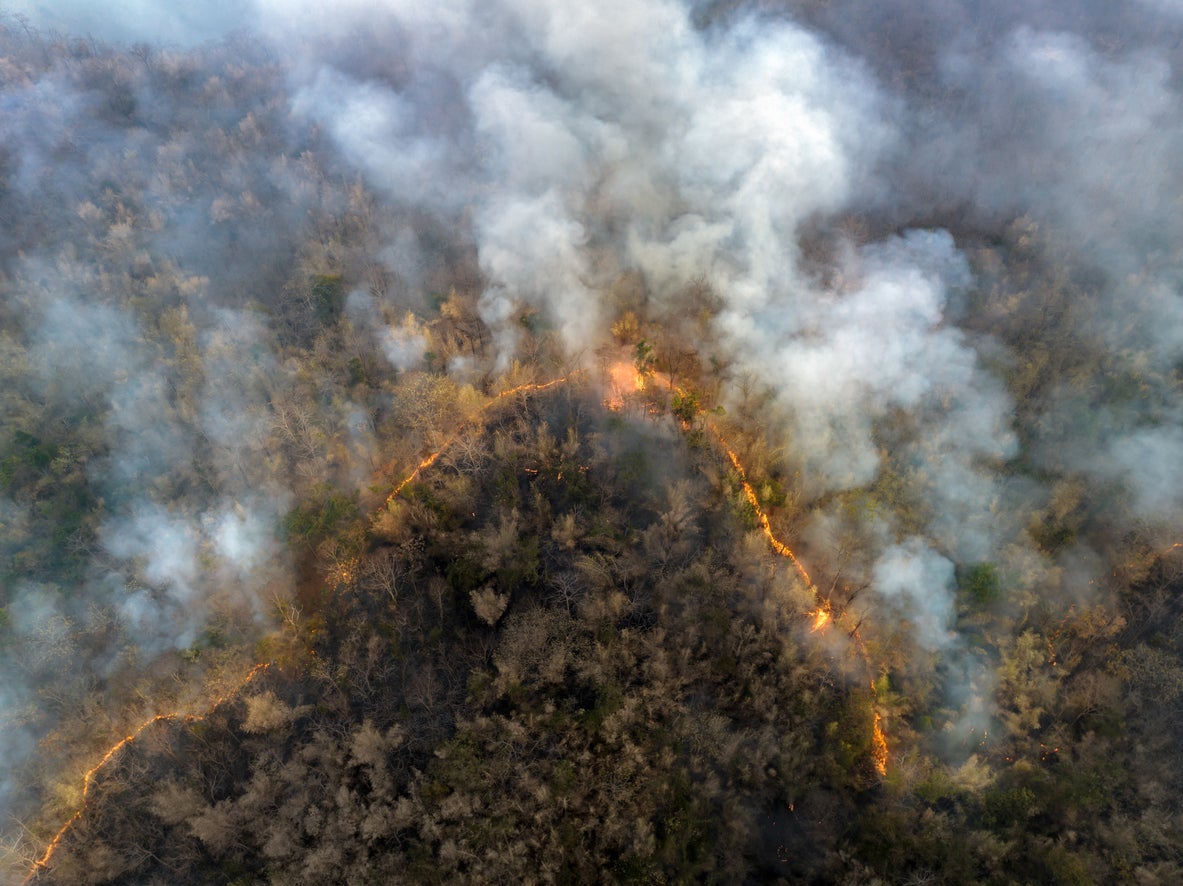 The world is set to pass the key threshold of 1.5C warming above pre-industrial levels, worsening the risks of climate change (Getty/iStock)
Getty/iStock
 The warnings came in the UNEP's latest "Emissions Gap" report, released on Wednesday (Getty/iStock)
Getty/iStock
The UN Environment Programme's annual Emissions Gap report, released on Wednesday, puts the world on course for 2.8C of warming this century if current government policies remain unchanged. To limit the overshoot of the Paris agreement's 1.5C limit, emissions must fall 18 percent by 2030, 45 percent by 2035 and 69 percent by 2040, all measured against 2025 levels.
The same document declares the 1.5C window closed. "We procrastinated, and now we are saying this window has closed," said Inger Andersen, UNEP's executive director — who in the same announcement urged governments to keep 1.5C as "the centrepiece of the Paris climate agreement". Secretary-General António Guterres framed the retreat as resolve: "Overshoot is not surrender."
This year's projections are worse than last year's, and not only because the world kept emitting. UNEP attributes the deterioration to the United States' withdrawal from the Paris agreement and to revised estimates of historical emissions — part of the widening gap is bookkeeping. New national pledges submitted since the previous edition made what the report calls a negligible difference; the commitments tabled at Cop30 in Brazil last November were noticeably weak, and UNEP sees US intransigence as one reason other countries held back. Even if every pledge on file is fulfilled, warming reaches 2.6C. Add every net-zero promise on top and the figure is 2.1C.
Against the 18 percent cut required by 2030, national climate plans deliver 5 to 8 percent. Actual emissions in 2025 were broadly flat compared with 2024, though UNEP's analysts declined to call that a peak, citing geopolitics and continued fossil expansion. Renewable energy grew strongly over the same period. The United States, the second-largest emitter after China, had spent years reducing its output; its Paris exit now threatens to reverse that trend. Bill Hare of Climate Analytics points to the biggest producers — the US and Saudi Arabia account for 20 to 25 percent of global fossil output — "looking at the fire, denying it exists and pouring more petrol on it."
The report's function is to measure the distance between what governments promise and what they do. This year, as last year, the distance is the finding, and the prescribed remedy — deeper pledges, delivered faster, through the same summit calendar that produced the weak ones — is unchanged. The pledges are voluntary; the instrument that measures them is the report itself.
The 1.5-degree limit, declared closed on Wednesday, remains the centrepiece of the Paris agreement.