
EU seeks 70 billion euros more for Ukraine in 2027
90 billion euro loan designed on assumption war would end in 2026, bloc has paid Moscow 197 billion euros for energy since 2022
Images
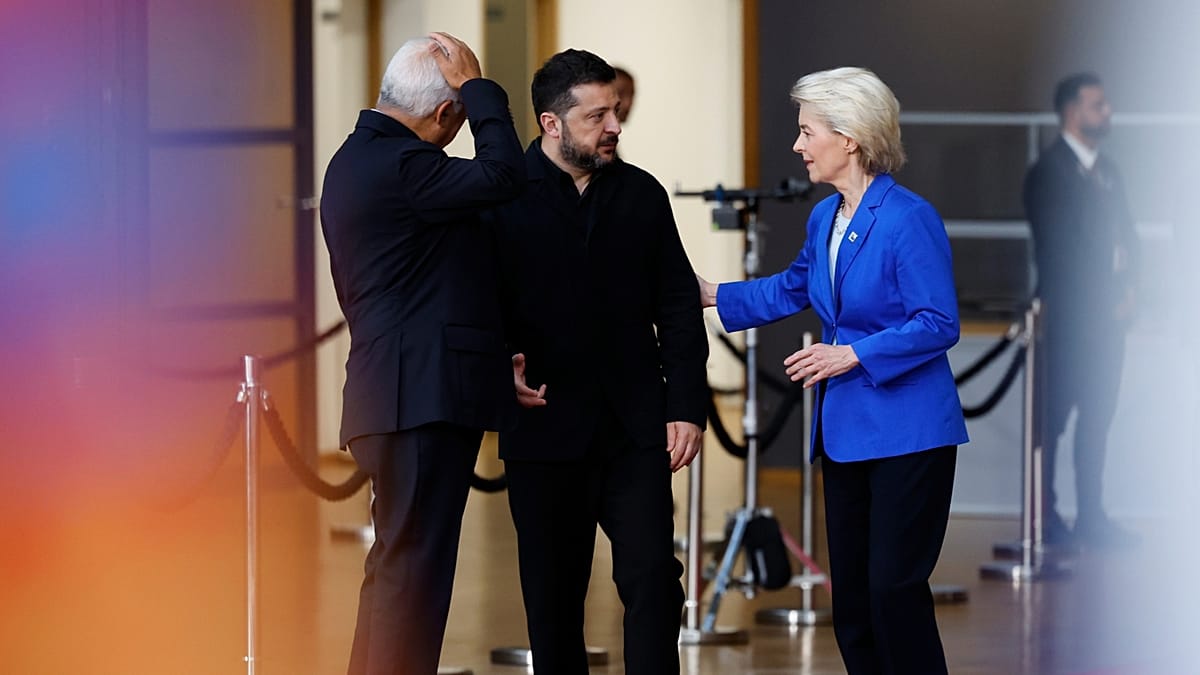 EU faces €70 billion Ukraine funding headache as war costs soar
euronews.com
The EU is searching for another €70 billion to keep Ukraine's war effort going through 2027. At the end of a two-day summit last week, Volodymyr Zelensky told the union's leaders that the war will cost €155 billion next year and that Kyiv needs at least €70 billion more "for defence, for weapons, and for our resilience." The European Commission has been tasked with finding the money.
The gap is far larger than Brussels had planned for. The €90 billion loan that leaders signed off last December was designed to cover two-thirds of Ukraine's financial and military needs across 2026 and 2027 combined, on the assumption that the war would end sometime in 2026. Moscow instead intensified its offensive, adding daytime attacks meant to cripple Ukraine's already fragile economy. Kyiv has spent weeks warning that it will need $32.6 billion for its budget and $45 billion for its armed forces next year — roughly $78 billion in all, or about €70 billion. Brussels first declined to comment on the figure; after several rounds of technical discussions, the Commission accepted it and concluded the money must be found.
Each funding route comes with a problem attached. Fresh joint EU debt, which Brussels is already issuing for the existing loan, is the likeliest option, according to diplomats: the union's AAA rating has kept its bond auctions oversubscribed since the pandemic, and Mario Draghi has called for borrowing on that scale. But joint bonds stand on the credit of the member states, and France — debt near 120 percent of GDP, borrowing costs close to five percent, the highest since 2002 — is heading into a presidential race led in the polls by Marine Le Pen, who has vowed to end all aid to Ukraine. Seizing the €300 billion in frozen Russian assets remains off the table: Belgium resists on behalf of Euroclear, the clearing house that holds the money and would carry the consequences, and Vladimir Putin, who took five European companies outright last week, has shown no such hesitation. Direct national contributions are the option no government looks forward to defending before voters, in a season of budget fights — the negotiations will run in parallel with the contest over the next long-term EU budget.
A Commission spokesperson said the €70 billion would be a "joint effort" with Britain, Norway, Canada and Japan, and that partners "have to come forward with pledges, and they have to deliver on those commitments." The previous division of labour, two-thirds Europe and one-third allies, did not work out as planned.
The €70 billion would come on top of the €45 billion the EU still plans to disburse under the existing loan. Its bill for Russian energy since March 2022 stands at €197 billion — nearly three times the request, paid to the other side of the front.