
5-billion-dollar gas ring proposed for Central Asia
Over 3,000 kilometres of pipeline would carry 20 billion cubic metres a year and let winter flows run in reverse, only agreement announced so far is with an autonomous republic inside Uzbekistan
Images
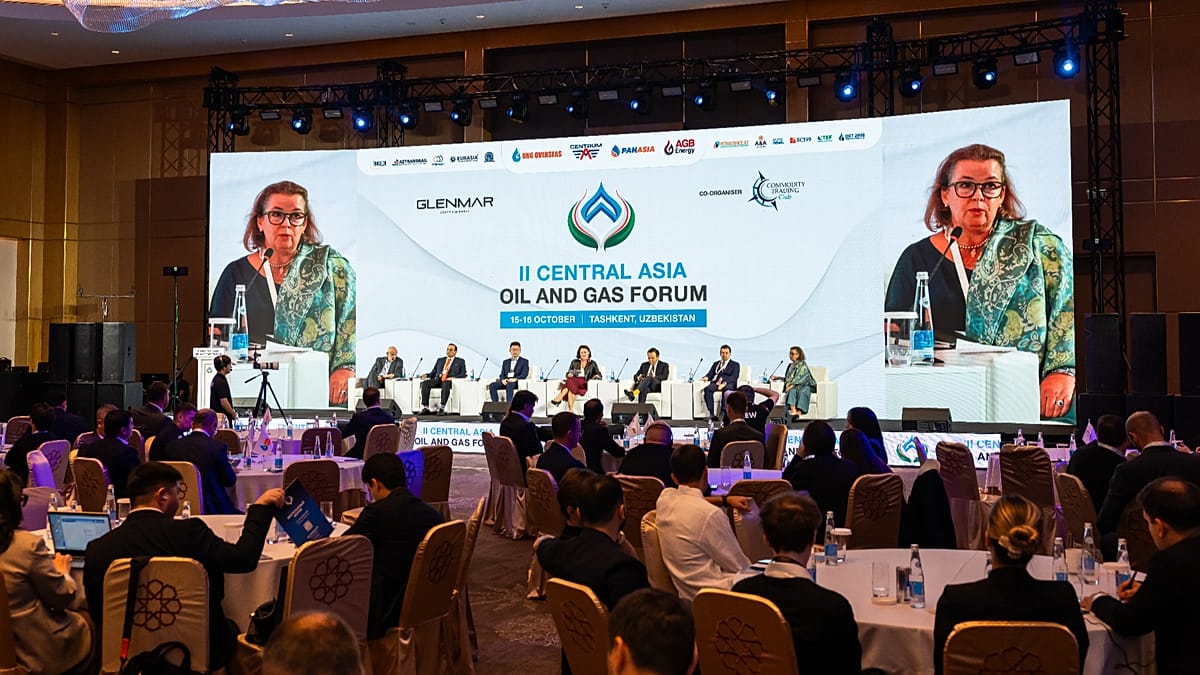 Central Asia’s $5bn ‘Gas Ring’ plan aims to boost energy security
euronews.com
A proposed five-billion-dollar gas network would link Kazakhstan, Kyrgyzstan, Tajikistan, Turkmenistan and Uzbekistan into a single ring, letting the five countries share supplies across more than 3,000 kilometres of new and upgraded pipeline. The plan was discussed at the second Central Asia Oil and Gas Forum in Tashkent and would carry around 20 billion cubic metres a year. Askar Ismailov, the Kazakh energy expert who first proposed the ring at the forum's 2025 inaugural edition, puts the core cost at 5 billion dollars: 2 billion for new construction, 3 billion for modernisation and digitalisation.
The need is real enough. Uzbekistan's large industrial enterprises produced 24.2 billion cubic metres of gas between January and August, down 16.3 per cent year on year, in a country that is both a major producer and a major consumer with rising winter demand. Kyrgyzstan imports its gas. Tajikistan runs on hydropower but still bought 126.4 million cubic metres from Uzbekistan in the first half of 2026. Kazakhstan produces gas, though most of it sits in the west of the country, far from the main population centres. A ring would let flows run backwards when demand spikes: when neighbours need more gas in winter, "we can do it in reverse mode," said Assylbek Jakiyev, chairman of PetroCouncil Kazakhstan, an oil and gas industry association.
What the ring lacks is money and signatures. No final financing structure has been announced, no agreement exists among the five governments, and no construction timetable has been set. The Global Gas Centre — a Geneva non-profit that brings together gas industry executives, took Ismailov on as an adviser and is actively advancing the proposal — signed a memorandum of understanding in May with the authorities of Karakalpakstan, an autonomous republic inside Uzbekistan. Its executive director, Valérie Ducrot, says the ring "will enhance the security of supply of all these countries." Ismailov reports discussions with prospective investors from China and the Middle East, and says Uzbekneftegaz, the Uzbek national company, expressed interest after preliminary talks.
Beyond funding, the project would need agreements on supply volumes, transit rules and which pipeline sections can carry gas in both directions. Uzbekistan, for its part, is not waiting on its neighbours: five new gas-condensate fields have been discovered this year, 80 wells drilled since January, and 40 more are planned before the year is out.