
Lagos hypemen monetise the space between lyrics
Ad-libbed quips over Dorime beats earn sprayed cash at raves and corporate parties, trade rooted in Kinshasa's atalaku now trains recruits at School of Hype
Images
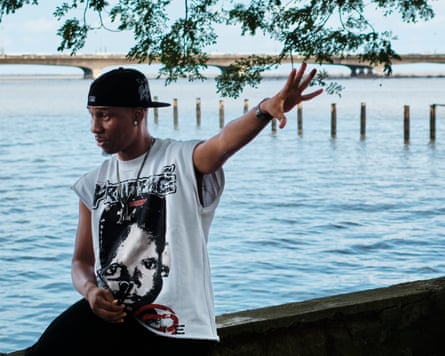 Toby Shang by the waterfront in the Lagos suburb of Akoka. Photograph: Sogo Oladele/The Guardian
theguardian.com
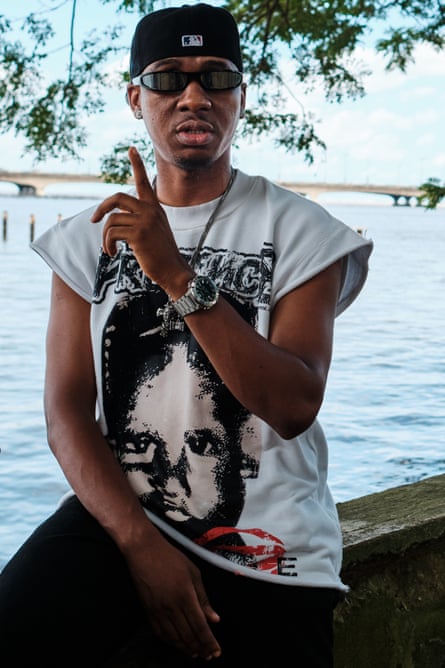 Toby Shang made a name for himself while still a student at the University of Lagos. Photograph: Sogo Oladele/The Guardian
theguardian.com
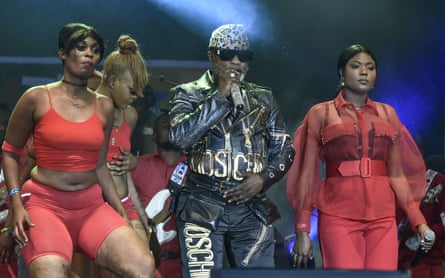 The Congolese singer Koffi Olomide performing at a festival in Abidjan in September 2021. Photograph: Sia Kambou/AFP/Getty
theguardian.com
 The Congolese musician Awilo Longomba performing at the All Africa music awards in Lagos in November 2019. Photograph: Pius Utomi Ekpei/AFP/Getty
theguardian.com
In Lagos, a trade has grown up in the spaces between lyrics. Hypemen — who neither sing nor rap — perform high-octane ad-libbed vocals and onomatopoeic sounds over fresh beats or popular instrumentals, and nightclub patrons pay them through the Nigerian custom of "spraying": throwing or placing money on someone to celebrate them.
The sub-genre, known as Afrohype or lamba, has a frontman in Toby Shang, 32, born Tobi Michael Adeyeye. Classmates at the University of Lagos renamed him after a history presentation on a 16th-century Chinese dynasty; by his final year his viral catchphrases had produced a hit, "Shedibalabala". He has since released two EPs, hosted his own rave and run four editions of his School of Hype, a one-day masterclass with online mentoring that has launched several rising stars.
Demand has spread from nightclubs to wedding after-parties, raves and corporate parties. On Instagram, a teenage sensation records 30-second hypes for birthday celebrants at the request of friends or relatives. The instrumental underneath is often "Dorime", a made-in-Nigeria version of "Ameno", the French group Era's 1996 track, now a continental nightclub classic.
The trade has deep roots: praise-singing and call-and-response styles carried by West African griots and by spirituals in the United States, converging in the atalaku tradition — Kikongo for "look here, look at me" — that came alive in 1980s Kinshasa. "Hypemen have the gift of the gab and fine mic control," says Dami Ajayi, a London-based doctor and cultural critic who encountered one at a party in Tirana. "He used the spaces between lyrics for hilarious quips, many of which were frontally risque and misogynistic."
Women remain few in a male-dominated scene, but Lady Ponce, a Yaoundé-based bikutsi artist known as the "100,000-volt lady", and Melody "M.I.A" Adigo, a Lagos radio presenter, have made their mark. Deborah "Hype Queen Baddy" Francis, an alumna of the School of Hype, died in September.
Toby Shang gave an interview near the University of Lagos lagoon waterfront, where he once emceed student gatherings. "Even my mother calls me Shang now," he said.