
Equatorial Guinea takes malaria elimination bid to the mainland
Bioko island cut infections with its own census and door-to-door spraying backed by US oil money, only two sub-Saharan states certified free of a disease that killed 610,000 in 2024
Images
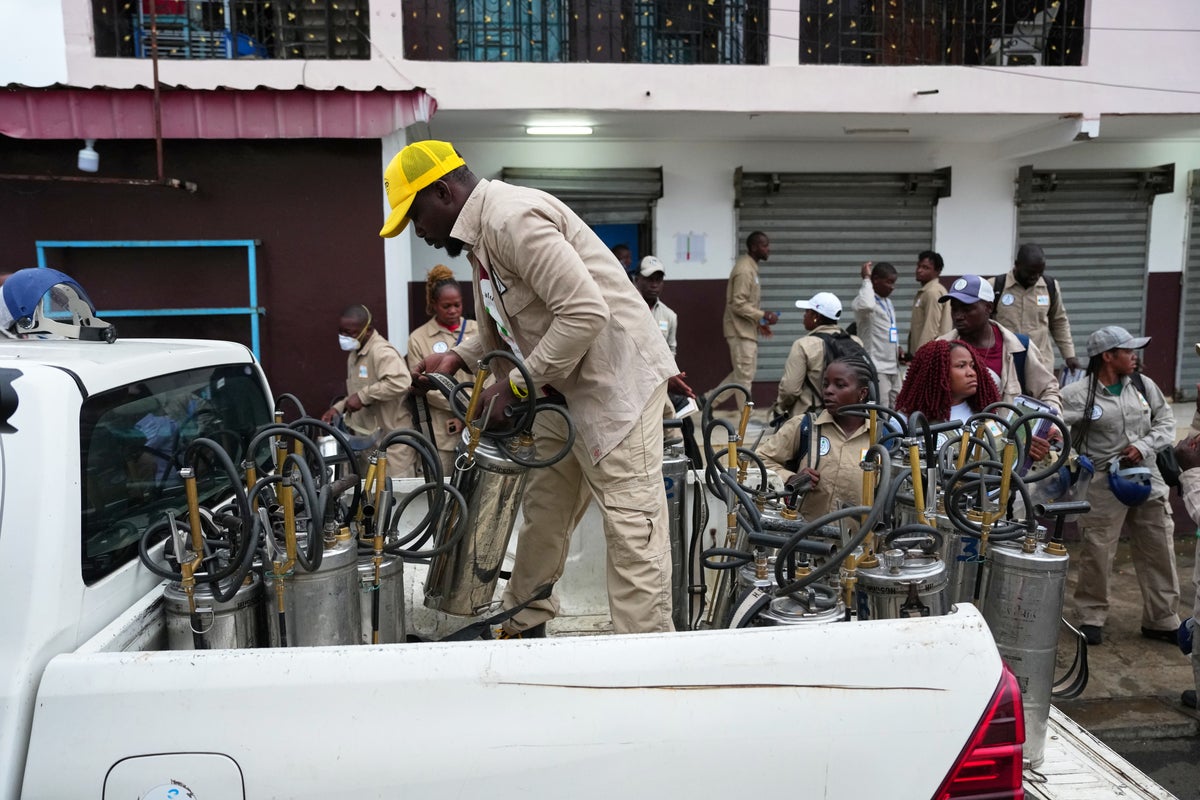 Equatorial Guinea is expanding an ambitious malaria elimination plan
independent.co.uk
Bioko, an island off the mainland of Equatorial Guinea roughly half the size of Rhode Island, has sharply cut malaria infections and deaths over two decades of indoor spraying, mosquito nets and larval control. Now the oil-rich country wants to take the approach to its mainland and eliminate the disease altogether — a status only two sub-Saharan nations, both islands, have ever been certified to reach.
The tools were familiar. What distinguished Bioko was two decades of painstaking data collection, sustained funding and workers going door to door to win residents' trust. There is no address system in Equatorial Guinea, so the programme built its own census: counting houses and residents, mapping where each dwelling stands, and tracking which were sprayed and which produced cases. "First, we did a population census with the number of houses and demographics. There is no address system in Equatorial Guinea, so we came up with our own system to map out how many houses there are and where, and track the spraying and the number of cases," says Guillermo Garcia of MCD Global Health, the US nonprofit that implements the programme. The core of the effort depends on sprayers who persuade households one at a time. "Each person is different, so you need to have a different way of connecting with them," says Benjamin Esono, a university student who works part time as a sprayer.
The wider continent is not keeping pace. Around 610,000 people died of malaria in 2024, the last available WHO figure, and African countries accounted for 95 per cent of global cases and deaths. The fight has stalled, making it unlikely the continent will meet its goal of eliminating the disease by 2030. Only Mauritius and Cabo Verde, both island nations, hold WHO certification as malaria-free.
The Bioko programme has been helped along by US oil companies, and money remains its stated problem — in a tiny oil-rich country ruled by Teodoro Obiang since 1979. The mainland expansion faces porous international borders and a far larger territory than the island.
On a recent morning in Malabo, Bioko's biggest city, spraying teams worked between low-rise cement buildings as heavy rain drummed on aluminium roofs. Elena Ntongono, a security guard and her family's main breadwinner, let them in despite the hour; she has had malaria several times, most recently seven months ago, and missed work because of it. Her 11-month-old grandson has not yet had malaria. "I am very happy my house is being sprayed," she said.