
Historic Limoges town hall burns as cost-of-living unrest spreads to Italy
Milan clashes leave close to fifty detained and Bologna shuts its station, CGIL calls November 20 general strike while Meloni blames vandals
Images
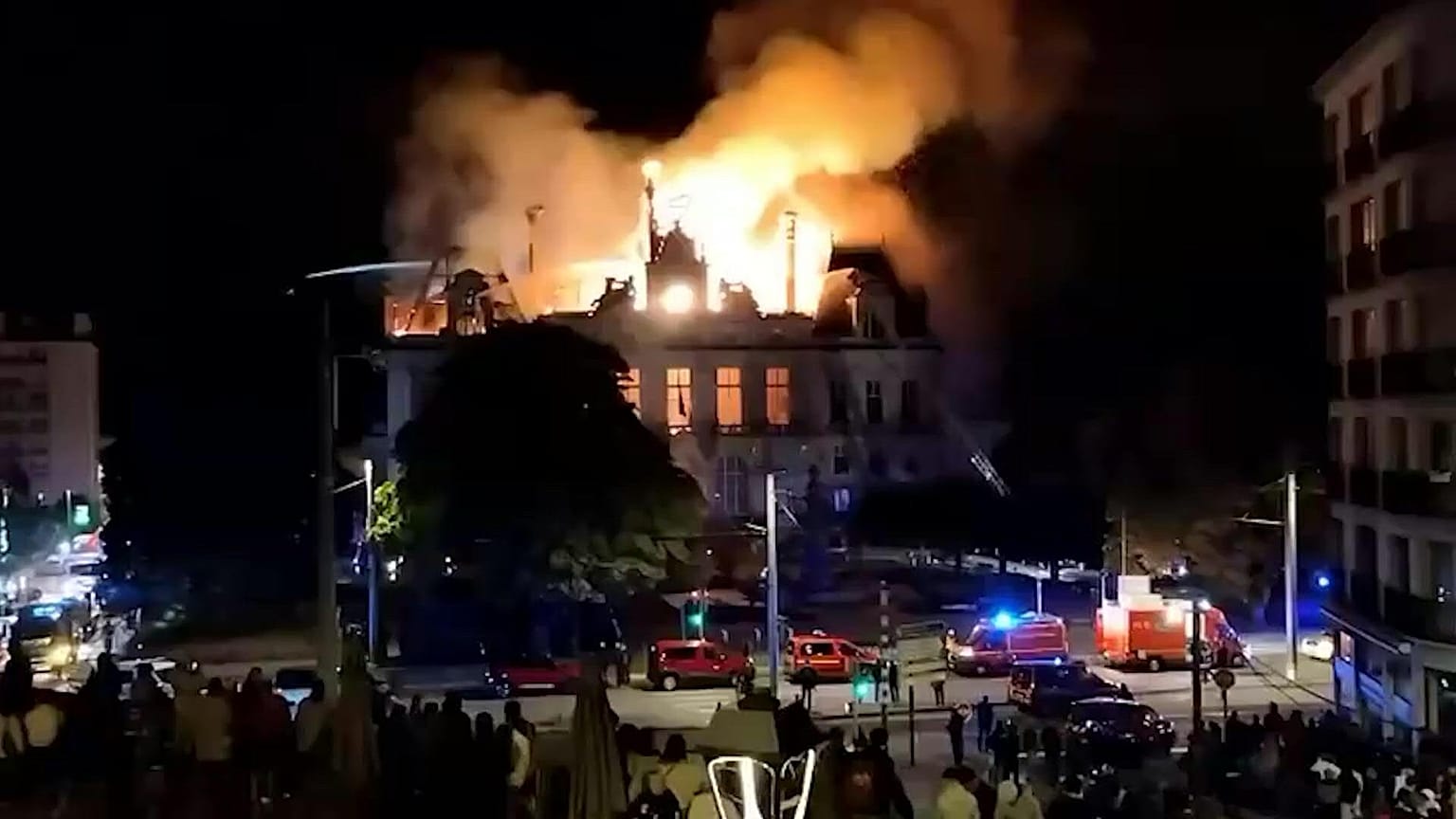 Limoges town hall on fire amid France nationwide protests
euronews.com
Limoges town hall on fire amid France nationwide protests
euronews.com
 Una manifestante ondea una bandera palestina entre humo durante enfrentamientos con la policía tras una protesta contra el aumento del costo de vida en Bolonia (REUTERS/Michele Lapini)
infobae.com
Una manifestante ondea una bandera palestina entre humo durante enfrentamientos con la policía tras una protesta contra el aumento del costo de vida en Bolonia (REUTERS/Michele Lapini)
infobae.com
 Meloni expresó su respeto hacia el derecho a la manifestación, pero criticó los hechos de violencia durante las protestas de este sábado en Italia (REUTERS/Antonio Bronic)
infobae.com
Meloni expresó su respeto hacia el derecho a la manifestación, pero criticó los hechos de violencia durante las protestas de este sábado en Italia (REUTERS/Antonio Bronic)
infobae.com
 Los manifestantes italianos convocaron a una huelga general para noviembre (REUTERS/Michele Lapini)
infobae.com
Los manifestantes italianos convocaron a una huelga general para noviembre (REUTERS/Michele Lapini)
infobae.com
The 143-year-old town hall of Limoges burned on Saturday night after a group set it alight amid France's nationwide cost-of-living protests. Prefect Maurice Barate said the roof had collapsed onto the floors below, sparing only the west wing, and that around two-thirds of the building's exterior had already disappeared. The extent of the damage was still being assessed.
The fire capped a day on which tens of thousands marched across France over rising prices — and on which the unrest stopped being an exclusively French affair. In Milan, hundreds of people fought police on the square outside the Duomo. Groups raised barricades, threw firecrackers at the police cordon and started a fire in front of the cathedral itself; officers answered with charges and tear gas, and riot police later moved to clear hooded demonstrators from the Galleria Vittorio Emanuele II next door. The Duomo metro station was closed, shops in the area pulled down their shutters and tourists abandoned the centre. Italian media reported numerous injured and close to fifty detained.
Bologna saw water cannon and seven arrests, according to the ANSA news agency, and the city's railway station was shut as a precaution. In Turin, officers fired smoke grenades during moments of tension at a demonstration where the slogans were aimed at Prime Minister Giorgia Meloni. In Rome, thousands joined a march convened by the CGIL union federation together with more than a hundred lay and Catholic associations, demanding higher wages, public services, fairer taxes and lower military spending.
"Demonstrating is a right. Burning our cities is not," Meloni wrote on social media, expressing respect for the thousands who had marched peacefully, including the CGIL mobilisation. She then listed the day's catalogue: stones thrown and officers injured in Milan, people detained in Turin carrying cobblestones and glass-breaking hammers, the station closure in Bologna. Those responsible, she wrote, were vandals who exploit demonstrations to sow chaos, assault the forces of order and take entire cities hostage — and she called on the opposition to condemn the violence without ambiguity.
The CGIL's answer was a date. General secretary Maurizio Landini used the Rome rally to call a general strike for November 20, timed to coincide with the European student strike already planned for that day.