
French police arrest 166 as cost-of-living protests sweep the country
Movement born over teacher shortages in poor Paris suburbs draws 33,000 in 140 actions, government with borrowing costs at two-decade highs answers with tear gas and stun grenades
Images
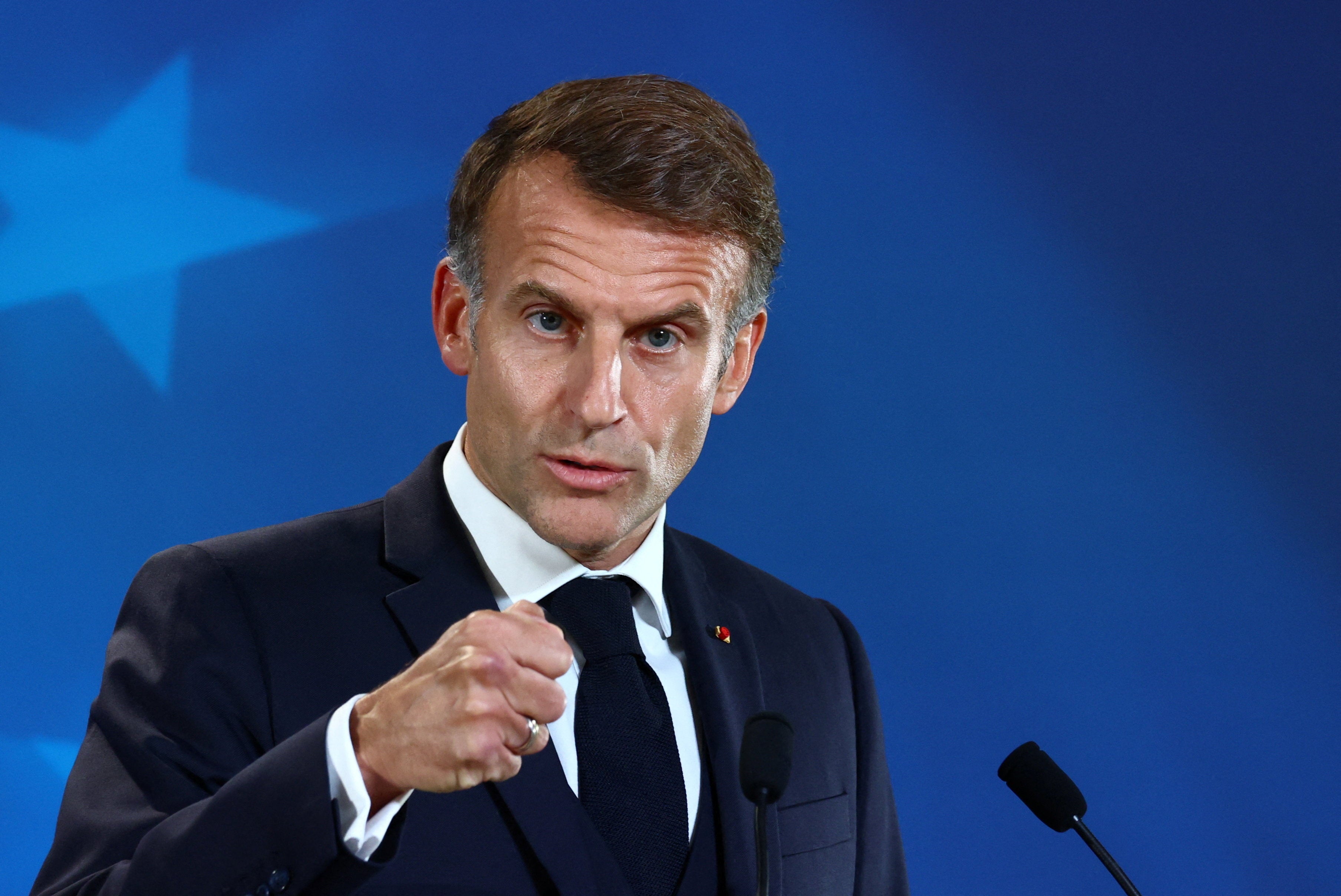 Emmanuel Macron has appealed for 'calm' ahead of Saturday's protests (Reuters)
Reuters
Emmanuel Macron has appealed for 'calm' ahead of Saturday's protests (Reuters)
Reuters
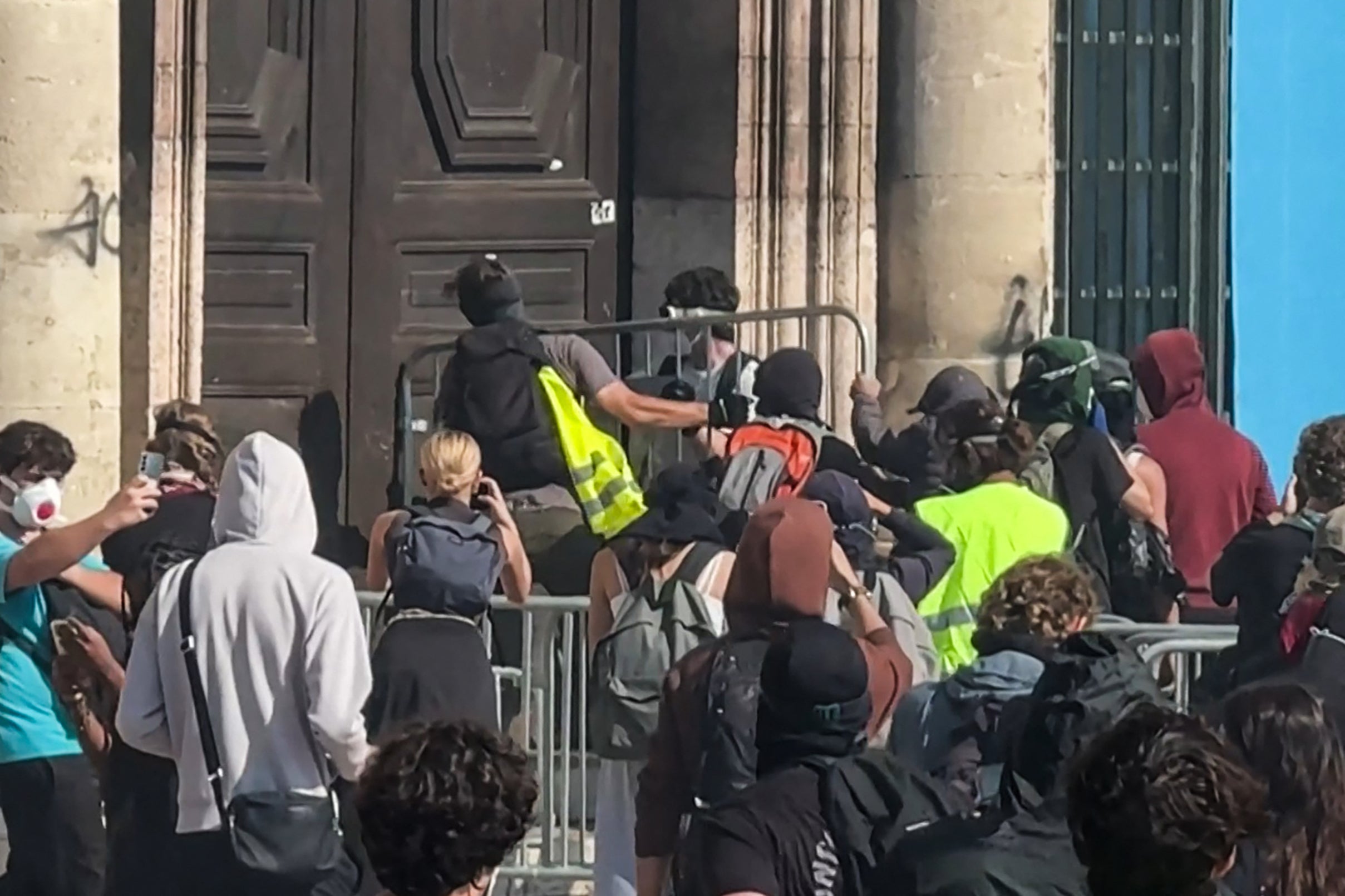 Protesters using a barrier to open the door to enter the Marseille's Town Hall (AFP/Getty)
AFP/Getty
Protesters using a barrier to open the door to enter the Marseille's Town Hall (AFP/Getty)
AFP/Getty
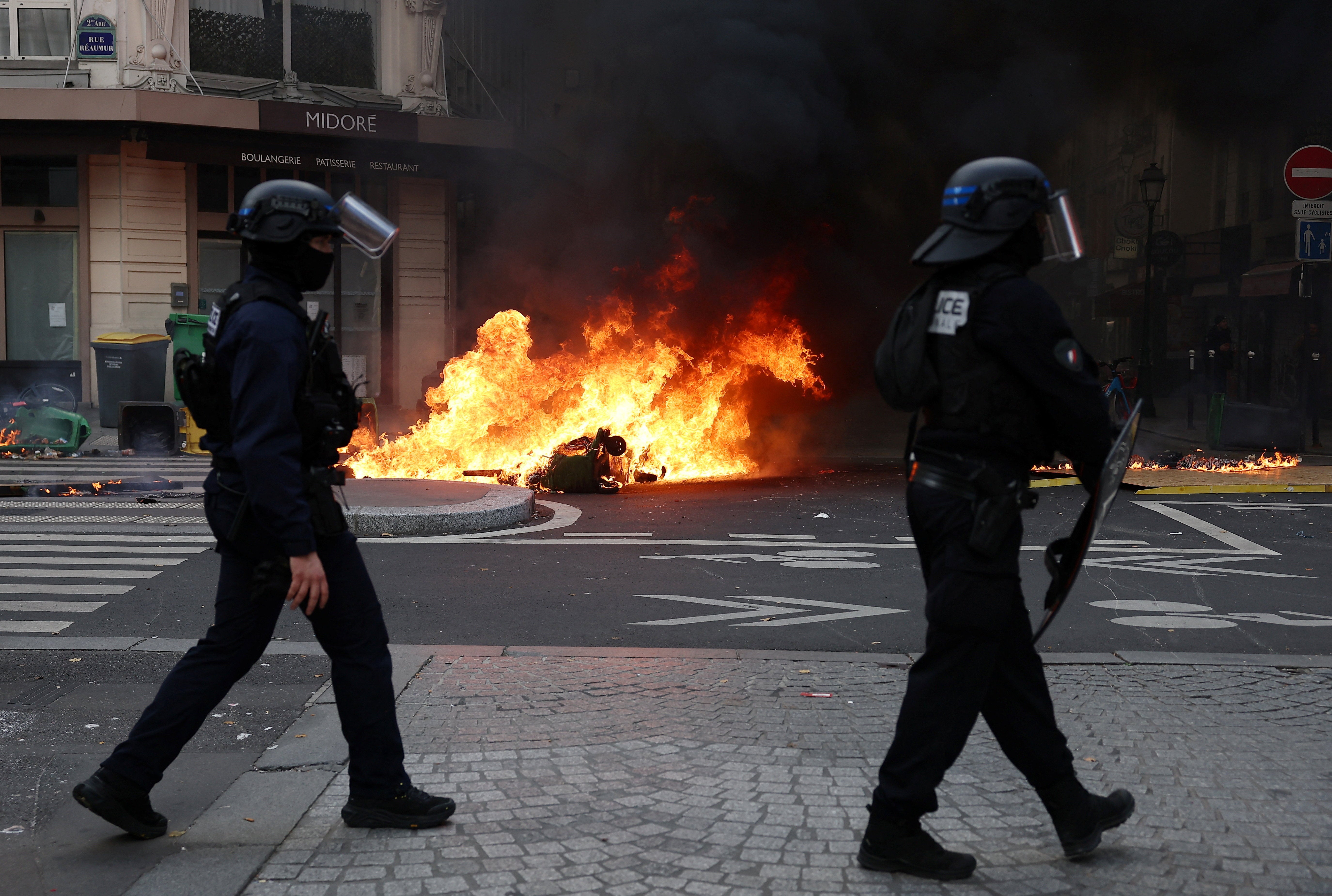 French riot police walk past burning objects in a street in Paris (Reuters)
Reuters
French riot police walk past burning objects in a street in Paris (Reuters)
Reuters
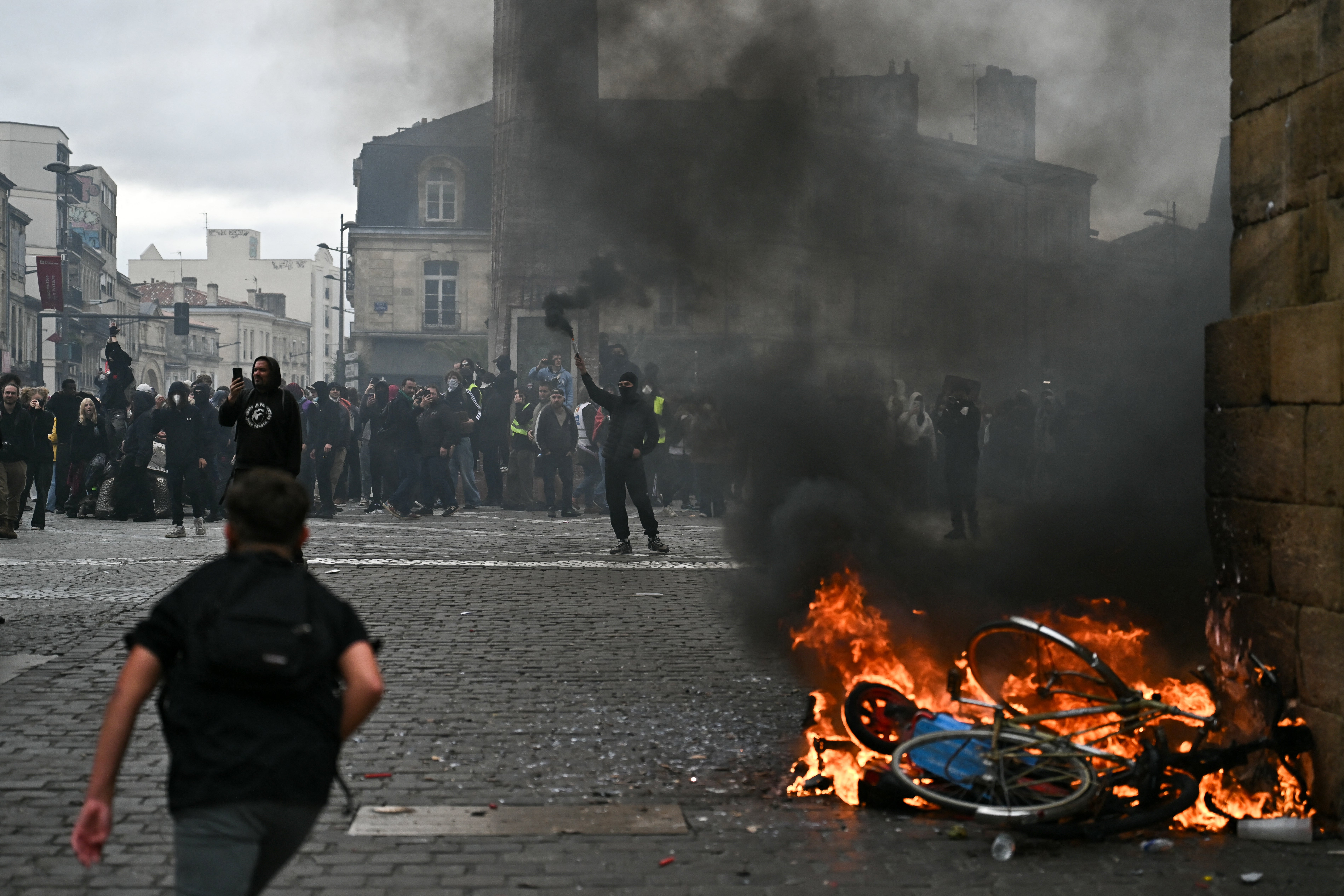 A protester lights smoke flares next to a fire during a demonstration to protest against the 'high cost of living' (AFP/Getty)
AFP/Getty
A protester lights smoke flares next to a fire during a demonstration to protest against the 'high cost of living' (AFP/Getty)
AFP/Getty
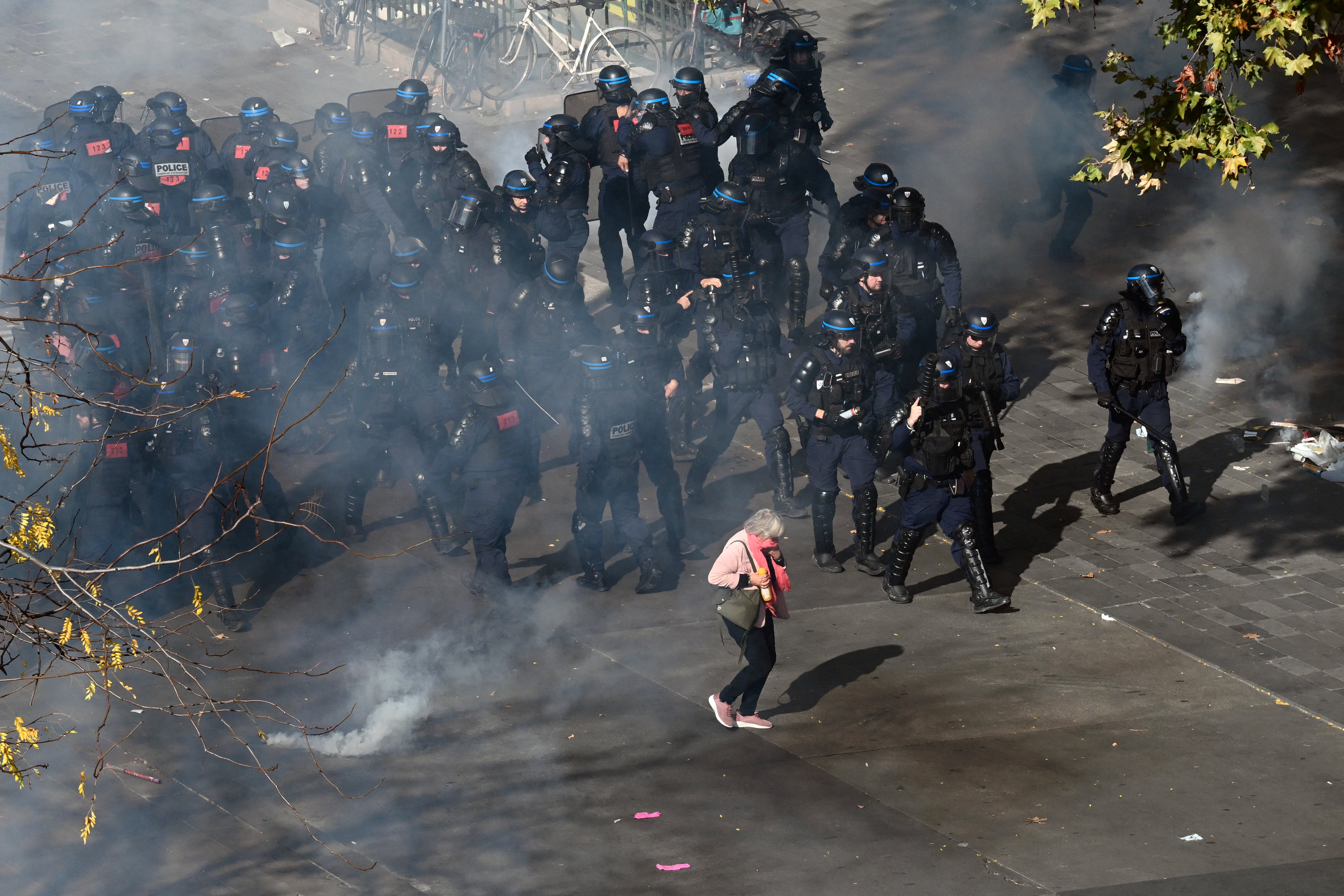 An elderly woman walks amid tear gas smoke past French police (AFP/Getty)
AFP/Getty
An elderly woman walks amid tear gas smoke past French police (AFP/Getty)
AFP/Getty
French police arrested 166 people across the country on Saturday as demonstrations against the cost of living and fuel prices drew 33,000 people to 140 separate actions nationwide. Officers fired tear gas in Paris, including at a student protest, and stun grenades remained authorised despite recent criticism of the police response.
The movement began the previous month at high schools in the poor northern suburbs of Paris, where anger over teacher absences and shabby facilities grew into a nationwide campaign against inequality, weak public spending and falling standards. On Saturday, protesters in hi-vis vests blocked streets in an echo of the yellow-vest unrest of President Emmanuel Macron's previous term, and photographs showed a crowd using a barrier to force open the door of Marseille's town hall. Clashes were reported in Rennes, Toulouse and Angers, with bins set alight.
Macron, entering the final stretch of his presidency ahead of the 2027 election, had appealed for calm, said he believes in the right to protest and called on demonstrators to show "respect for people and property". The interior ministry supplied its own account: a movement marked by "a very strong mobilisation of far-left elements, whose sole intent is to incite disorder", carrying out "targeted acts of violence" through "hooded individuals", with "a very high probability" of attempted escalation during the afternoon marches.
A long struggle to reduce rising public debt has not impressed investors, who have been ditching French bonds and driving borrowing costs to their highest levels in more than two decades.
A 19-year-old protester in Paris who gave her name as Lola put the case differently: "We are fighting because the cost of living is too harsh, because the price of fuel is too high, because high school pupils are being violently attacked and hurt all over the country just for trying to protest and ask for more teachers and decent learning conditions."
Police had warned of enhanced checks before the demonstrations, and most arrests were for carrying weapons or prohibited protective gear. Reports had put the expected Paris crowd at around 40,000, and a heavy police presence stood guard near the Champs-Élysées and the Arc de Triomphe, where some demonstrators climbed on monuments.
The interior ministry's account of the day ran to hooded individuals, targeted violence and 166 arrests. The movement's founding demand, weeks earlier, had been more teachers.