
Trump calls seven-month Iran war a military exercise
Pentagon death toll now 21 while CENTCOM claims Iranian proxies send money back to Tehran, strike pause near Hormuz ordered ahead of midterms
Images
 newsweek.com
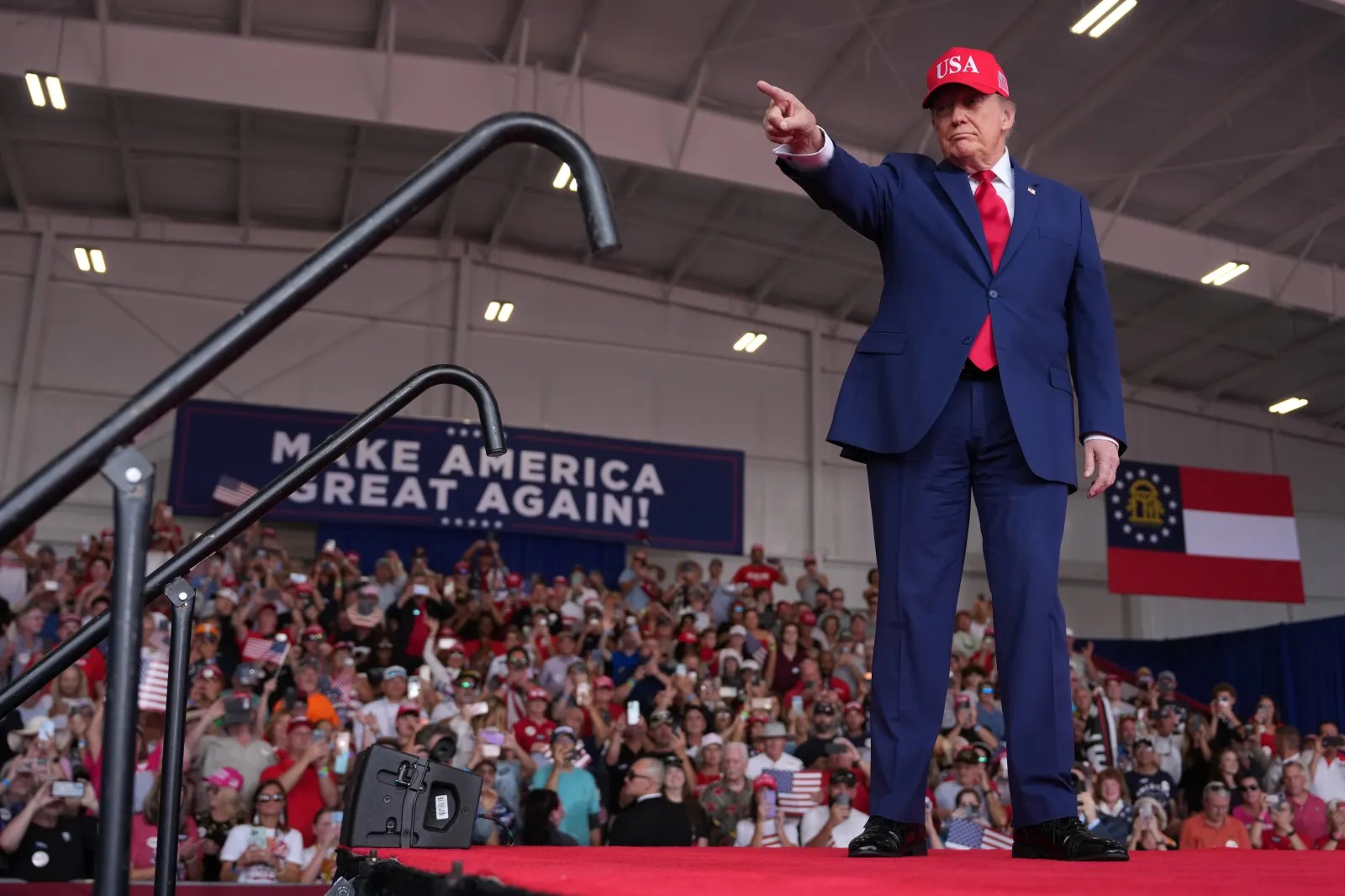 President Donald Trump arrives at a campaign rally at Dalton Municipal Airport on Friday in Dalton, Georgia.
newsweek.com
President Donald Trump arrives at a campaign rally at Dalton Municipal Airport on Friday in Dalton, Georgia.
newsweek.com
 US Supreme Court Hands Trump And Republicans Midterm Win In Political Ad Rates Fight
timesnownews.com
US Supreme Court Hands Trump And Republicans Midterm Win In Political Ad Rates Fight
timesnownews.com
At a campaign rally in Georgia on Friday, Donald Trump recast the seven-month US-Israeli war with Iran as a military exercise. The remark came less than a week after the Pentagon raised its official count of American dead to 21, with another 865 service members wounded.
This is the third renaming in three months. In September, Trump told reporters the conflict was "small potatoes" and "a military conflict" rather than a war, while acknowledging the deaths of 18 American service members — a figure he contrasted with the tens of thousands lost in Vietnam. Vice President JD Vance said around the same time that he "wouldn't call it a war" because there was "no active shooting." In March, House Speaker Mike Johnson described the fighting as a "limited operation" whose mission was "nearly accomplished," prompting Representative Thomas Massie, co-sponsor of a war powers resolution, to accuse him of "Orwellian levels of double speak."
The casualty accounting itself has been contested. The Washington Post reported in September, citing six US officials, that more service members had died in the Middle East than the Pentagon's public database showed; Defense Secretary Pete Hegseth called the reporting "a complete lie." The Pentagon subsequently raised the figure in its database, which now separates losses during Operation Epic Fury — the initial phase that began February 28 — from casualties in the resumed hostilities.
The same week, the top US commander in the region offered a different picture of the enemy's condition. Admiral Brad Cooper of Central Command said in a video message that the Islamic Revolutionary Guard Corps is under such financial pressure that the money flow has reversed: militias the IRGC once funded — Hezbollah, Hamas, Shia groups in Iraq — are now sending cash back to Tehran, in some cases withholding their own fighters' pay to do so. Cooper said the naval blockade alone has cost Iran 25 billion dollars in lost oil revenue, and that Washington and the Treasury recently froze 350 million dollars in Iranian cryptocurrency.
The squeeze has not closed the strait. Cooper said 400 ships carrying 100 million barrels passed through Hormuz in the past week, and linked a sharp rise in Iranian attacks on shipping to "desperation" inside the IRGC. Central Command has meanwhile almost completely stopped striking Iranian anti-ship missiles and drone launchers near the strait — a pause the White House ordered, according to US officials, so the war would not escalate before the midterm elections. One official said the pause has made Iran more confident; officials believe Tehran is deliberately hitting ships to push oil prices higher and pressure Trump at the polls. A Pew survey released October 8 found 65 percent of Americans disapprove of his handling of the war.
In the same week the Pentagon added two noncombat deaths to its count, Trump told the Georgia crowd: "It's a military exercise, OK? It's a military exercise."