
Guardian traces VW Ford and Tesla battery nickel to deforested indigenous lands in Sulawesi
Supply chains route through Chinese cathode maker into the world's largest battery producer, carmakers count CO2 but not hectares of rainforest
Images
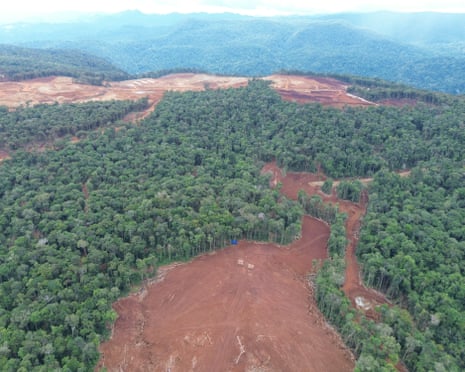 Deforestation in Indonesia linked to nickel mining. Photograph: Didi Hardiana, NGO Puspaham
theguardian.com
Deforestation in Indonesia linked to nickel mining. Photograph: Didi Hardiana, NGO Puspaham
theguardian.com
![Wadimula: ‘Destroying [the forest] means destroying our own life.’ Photograph: Stefano Valentino](https://i.guim.co.uk/img/media/dd5e5b8c1dcf166ec6b05880aa6d83c0e5adaca2/0_1310_3648_2371/master/3648.jpg?width=445&dpr=1&s=none&crop=none) Wadimula: ‘Destroying [the forest] means destroying our own life.’ Photograph: Stefano Valentino
theguardian.com
Wadimula: ‘Destroying [the forest] means destroying our own life.’ Photograph: Stefano Valentino
theguardian.com
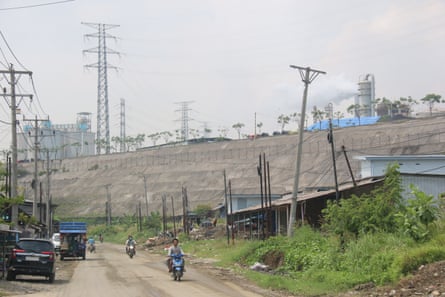 Morowali industrial park on Indonesia’s eastern coast, operated by Huayou’s local subsidiary. Photograph: Stefano Valentino
theguardian.com
Morowali industrial park on Indonesia’s eastern coast, operated by Huayou’s local subsidiary. Photograph: Stefano Valentino
theguardian.com
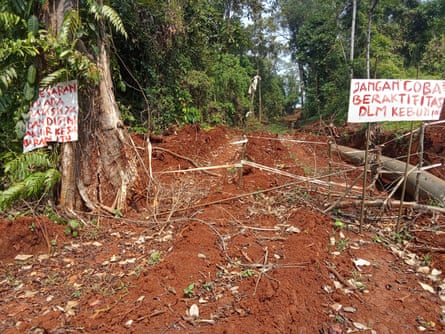 A track cut through forest in the Hengjaya concession. Photograph: Stefano Valentino
theguardian.com
A track cut through forest in the Hengjaya concession. Photograph: Stefano Valentino
theguardian.com
An on-the-ground investigation in Sulawesi links the battery supply chains of Volkswagen, Ford and Tesla to nickel mined in indigenous woodlands where primary rainforest has been cleared. The Guardian, working with Voxeurop and other European media partners, traced ore from the Cahaya and Hengjaya mines through regional smelters and Chinese processing plants run by Zhejiang Huayou Cobalt, a cathode manufacturer that supplies CATL, the world's largest battery maker, and whose corporate reports list US and European carmakers as end-users.
Sulawesi holds the world's largest nickel deposits, and nickel is what gives electric-vehicle batteries their range. Ore from the two concessions feeds a Huayou smelter in the Morowali industrial complex on Indonesia's eastern coast, where limonite is refined into mixed hydroxide precipitate — the raw material for battery cathodes. Shipments worth roughly $606 million left Morowali for Chinese ports in 2024, followed by roughly $470 million more last year. A separate route runs from Huayou through Poland to LG, the South Korean battery group. Public filings do not disclose volumes from Huayou to CATL, so specific ore cannot be tied to specific cars — but Huayou confirmed group-level supplies to CATL in a 2024 Shanghai Stock Exchange inquiry, and its downstream subsidiary Chengdu B&M confirmed deliveries of "large quantities."
Satellite analysis shows the mines have driven widespread deforestation of primary forest on lands inhabited by the indigenous Tolaki people. Wadimula, a Tolaki elder whose home sits on the edge of the 21,000-hectare Cahaya concession, told the reporters: "We used to ask the forest for protection in return for our offerings. Destroying it means destroying our own life."
The gap the investigation exposes is structural. Carmakers publish carbon accounting for their vehicles and tout certified supply chains, but the intermediaries — smelters, refiners, cathode makers — have no incentive to audit land already cleared, and the carmakers' climate ledgers count tonnes of CO2, not hectares of rainforest. Environmental groups warn that the boom in material-hungry electric SUVs is amplifying the destruction by swelling the volume of minerals mined.
The pattern is familiar from cobalt in Congo and lithium in South America: the green transition's raw-material bill is presented to the communities with the least power to contest it, several thousand kilometres from the showrooms where the emissions savings are booked.