
Putin seizes five European firms' Russian assets
Tarkett and four companies that stayed after the invasion lose operations without compensation, Centre Capital's chief executive is a wounded war veteran of the governor's office in Zabaykalsky
Images
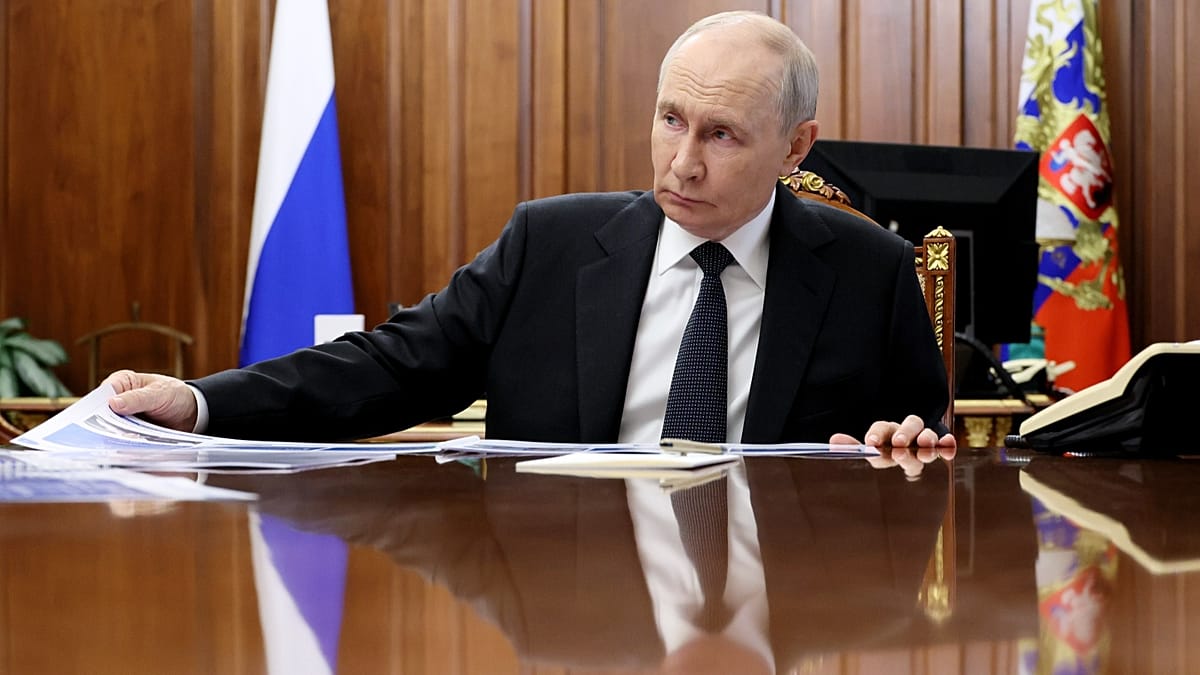 Putin seizes five European firms in ongoing hostile asset crackdown
euronews.com
Putin seizes five European firms in ongoing hostile asset crackdown
euronews.com
President Vladimir Putin has signed a decree ordering the compulsory seizure of the Russian assets of five European companies, including French flooring manufacturer Tarkett, in the latest round of what Western governments and international legal experts describe as unlawful expropriation.
The five companies covered by the decree — Tarkett, paper packaging producer Kappa Rus (formerly part of Ireland's Smurfit Kappa), hygiene product maker Ontex RU, metal packaging manufacturer Eviosys Packaging Kuban and Menshen Packaging CIS — have combined annual revenue exceeding 50 billion roubles, roughly €532 million. All five continued operating in Russia after the full-scale invasion of Ukraine in February 2022. The seized assets have been placed under the interim control of a management company called Centre Capital, registered in February 2026 and headed by Marat Mirkhaydarov, the former head of the administration of the governor of Zabaykalsky region, who stood down in 2025 after an injury sustained in the war.
Tarkett, which ranks third globally by floor covering sales according to its 2024 annual report, kept two of its 34 worldwide production sites in Russia and continued paying taxes to the Russian budget. That calculation — that staying put and keeping local operations alive would preserve the asset — is now being repriced across the board.
The mechanism is not new. A presidential decree signed in April 2023 authorised temporary administration over foreign companies' Russian assets; the first targets were Danish brewer Carlsberg and French dairy group Danone. In September 2026, Putin placed the Russian assets of Nestlé, Metro, Auchan and Leroy Merlin under temporary administration through a company called LEV Management, established shortly before the decision and, according to Russian media reports, linked to the security services. Kremlin spokesman Dmitry Peskov has directly tied the transfers to the companies' origin in what Moscow officially designates 'unfriendly countries' — all EU member states, the US, the UK and other sanctioning states.
Moscow frames the seizures partly as a response to the EU's freeze of roughly €300 billion in Russian sovereign assets. The symmetry is incomplete. Companies whose assets are taken can in principle pursue compensation through international arbitration under bilateral investment treaties Russia has signed with EU member states — but enforcing an arbitration judgment against the Kremlin is, in practice, nearly impossible. Meanwhile the EU continues to debate whether frozen Russian assets may lawfully be touched at all, while European firms that stayed in Russia lose theirs without compensation, and the EU itself has paid 197 billion euros for Russian energy since March 2022.
The pattern rewards those who left and punishes those who stayed. Tarkett's two plants now report to a manager recruited from a regional governor's administration who was wounded in the war against Ukraine.