
Pterosaur museum sinks eight metres into Gobi sand
Hami halls keep fossils in the ground they were dug from, Turenscape claims 94 percent cut to air-conditioning power
Images
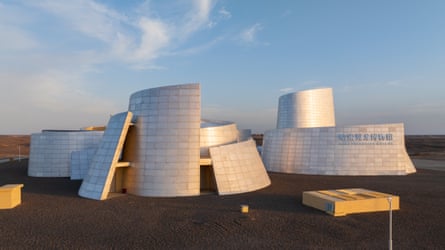 The Hami Pterosaur Museum is designed so as to require minimal artificial heating and cooling. Photograph: Turenscape
theguardian.com
The Hami Pterosaur Museum is designed so as to require minimal artificial heating and cooling. Photograph: Turenscape
theguardian.com
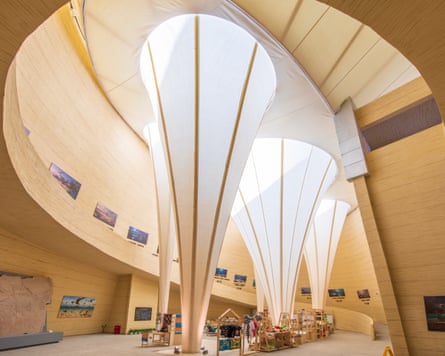 Most of the museum’s structure has been built 8-metres deep into the ground of the desert. Photograph: Turenscape
theguardian.com
Most of the museum’s structure has been built 8-metres deep into the ground of the desert. Photograph: Turenscape
theguardian.com
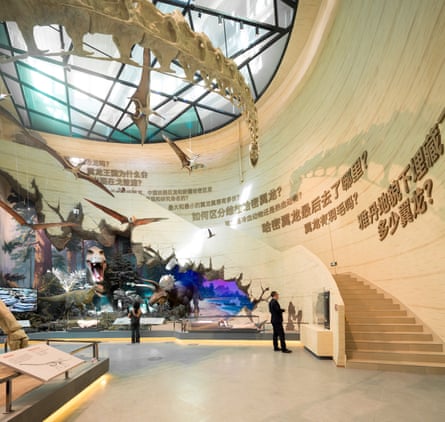 Visitors to the museum will be able to see the fossils in the geological context of where they were found. Photograph: Turenscape
theguardian.com
Visitors to the museum will be able to see the fossils in the geological context of where they were found. Photograph: Turenscape
theguardian.com
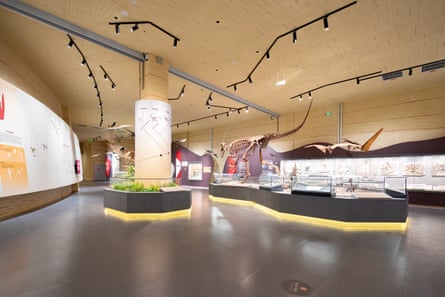 Pterosaurs once roamed the Hami region roughly 130m years ago. Photograph: Turenscape
theguardian.com
Pterosaurs once roamed the Hami region roughly 130m years ago. Photograph: Turenscape
theguardian.com
The Hami Pterosaur Museum opened in the Gobi desert of north-west China with most of its 8,000 square metres sunk eight metres into the ground, an engineering answer to summer air temperatures above 55C, winter lows below minus 20C, and sandstorms that scour the region. Hundreds of pterosaur fossils are displayed within walking distance of where they were excavated.
Director Wang Xiaolin, a palaeontologist at the Chinese Academy of Sciences who has dug in Hami for twenty years, argued that keeping the fragile relics local preserves their geological context. Among the exhibits is a specimen retaining the upper and lower jaws and the soft-tissue structures of a head crest, from an animal that roamed the area roughly 130 million years ago. Beijing architecture firm Turenscape designed the building as one of the last projects of its late founder, landscape architect Kongjian Yu.
The design does the climate work directly. Underground halls stay cool in summer and warm in winter; natural ventilation shafts let cool air sink and hot air escape; giant translucent ceiling-to-floor funnels pull in daylight. Turenscape estimates the underground placement cuts air-conditioning electricity use by 94 percent compared with an above-ground counterpart, roughly 223,000 kWh a year, while the funnels reduce lighting demand by nearly half, saving another 85,000 kWh annually. Back-up air-conditioners are installed anyway.
Wang Yujia, a landscape architect at the University of Nebraska–Lincoln who is not involved in the project, noted that being largely underground shields the museum from wind, sand, solar heat and the desert's day-night temperature swings — meaning far less machinery is needed to keep the fossils stable.
The museum's five exhibition halls sit in a region where surface ground temperature can reach 80C, and where American expeditions harvested fossil beds nearly a century ago. The fossils now stay where they were found, cooled by sand instead of compressors.