
India fortifies Delhi against flag-waving protesters
130 million deleted voter names fuel demand for election commissioner's resignation, police offer to facilitate selected persons to carry the national flag
Images
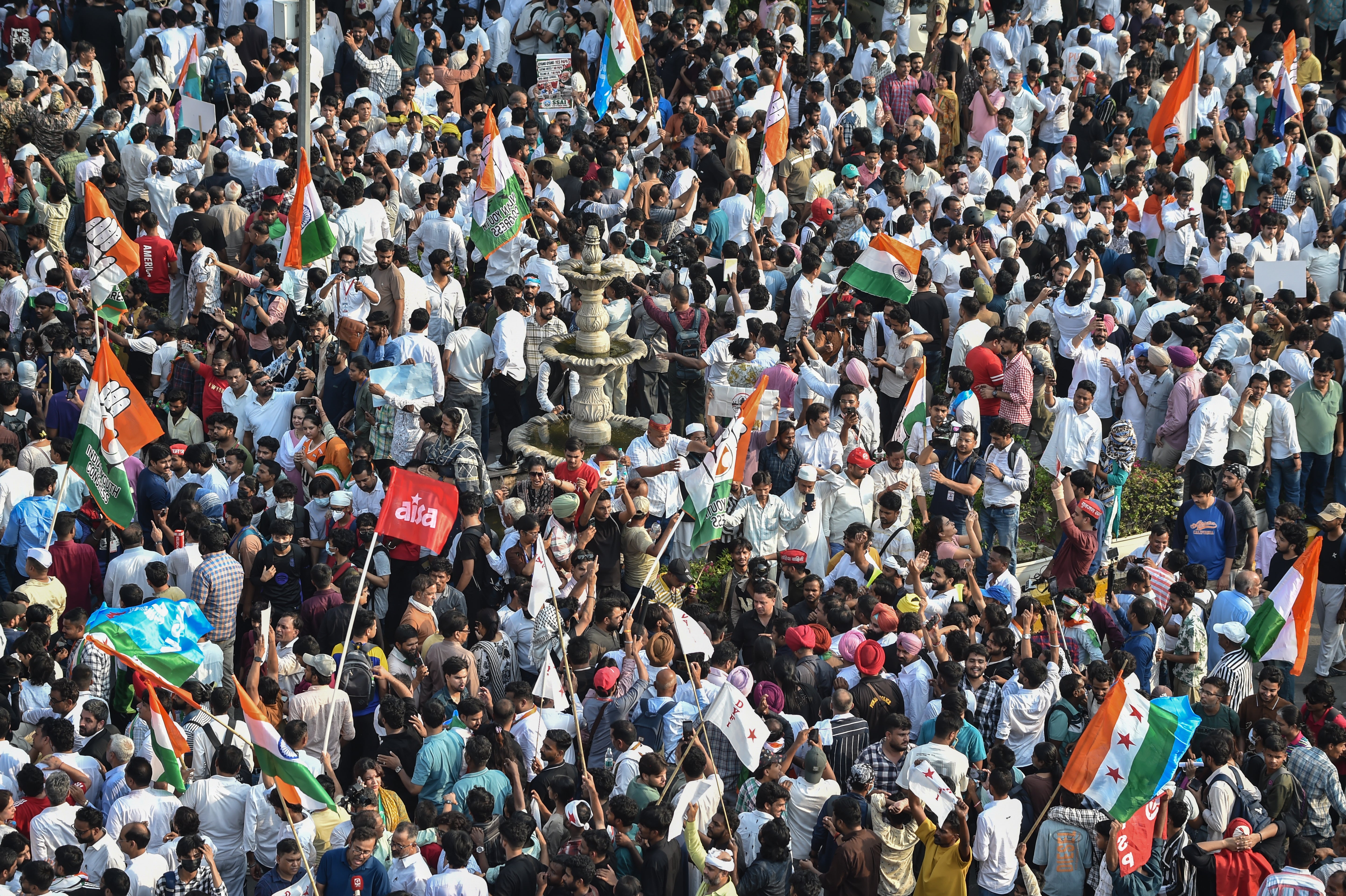 Protesters march in Delhi on 12 October 2026 (Getty)
Getty
Protesters march in Delhi on 12 October 2026 (Getty)
Getty
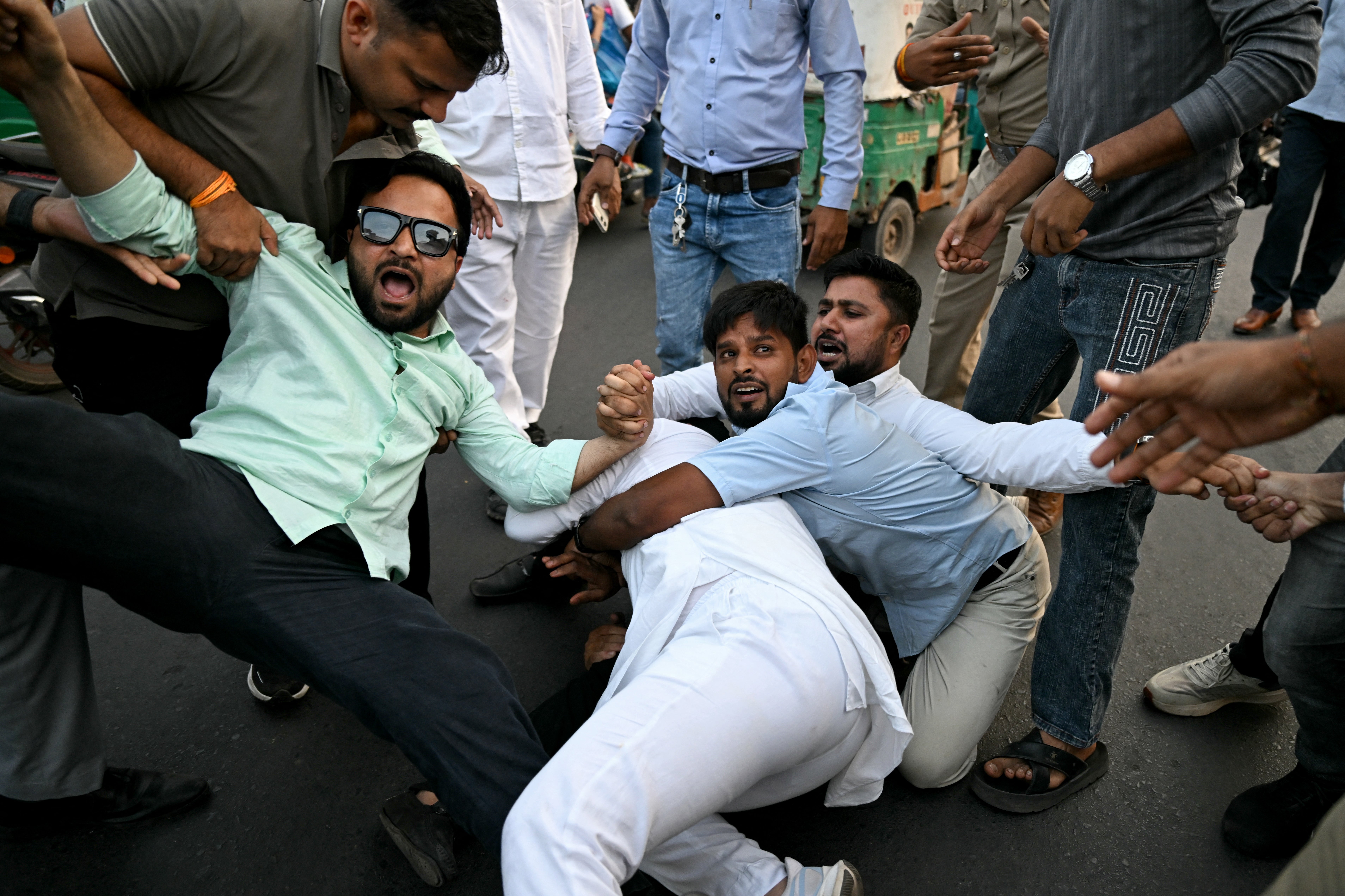 Police detain protesters during a demonstration chief election commissioner Gyanesh Kumar’s resignation (AFP/Getty)
AFP/Getty
Police detain protesters during a demonstration chief election commissioner Gyanesh Kumar’s resignation (AFP/Getty)
AFP/Getty
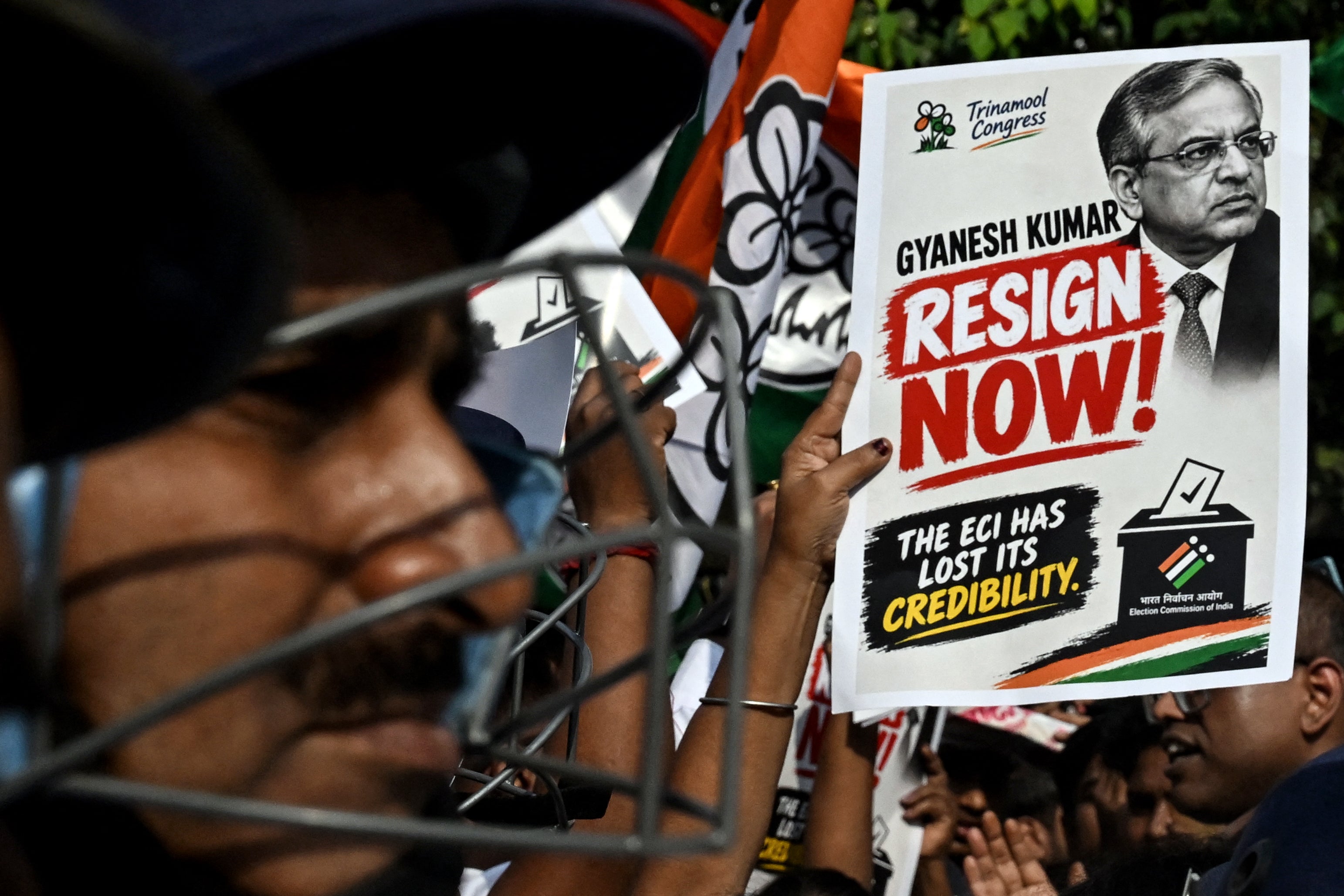 A protester carries a poster during a demonstration against chief election commissioner Gyanesh Kumar (AFP/Getty)
AFP/Getty
A protester carries a poster during a demonstration against chief election commissioner Gyanesh Kumar (AFP/Getty)
AFP/Getty
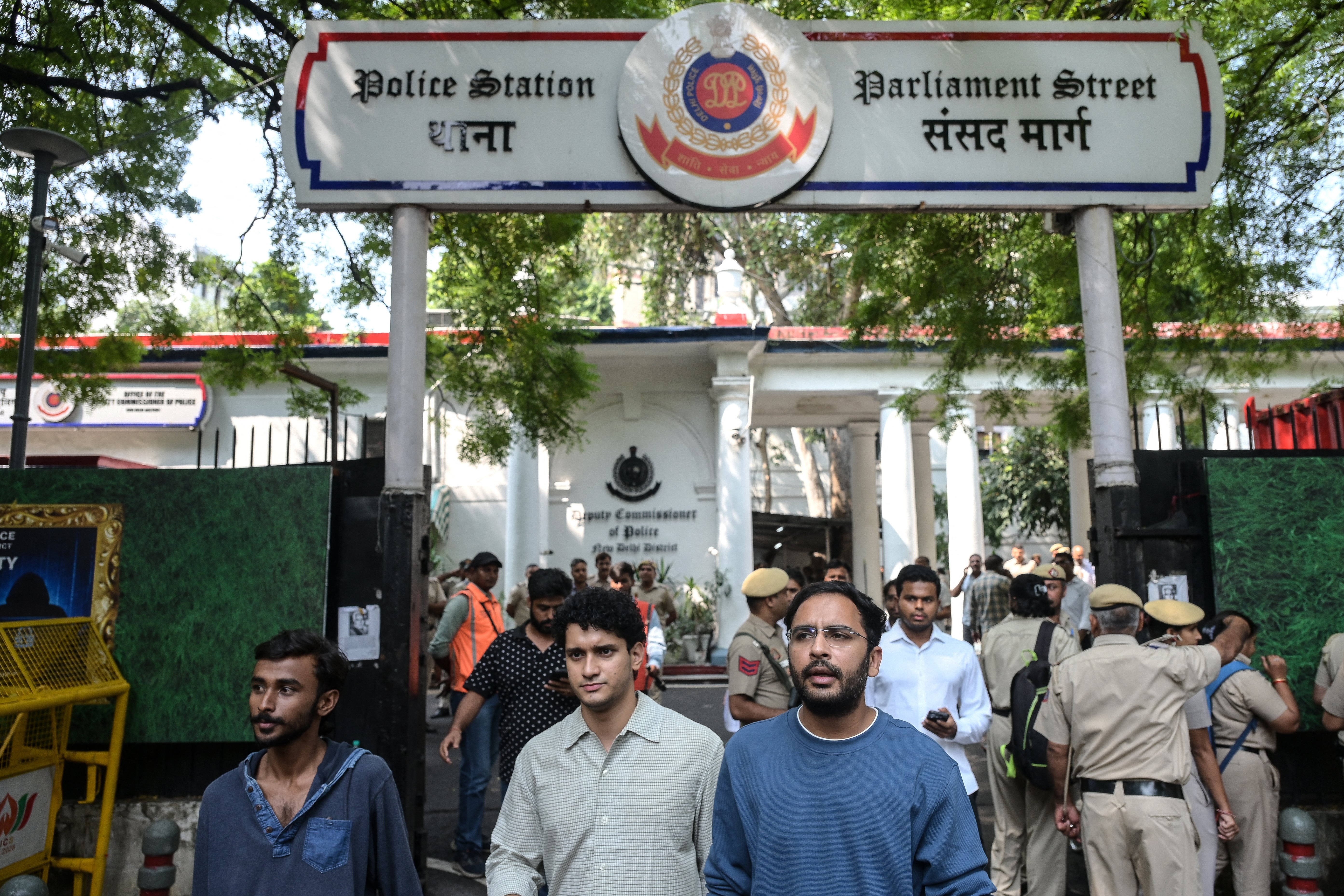 Cockroach Janta Party spokespersons Saurav Das and Ashutosh Ranka walk out of a police station as they seek approval for a protest demanding the resignation of chief election commissioner Gyanesh Kumar (AFP/Getty)
AFP/Getty
Cockroach Janta Party spokespersons Saurav Das and Ashutosh Ranka walk out of a police station as they seek approval for a protest demanding the resignation of chief election commissioner Gyanesh Kumar (AFP/Getty)
AFP/Getty
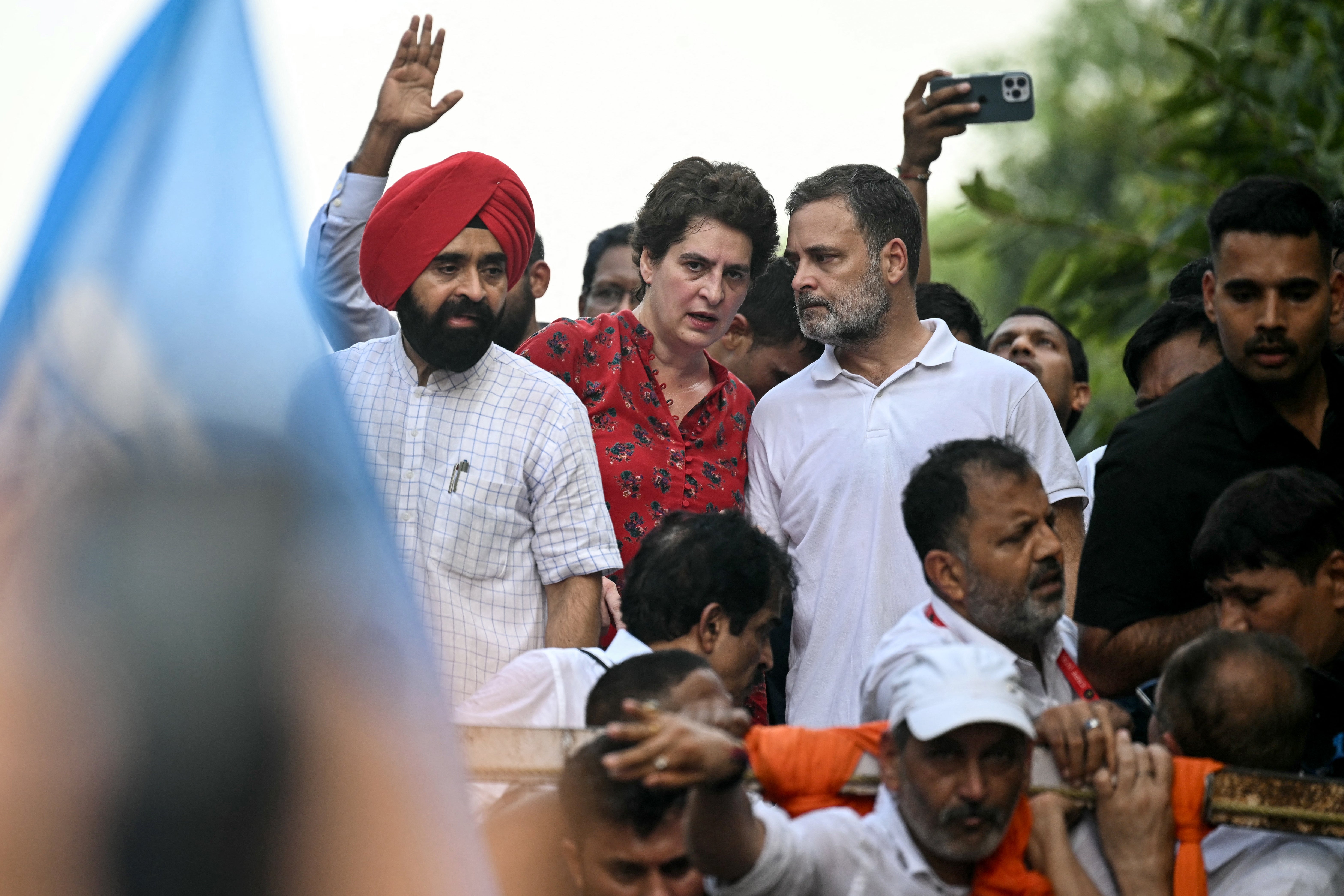 Congress party leader Rahul Gandhi and his sister and fellow MP Priyanka Gandhi Vadra speak during a protest march in Delhi (AFP/Getty)
AFP/Getty
Congress party leader Rahul Gandhi and his sister and fellow MP Priyanka Gandhi Vadra speak during a protest march in Delhi (AFP/Getty)
AFP/Getty
More than 6,000 police officers have taken position around Connaught Place ahead of a planned flag-waving demonstration, on top of 26,000 central armed police deployed across central Delhi over the past week — a deployment an officer described to the Hindustan Times as among the largest since the 2020 Delhi riots. The demonstrators' demand is the resignation of chief election commissioner Gyanesh Kumar, whose Special Intensive Revision classified some 130 million names on India's voter rolls as dead, moved, untraceable or duplicated.
Protests have run since 2 October in Delhi and other parts of the country, mobilised by opposition parties and youth groups. The loudest is the Cockroach Janata Party, a youth movement that appeared over the summer and already led the protests that forced out the education minister after a series of botched exams — ministerial resignations being exceptionally rare in India, and the ouster one of the clearest challenges to Narendra Modi's authority since he took power in 2014. This week police arrested three of its leaders after they entered Jantar Mantar, a site the authorities had denotified as a designated protest area, and waved the national flag; two remain in judicial custody. Rahul Gandhi called the jailing of young people for waving the tricolour "an act of cowardice."
The trigger was an Indian Express investigation reporting that Kumar's two fellow commissioners repeatedly objected to decisions and procedures connected to the revision, and that centralised databases prevented officials on the ground from correcting voter lists despite having the legal authority to do so. The commission acknowledged the objections and called them part of routine decision-making; it insists the 130 million names were classified, not necessarily removed, and that eligible voters can apply to be restored. Critics point to the documents demanded and the cumbersome rectification process as evidence of systematic exclusion. The government has rejected the resignation demand outright — "There's no chance of chief election commissioner Gyanesh Kumar resigning," said minister Ramdas Athawale — while authorities have cut mobile internet, detained political leaders, students, activists and lawyers en masse, banned gatherings of four or more people, and closed Central Park "for administrative reasons." Rajeev Bhargava, a political theorist formerly at Jawaharlal Nehru University, argues the commissioners "should have resigned" the day the revelations appeared, and that their refusal confirms suspicions that the government and the commission are "in cahoots."
The Delhi High Court on Thursday refused to block the protest. The police, for their part, have offered to facilitate "a group of selected persons" to carry the national flag at a suitable place.