
Spanish wind sled to cross Antarctica without fossil fuels
Kites haul 16 research projects over 3,400 kilometres of ice, comparable tracked expedition burned 170,000 litres
Images
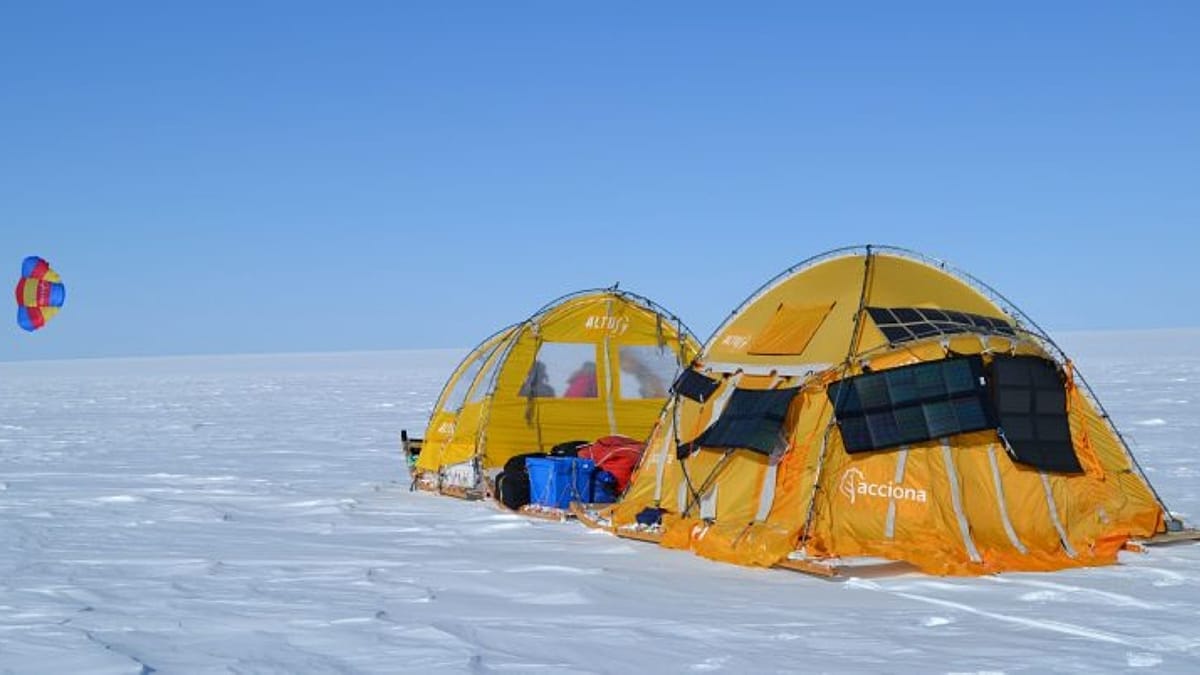 Wind Sled, Spanish invention to cross Antarctica without emissions: 'Unique in the world'
euronews.com
A Spanish expedition leaves for Antarctica on 18 October intending to cross roughly 3,400 kilometres of the interior in about 80 days, hauled by kites, with no combustion engine and no aerial resupply. Ramón Larramendi's Wind Sled will run from Russia's Novolazarevskaya base in Queen Maud Land to the French-Italian Concordia station on Dome C, crossing the Pole of Inaccessibility and skirting the Pole of Cold.
The vehicle is the product of some 25 years of development, over which Larramendi has covered more than 28,000 kilometres on ice. It consists of four modules, is 15 metres long and can carry up to 2,100 kilos; this expedition loads around 250 kilos of instruments for 16 research projects selected through the Spanish Polar Committee, involving the CSIC, CIEMAT and INTA research bodies, six Spanish universities and international organisations. One project, from NASA's Ames Research Center and led by Spaniard Alfonso Dávila, will examine whether conditions favourable to microbial life can arise inside salt rocks exposed to the extreme cold. Twenty kites, from five to 150 square metres, provide the propulsion — up to 80 kilometres per hour in favourable winds, around 25 on average — with solar power running the equipment. Larramendi describes the design as borrowed from Inuit techniques: "The wind sled is, in a way, completely unique in the world."
The comparison that interests him is fuel. The Transantarctic Scientific Expedition of 2011-2012 covered a similar distance with tracked trucks, snowmobiles and sleds, consuming roughly 170,000 litres in two months. The Wind Sled carries no fuel and needs no resupply flights, and its route crosses regions where hardly any direct measurements exist, complementing what satellites and permanent stations gather.
Larramendi's claim is total: "Other systems powered by renewable energy may emerge to cross Antarctica, but none will be more sustainable or have a smaller footprint than the Wind Sled." The expedition is due back in early February. Twenty kites, from five to 150 square metres, are the entire propulsion plan.