
Argentina's Vaca Muerta shale boom linked to sickness cluster in Patagonia
Guardian reports birth defects and miscarriages on one street beside a wellhead as Milei touts record oil exports to Europe, no in-depth health study has been done in thirteen years
Images
 Analía Celeste Saldías suffered complications while pregnant with her son Joel, now five. He was born with a birth defect at home in Calle Ciega 10. Photograph: Erica Canepa/The Guardian
theguardian.com
Analía Celeste Saldías suffered complications while pregnant with her son Joel, now five. He was born with a birth defect at home in Calle Ciega 10. Photograph: Erica Canepa/The Guardian
theguardian.com
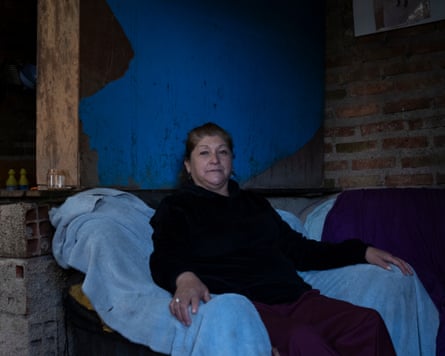 Roxana Valverde, a resident of Calle Ciega 10, has lived in the area for nearly 30 years. Photograph: Erica Canepa/The Guardian
theguardian.com
Roxana Valverde, a resident of Calle Ciega 10, has lived in the area for nearly 30 years. Photograph: Erica Canepa/The Guardian
theguardian.com
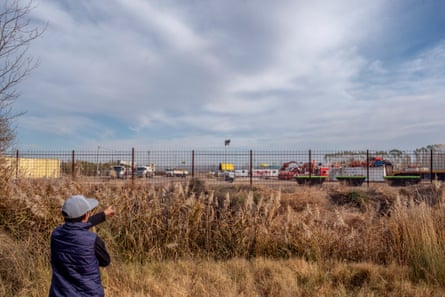 A resident of Calle Ciega 10 points toward the oil well located a short distance from their home in Allen, Rio Negro province. Photograph: Erica Canepa/The Guardian
theguardian.com
A resident of Calle Ciega 10 points toward the oil well located a short distance from their home in Allen, Rio Negro province. Photograph: Erica Canepa/The Guardian
theguardian.com
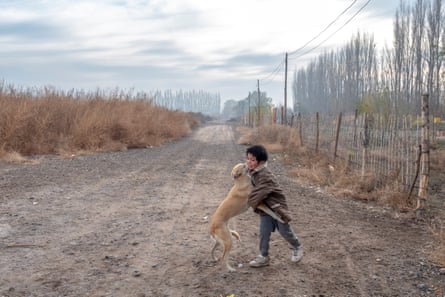 Dominik Joel Valverde, born with a congenital malformation, plays with a dog along a dirt road metres from an oil well in Calle Ciega 10. Photograph: Erica Canepa/The Guardian
theguardian.com
Dominik Joel Valverde, born with a congenital malformation, plays with a dog along a dirt road metres from an oil well in Calle Ciega 10. Photograph: Erica Canepa/The Guardian
theguardian.com
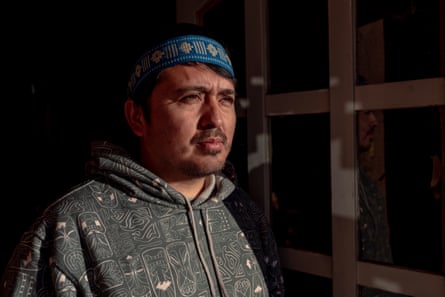 Lef Nawel of the Zonal Xawvn Ko Mapuche Cconfederation, an organisation that brings together 14 Indigenous communities living across different parts of Vaca Muerta. Photograph: Erica Canepa/The Guardian
theguardian.com
Lef Nawel of the Zonal Xawvn Ko Mapuche Cconfederation, an organisation that brings together 14 Indigenous communities living across different parts of Vaca Muerta. Photograph: Erica Canepa/The Guardian
theguardian.com
On Calle Ciega 10 in Allen, a small Patagonian town on the eastern edge of Vaca Muerta, residents say the illnesses began thirteen years ago, when a well was drilled near their homes. Analía Celeste Saldías's son Joel, now five, was born with a birth defect. Other families on the street of roughly twenty report severe migraines, nausea, skin irritation, cancers, miscarriages and stillbirths. Roxana Valverde, who has lived nearby for nearly thirty years, says women have moved away because they could not carry pregnancies to term. "Before the well was drilled, this didn't happen," she told the Guardian.
Vaca Muerta holds the world's second-largest reserve of shale gas and the fourth-largest of shale oil, with more than 2,600 active wells across four provinces. Fracking there began in 2012 under Cristina Kirchner's government; under Javier Milei it has become the centerpiece of Argentina's economic recovery. By the end of 2025 the country's all-time production record was broken, and crude oil overtook soya bean meal as Argentina's leading export for the first time in history — driven partly by European companies seeking an alternative to Russian gas. The state company YPF controls a third of unconventional output; Chevron, TotalEnergies and Shell handle much of the rest.
The residents of Calle Ciega 10 are seasonal fruit-farm workers in small, dilapidated houses. Children ride bikes a few metres from the wellhead. Doctors, Valverde says, tell patients the illnesses could stem from fracking pollution while conceding that without in-depth studies nothing can be established with certainty. Those studies would have to be commissioned by someone — and the provincial state that would commission them finances itself from the very royalties it would be reviewing.
Numerous scientific studies have linked fracking to respiratory and skin conditions, cancer, congenital disabilities and pregnancy complications in nearby populations. None has been conducted on this street. The export figures that made oil Argentina's top product are booked as national income; the miscarriages on Calle Ciega 10 are booked nowhere at all.