
Houthis besiege Yemen's third city Taiz, rebels seize 1,000km in a month and break four years of UN-brokered calm
Repairman sells wife's gold ring to feed family of six
Images
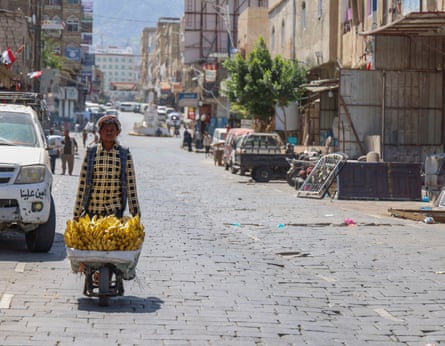 A Yemeni man selling bananas along a street in the city of Taiz earlier this month. Photograph: Ahmad Al-Basha/AFP/Getty Images
theguardian.com
A Yemeni man selling bananas along a street in the city of Taiz earlier this month. Photograph: Ahmad Al-Basha/AFP/Getty Images
theguardian.com
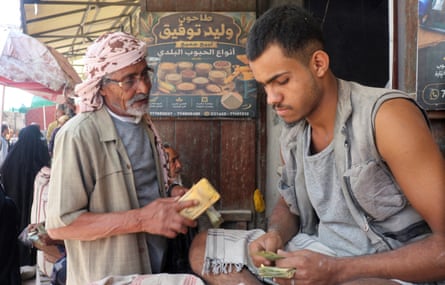 A grain seller trading in Taiz last week. Photograph: Ebrahim al-Suhaibi/Reuters
theguardian.com
A grain seller trading in Taiz last week. Photograph: Ebrahim al-Suhaibi/Reuters
theguardian.com
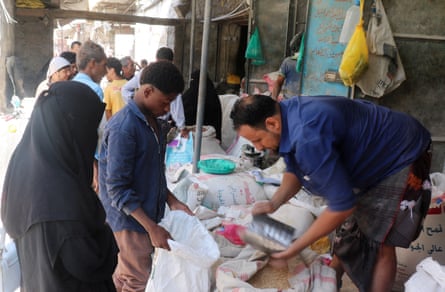 Customers line up to buy grain at a Taiz market. Photograph: Ebrahim al-Suhaibi/Reuters
theguardian.com
Customers line up to buy grain at a Taiz market. Photograph: Ebrahim al-Suhaibi/Reuters
theguardian.com
 Houthi fighters march through the streets of Jabal Habashy district, to the west of Taiz. Photograph: Houthi Military Media/Reuters
theguardian.com
Houthi fighters march through the streets of Jabal Habashy district, to the west of Taiz. Photograph: Houthi Military Media/Reuters
theguardian.com
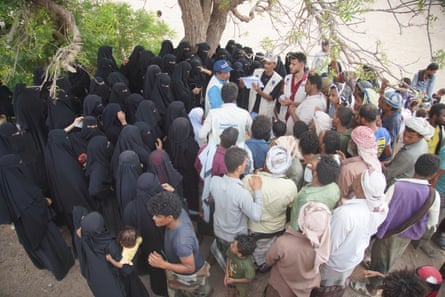 Displaced Yemeni families, who fled Houthi attacks on their villages near Taiz, receive food and shelter supplies in Aden. Photograph: Abdulnasser Alseddik/Anadolu/Getty Images
theguardian.com
Displaced Yemeni families, who fled Houthi attacks on their villages near Taiz, receive food and shelter supplies in Aden. Photograph: Abdulnasser Alseddik/Anadolu/Getty Images
theguardian.com
After walking to more than a dozen shops in Taiz, Ali Abdulsamed found a 25-kilo bag of wheat flour on sale at more than twice its usual price. He has no savings, so he paid for it with his wife's gold ring.
Taiz, Yemen's third most populous city with about a million residents, is besieged from all sides. Supplies of fuel, food and other basic goods are cut off, and the UN World Food Programme warned on Monday that the fighting had denied vital assistance to 800,000 people in the city. Abdulsamed, a 48-year-old who repairs mobile phones on one of the main streets in the heart of Taiz, spent an entire day walking from queue to queue, reaching each grocer's counter as the shelves emptied. Since 3 October, he says, almost all food items have disappeared from the city's shops.
The siege is the product of a ground war that reignited last month, when the Iran-allied Houthis launched a military campaign to take Yemen's Red Sea coast. The offensive broke four years of relative calm that had held since a UN-brokered ceasefire froze the frontlines in 2022. The rebels have since seized more than 1,000 kilometres of territory and taken control of the Bab al-Mandab strait, a vital shipping lane.
Their advance halted at Taiz, which has never left Yemeni government control since the civil war began in 2014. The routes into the city were closed by the Saudi-backed government forces defending it — the same roads that carried its food. The speed of the Houthi advance left residents no time to prepare, and the rush on stores drove up the price of what remained. Petrol more than doubled in price last week, and bus fares followed. Many residents, Abdulsamed among them, have stopped driving or taking buses altogether and walk up to 10 kilometres a day instead.
The war has also pulled Saudi Arabia back into direct confrontation. The Houthis have attacked Riyadh's airport, and Saudi strikes have hit the rebel-held capital Sanaa in support of government forces. Taiz entered the fighting with some of the highest levels of food insecurity in Yemen.
The street outside Abdulsamed's repair shop used to carry constant traffic and a steady flow of customers. Now it is almost empty, except for a few people scrambling to find supplies before hurrying home, while the sound of explosions and gunfire echoes through the day.