
Zelensky calls Trump's Starlink cutoff a betrayal
Speed cap grounds Ukraine's strike drones and disables the interceptors over Kyiv, Moscow's missiles land for a second night without American warning
Images
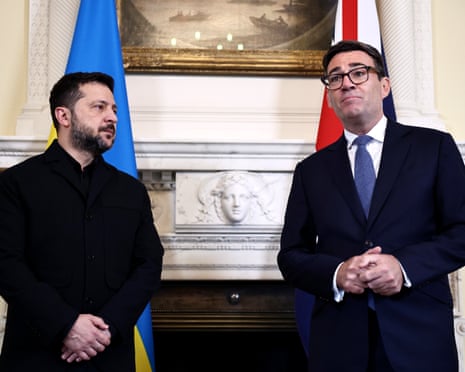 Ukraine President Volodymyr Zelenskyy met Andy Burnham in London. Photograph: Henry Nicholls/Reuters Pool/AP
theguardian.com
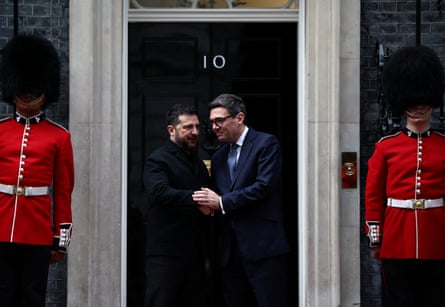 Andy Burnham greeted Ukraine’s president, Volodymyr Zelenskyy, warmly at No 10. Photograph: Henry Nicholls/Reuters
theguardian.com
 Getty
Ukraine's military access to the Starlink satellite network stopped working at speeds above 100mph overnight, without explanation — a threshold that rendered most of the drones Kyiv uses to strike behind Russian lines inoperable. Volodymyr Zelensky, in London to meet the British prime minister, was asked on television whether the cutoff was deliberate and whether he felt betrayed by Donald Trump. "Really, yes … but it's a little bit more complicated than just my emotions or my feelings," he replied. "It's a pity that we are losing, we are losing a strong partner" — one that has now, in his account, picked the other side after more than four years of war.
The restriction also disabled the interceptors that have been most effective against the jet-powered attack drones Russia bombs Kyiv with. "I am sure they knew what they did, absolutely," Zelensky told Piers Morgan. "Because it was 1am at night, Starlink was blocked by SpaceX and the United States." The decision, he said, will bring "a lot of human losses … of course, people will die."
Elon Musk said on X that Starlink cannot be used for offensive military actions, that the service is limited to civilian and defensive use, and that the restrictions come from the American government rather than from him. The distinction matters less than it looks: the network is built by his SpaceX and managed by the United States government.
For a second night, Russia launched ballistic missiles at Ukraine without the advance warnings Washington had supplied for years. Trump denied that intelligence sharing had been cut; Zelensky said his military advisers had received threats that it could be limited. The American president has demanded that Ukraine stop striking Russian oil refineries, which he blames for the price of diesel — an account most analysts assign instead to the closure of the Strait of Hormuz after the American and Israeli attack on Iran. Zelensky denies that Ukraine has struck Russian energy infrastructure at all; his adviser Dmytro Lytvyn said Wednesday's targets were a data centre and another unnamed one. Kremlin spokesman Dmitry Peskov told journalists that Russia does not understand the terms of the energy ceasefire it is supposed to be observing while bombing Ukrainian power plants. Putin, Zelensky said, is laughing over the diesel deal — for him, a simple victory.
Answering calls from Trump and Musk to step down, Zelensky said elections cannot be held while drones swarm the country, and that the soldiers who gave their lives must vote first. Hours before receiving him in Downing Street, Andy Burnham promised MPs that the Ukrainian president "would not leave empty-handed", and said he had tasked officials with drawing up further sanctions and options for speeding up military aid. Zelensky also met King Charles at Buckingham Palace.
"We are behind you and that will not change," Burnham told him. Ukraine's strike drones were grounded overnight, at one in the morning, without explanation.