
Kazakhstan seeks Antwerp-Bruges port partnership for Middle Corridor trade
Caspian route volumes up 58 percent as transit times drop from 80 days to 40-60, the Belgian port sent no representative to the Astana business council
Images
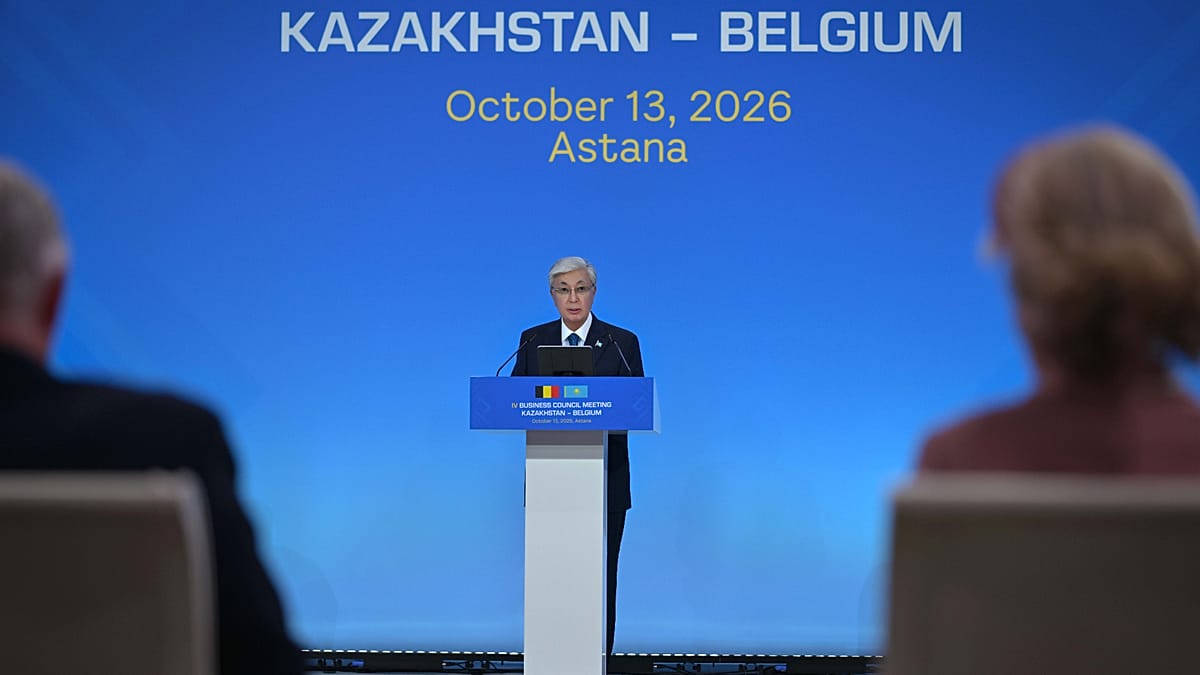 Kazakhstan seeks Belgium partnership to boost Middle Corridor trade
euronews.com
Kazakhstan seeks Belgium partnership to boost Middle Corridor trade
euronews.com
Kazakhstan used the first state visit by Belgium's King Philippe and Queen Mathilde to propose linking the Port of Antwerp-Bruges with its Caspian ports of Aktau and Kuryk, President Kassym-Jomart Tokayev told a Belgium-Kazakhstan business council in Astana. The Middle Corridor moved around 44,000 TEUs in the first eight months of 2026, up 58 percent on the same period a year earlier, according to the national railway Kazakhstan Temir Zholy.
The route — formally the Trans-Caspian International Transport Route — connects China with Europe through Kazakhstan, the Caspian Sea and the South Caucasus, offering an alternative to traditional east-west corridors. Kazakhstan is investing in railways, roads, seaports and terminals along it, with Tokayev targeting 10 million tonnes of freight. He called Belgium's experience as a major European logistics centre particularly valuable, wanting wider markets for Kazakh metals, petrochemicals and agricultural products, and King Philippe voiced support for tying the route into European ports, railways and logistics hubs. Belgium is already among Kazakhstan's ten largest investors, with more than 15 billion dollars committed over the past two decades. Nurlan Zhakupov, who heads the sovereign wealth fund Samruk-Kazyna, said talks with the Belgian port are underway — and kept the framing sober: the corridor 'has to make economic sense and deliver an economic benefit', though he thinks concrete results are not far off.
The economics are decided at borders. As many as 15 different companies and authorities can touch a single shipment travelling from Europe to Kazakhstan, and Dave van den Bos of Ahlers Logistics says digitisation matters more than infrastructure: even with capacity in place, a container waits at the frontier for someone to give a green light or a stamp, and infrastructure is easier to fix than paperwork. Transit times have fallen from roughly 80 days to 40-60, with Caspian weather and port congestion still forcing delays.
The Port of Antwerp-Bruges sent no representative to the business council.