
Meloni calls Trump's Russian diesel deal very risky and a legitimisation for Moscow
Premier tells parliament the purchase weakens the sanctions lever built to push Putin to negotiate, Salvini counters that Italy cannot keep sending billions as gifts
Images
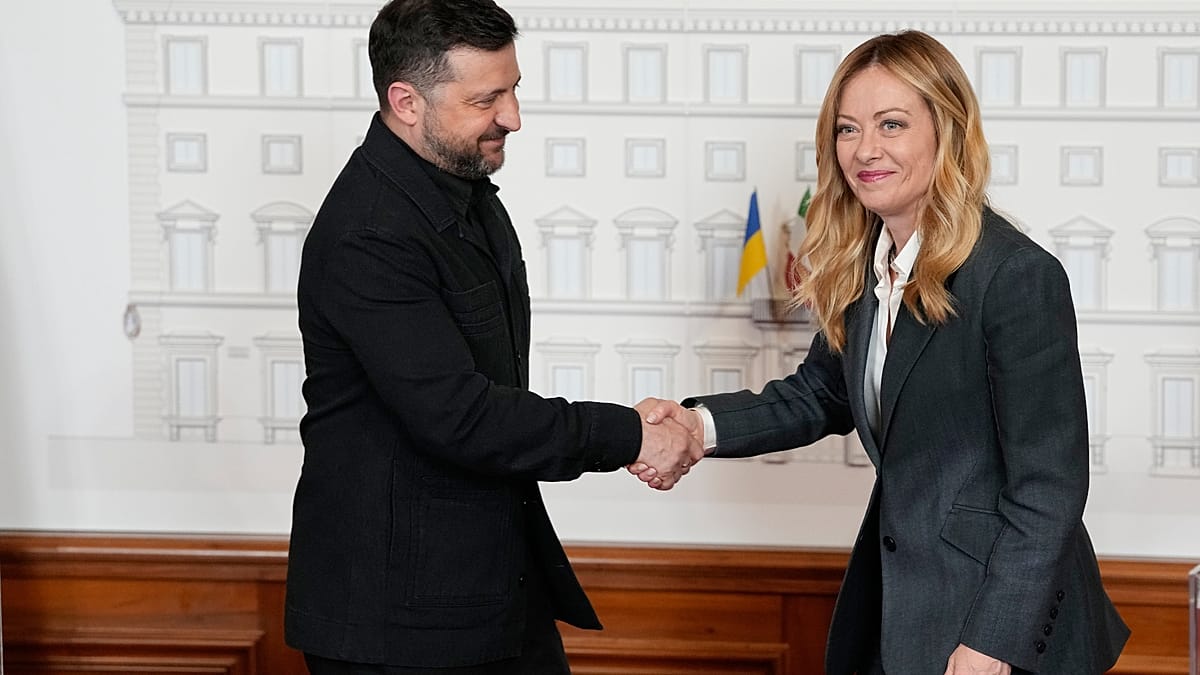 Meloni says Trump’s 'risky' Russian diesel deal legitimises Moscow
euronews.com
Meloni says Trump’s 'risky' Russian diesel deal legitimises Moscow
euronews.com
Giorgia Meloni has called Donald Trump's deal to buy Russian diesel "a very risky choice" and "a legitimisation for Moscow while its bombs are still falling on Ukrainian cities". The Italian prime minister made the remarks to parliament in Rome on Wednesday, before travelling to Brussels for a European Council summit.
The warning matters because of who delivers it. Meloni has been among Trump's closest allies in Europe, and the criticism now comes from inside his own camp. She told MPs the purchase implies "a weakening of the sanctions lever" — pressure built, she pointed out, in part by the United States itself to push Vladimir Putin to sit down at the negotiating table. Putin, she said, "is provoking Europe because he needs to divert attention from how the conflict is going and is looking for a new enemy".
Volodymyr Zelenskyy, visiting London the same day, thanked Meloni "for understanding who the aggressor is" and said it was "painful that President Trump chooses a different side" — an implicit reference to the alleged lack of cooperation from the US Starlink satellite network on data about incoming Russian missiles during the latest waves of attacks.
At home the coalition is split. Deputy prime minister Matteo Salvini told a press briefing in the European Parliament that Italy "cannot go on indefinitely sending billions, not as loans but as gifts" to Ukraine, and noted that other EU states, including Belgium and Spain, "are buying energy and gas from Russia". Euronews records that the EU itself paid €7.9 billion for Russian Arctic LNG amid record imports.
Meloni also took aim at the larger capitals. If France, Germany and Britain, in their E3 format, "believe they can do better on their own than all together", she said, they should at least act "on behalf of everyone and with an official mandate from all". She called on the Twenty-Seven to agree on a respected figure, mandated by all, to carry Europe's voice to the negotiating table.
The diesel purchase fits a wider pattern. France has pushed to strike the oligarch Alisher Usmanov from the EU sanctions list as part of an exchange for two French citizens held in Azerbaijan — a move Latvia blocked at the last minute. Each exception becomes a precedent the next buyer can cite.
Moscow's reply to the Italian prime minister was brief. Foreign ministry spokeswoman Maria Zakharova told Italian media that the matter was "none of her business".