
Cocaine seizures in Europe up 471 percent in a decade
Guardian investigation maps Latin American cartel presence in at least 12 countries, PCC reported in 16 including Sweden
Images
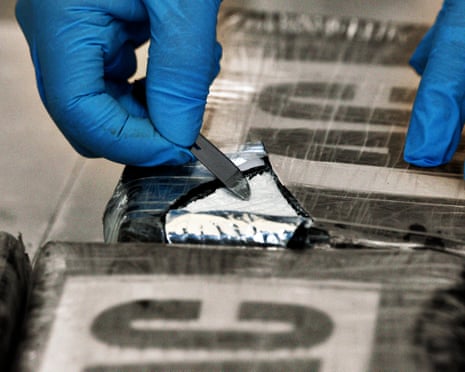 A member of the Honduran narcotics directorate (DLCN) tests a package of cocaine before 2.5 tonnes of the drug are burnt in Tegucigalpa earlier this month. Photograph: Orlando Sierra/AFP/Getty Images
theguardian.com
A member of the Honduran narcotics directorate (DLCN) tests a package of cocaine before 2.5 tonnes of the drug are burnt in Tegucigalpa earlier this month. Photograph: Orlando Sierra/AFP/Getty Images
theguardian.com
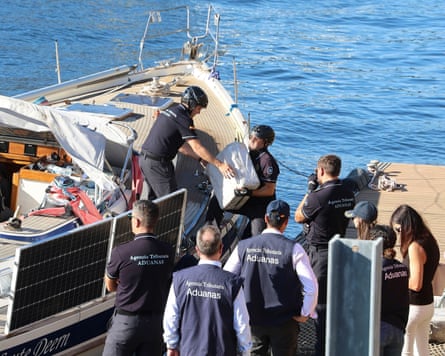 Spanish customs officials in Vigo, Galicia, unload bundles of cocaine from a sailing boat that was seized with more than 2,000kg of the drug last month. Photograph: Salvador Sas/EPA
theguardian.com
Spanish customs officials in Vigo, Galicia, unload bundles of cocaine from a sailing boat that was seized with more than 2,000kg of the drug last month. Photograph: Salvador Sas/EPA
theguardian.com
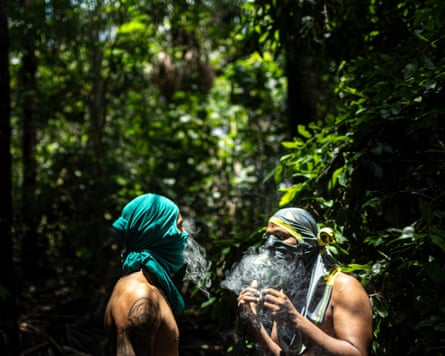 Drug traffickers near Boa Vista, in Brazil’s northern state of Roraima, in 2024. The First Capital Command (PCC) is South America’s largest criminal group. Photograph: Washington Post/Getty
theguardian.com
Drug traffickers near Boa Vista, in Brazil’s northern state of Roraima, in 2024. The First Capital Command (PCC) is South America’s largest criminal group. Photograph: Washington Post/Getty
theguardian.com
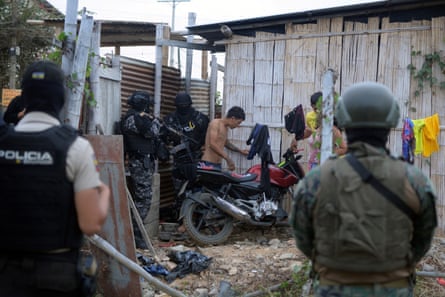 Soldiers and police raid a house seized by drug traffickers in Duran, Ecuador, in 2024. The country has become a key trafficking route for drugs. Photograph: Gerardo Menoscal/AFP/Getty
theguardian.com
Soldiers and police raid a house seized by drug traffickers in Duran, Ecuador, in 2024. The country has become a key trafficking route for drugs. Photograph: Gerardo Menoscal/AFP/Getty
theguardian.com
Cocaine seizures in Europe rose 471 percent between 2014 and 2024, and a four-month Guardian investigation links the surge directly to Latin American criminal networks building a permanent presence on the continent — cartels and factions now active in at least 12 European countries, with Brazil's Primeiro Comando da Capital reported to operate in 16.
The investigation drew on databases, police and intelligence agencies, and interviews with judges, prosecutors and experts from eight countries. The identified groups include Mexico's Sinaloa cartel and Jalisco New Generation cartel, Colombia's Clan del Golfo, the ELN guerrillas and dissident FARC factions, Brazil's PCC and Comando Vermelho, Venezuela's Tren de Aragua, and the US-originated Barrio 18 and MS-13. The count covers only groups officially identified through police operations, transnational investigations and ongoing court cases — not gangs that work through "joint ventures" with European mafias without a physical presence of their own.
The presence is most prominent in Spain, Portugal, the Netherlands, Belgium and France, with activities also noted in Germany, Romania, Croatia, Slovakia and Bulgaria. The PCC, now Brazil's biggest criminal group, is reported by the São Paulo public prosecutor's office — in an unpublished report partly based on data from the Brazilian intelligence agency Abin, reviewed by the Guardian — to operate in the UK, Ireland, Iceland, Serbia, Sweden, Switzerland and Turkey, among 16 countries in total.
"There is something new happening with a presence of Latin American groups in geographies where there's no pre-existing infrastructure," said Daniel Brombacher, director of the Europe Observatory at the Global Initiative Against Transnational Organized Crime. "This phenomenon is no longer limited to the traditional gateway countries." Latin American groups are appearing along the Balkan route in Romania and Bulgaria, and national authorities and experts suggest the list of countries may be longer than currently documented. More laboratories processing cocaine derivatives have been dismantled in Europe over the decade, and last month Spanish customs in Vigo unloaded more than 2,000kg of cocaine from a seized sailing boat.
Colombian organisations such as the Cali and Medellín cartels have held footholds in Galicia since at least the 1980s. The Mexican-run methamphetamine laboratories uncovered recently were in southern France, north-eastern Poland and Brandenburg, south of Berlin.