
Saudi Arabia strikes oil depot near Sanaa
Biggest attack yet on Houthi energy infrastructure follows airport raid that killed 13, rebels answer by declaring Aramco facilities in Riyadh legitimate targets
Images
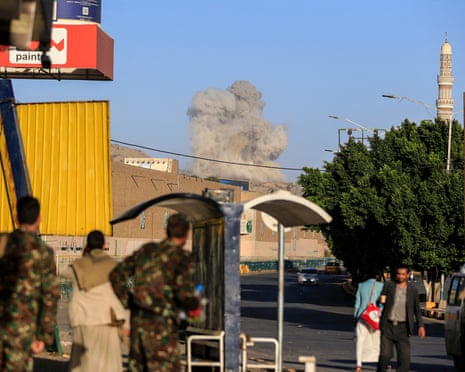 A plume of smoke rises during a reported airstrike by the Saudi-led coalition on the Houthi-controlled Yemeni capital Sana’a, on 9 October, 2026. Photograph: AFP/Getty Images
theguardian.com
A plume of smoke rises during a reported airstrike by the Saudi-led coalition on the Houthi-controlled Yemeni capital Sana’a, on 9 October, 2026. Photograph: AFP/Getty Images
theguardian.com
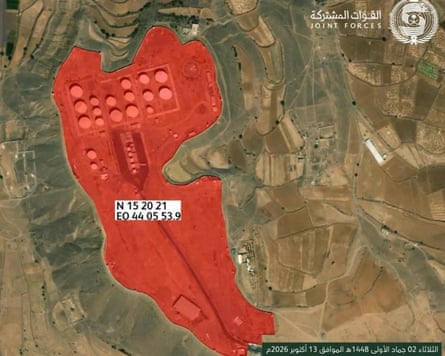 A map released by the Joint Forces Command of the Coalition shows the targeted site of the Yemeni Oil Company and Al-Sabaha Central Station in Sana'a. Photograph: @CJFCS.
theguardian.com
A map released by the Joint Forces Command of the Coalition shows the targeted site of the Yemeni Oil Company and Al-Sabaha Central Station in Sana'a. Photograph: @CJFCS.
theguardian.com
Saudi Arabia has struck the Central Sabaha Station oil depot on the western outskirts of Sanaa, in what is described as the biggest attack so far on Houthi energy infrastructure. The raid came days after a Houthi attack on King Khalid international airport in Riyadh killed 13 people and injured 300, leaving Saudi Arabia's main air hub closed until Saturday at the earliest. Before Tuesday's attack, a Saudi spokesperson warned civilians to leave the target area.
The strikes reached well beyond the capital. Houthi oil depots at Ras Isa port in Hodeidah, a facility Israeli strikes had already hit in 2024, came under attack in ten separate waves, apparently aimed at immobilising Houthi forces as they push south towards Taiz, where the rebels are now close enough to the city edges to fire rockets into residential areas. The coalition also bombed what it believes was a Houthi leadership hideout in the Razih border district of Saada governorate in northern Yemen.
A Houthi spokesperson responded by telling all employees and citizens near any Aramco facility in Riyadh to evacuate, declaring the sites legitimate targets. Saudi Arabia holds complete air dominance over Yemen; the Houthis answer with drones and missiles that increasingly get through. Baraa Shiban, a Yemen specialist at the defence thinktank Royal United Services Institute, told the Guardian that Houthi drones now fly lower and smaller than earlier models, and are cheap enough that it takes only a few getting through to be effective.
Donald Trump said the Houthis were 'behaving very badly' and that he would 'never forget' their attacks, which he suggested were an attempt to influence next month's US midterm elections. He announced no new military action. The current phase of the conflict began after the Houthis seized key areas along the Bab el-Mandeb strait, the critical waterway at the southern end of the Red Sea through which Gulf oil passes.
The Yemeni Oil Company said its storage facilities in Sanaa were empty at the time of the strike.