
Trump threatens Iran with annihilation at UN
US envoys meet Iranian officials on sidelines in New York, Tehran links Hormuz reopening to end of blockade
Images
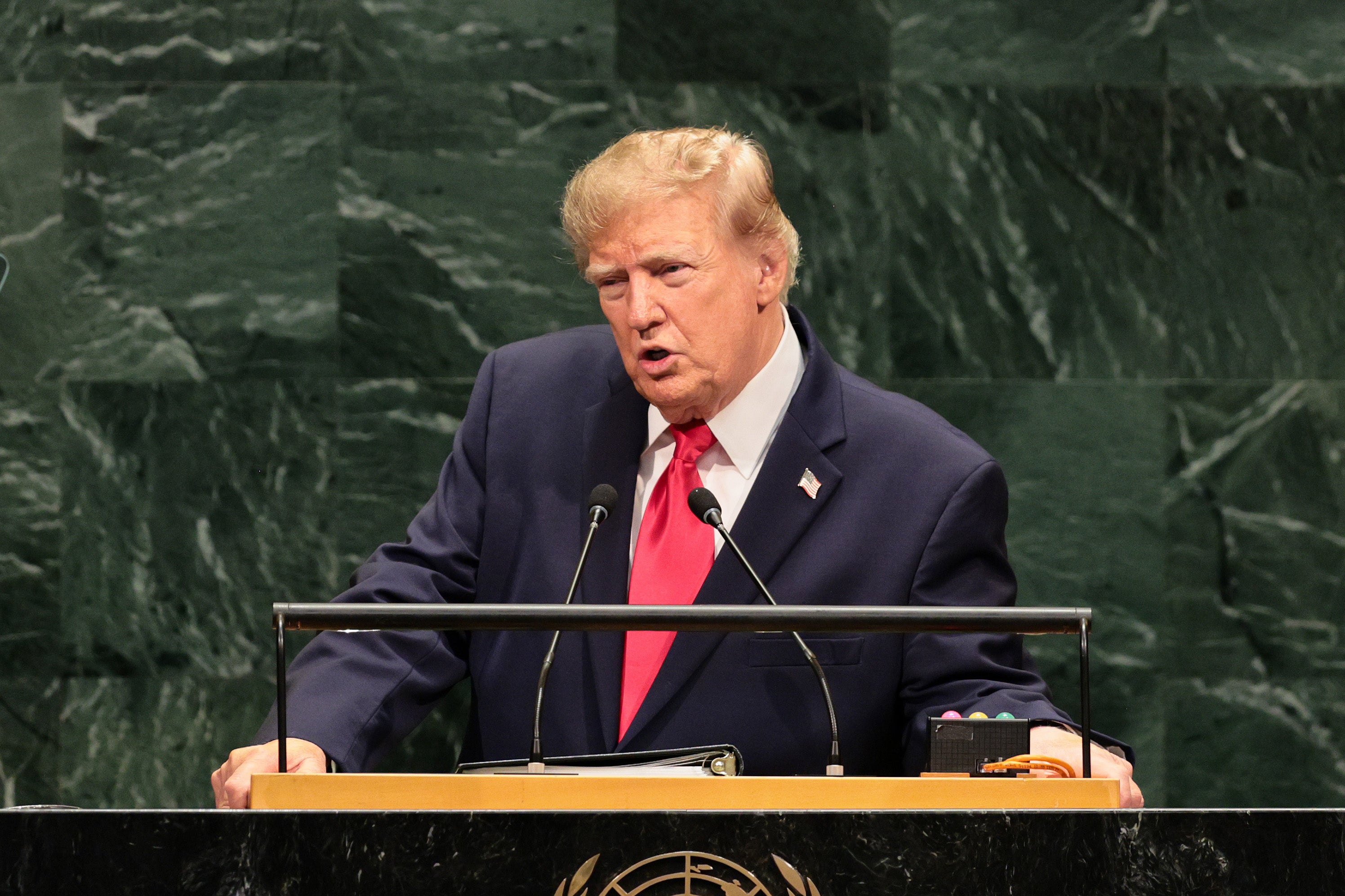 US President Donald Trump gives a speech at the United Nations General Assembly in New York City on Tuesday (Getty Images)
Getty Images
US President Donald Trump gives a speech at the United Nations General Assembly in New York City on Tuesday (Getty Images)
Getty Images
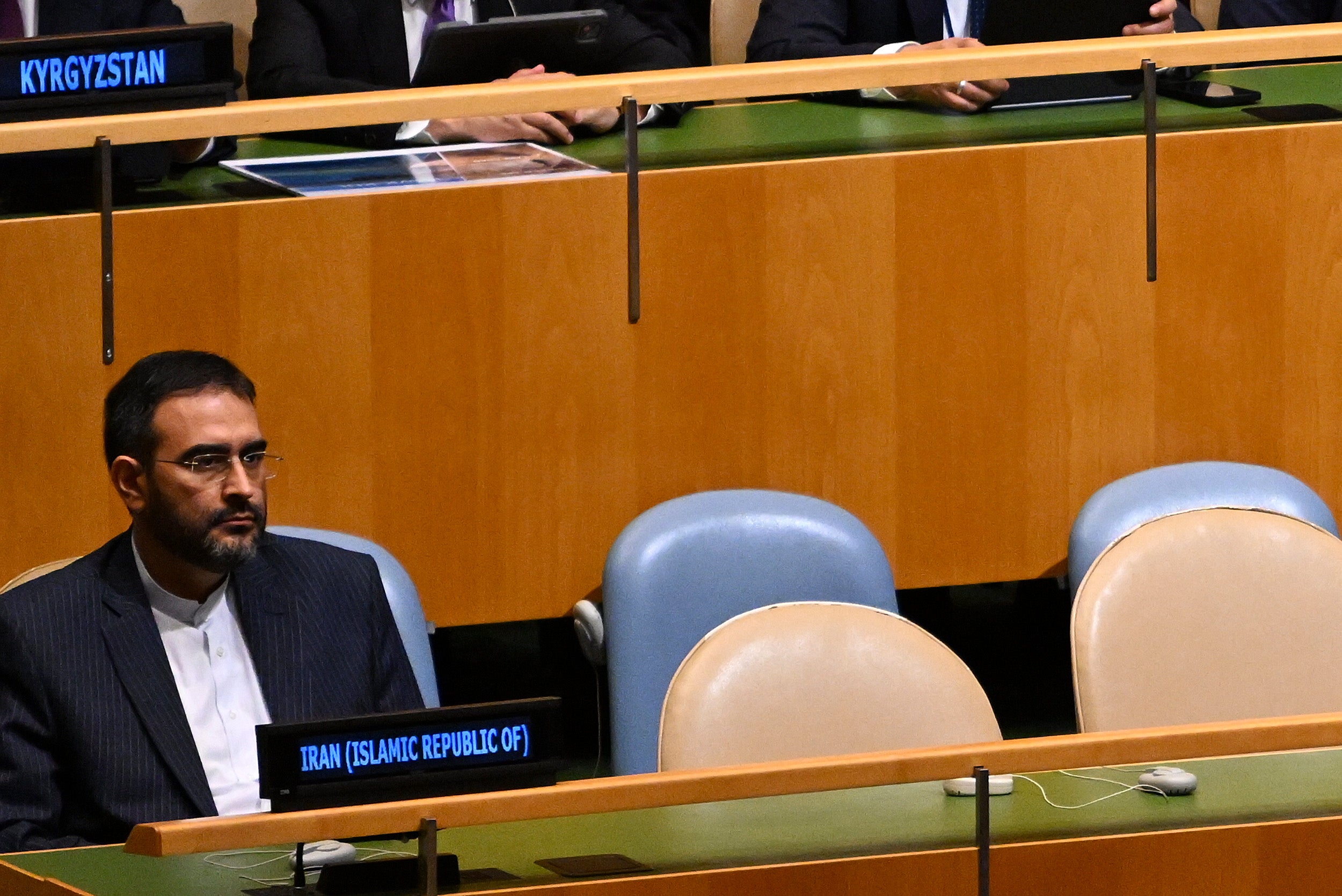 Empty seats in the Iran delegation are seen as Trump gives his speech (Getty Images)
Getty Images
Empty seats in the Iran delegation are seen as Trump gives his speech (Getty Images)
Getty Images
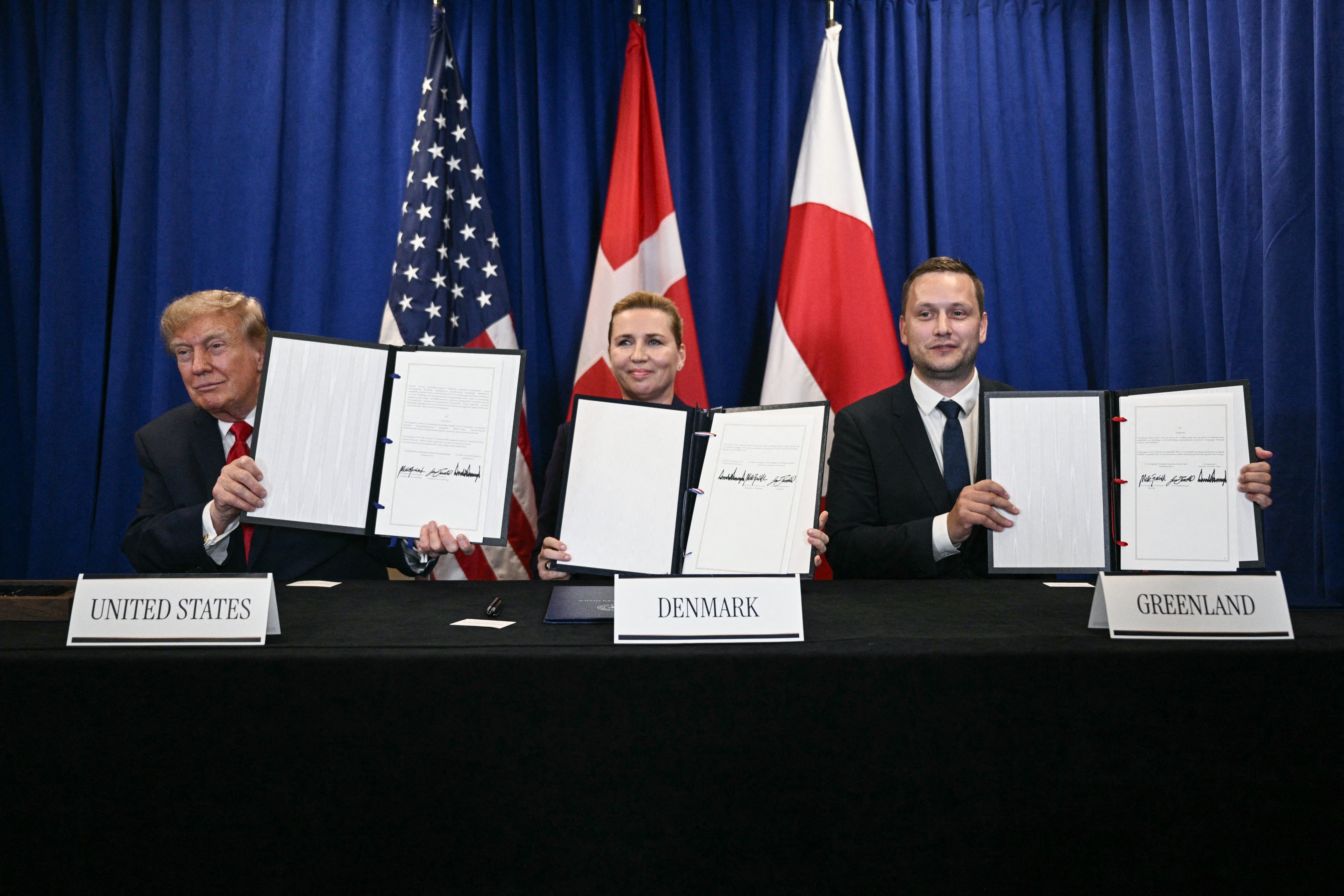 Trump, Denmark's Prime Minister Mette Frederiksen and Greenland's Prime Minister Jens-Frederik Nielsen sign a trilateral security deal on the sidelines of the UN General Assembly (AFP via Getty Images)
AFP via Getty Images
Trump, Denmark's Prime Minister Mette Frederiksen and Greenland's Prime Minister Jens-Frederik Nielsen sign a trilateral security deal on the sidelines of the UN General Assembly (AFP via Getty Images)
AFP via Getty Images
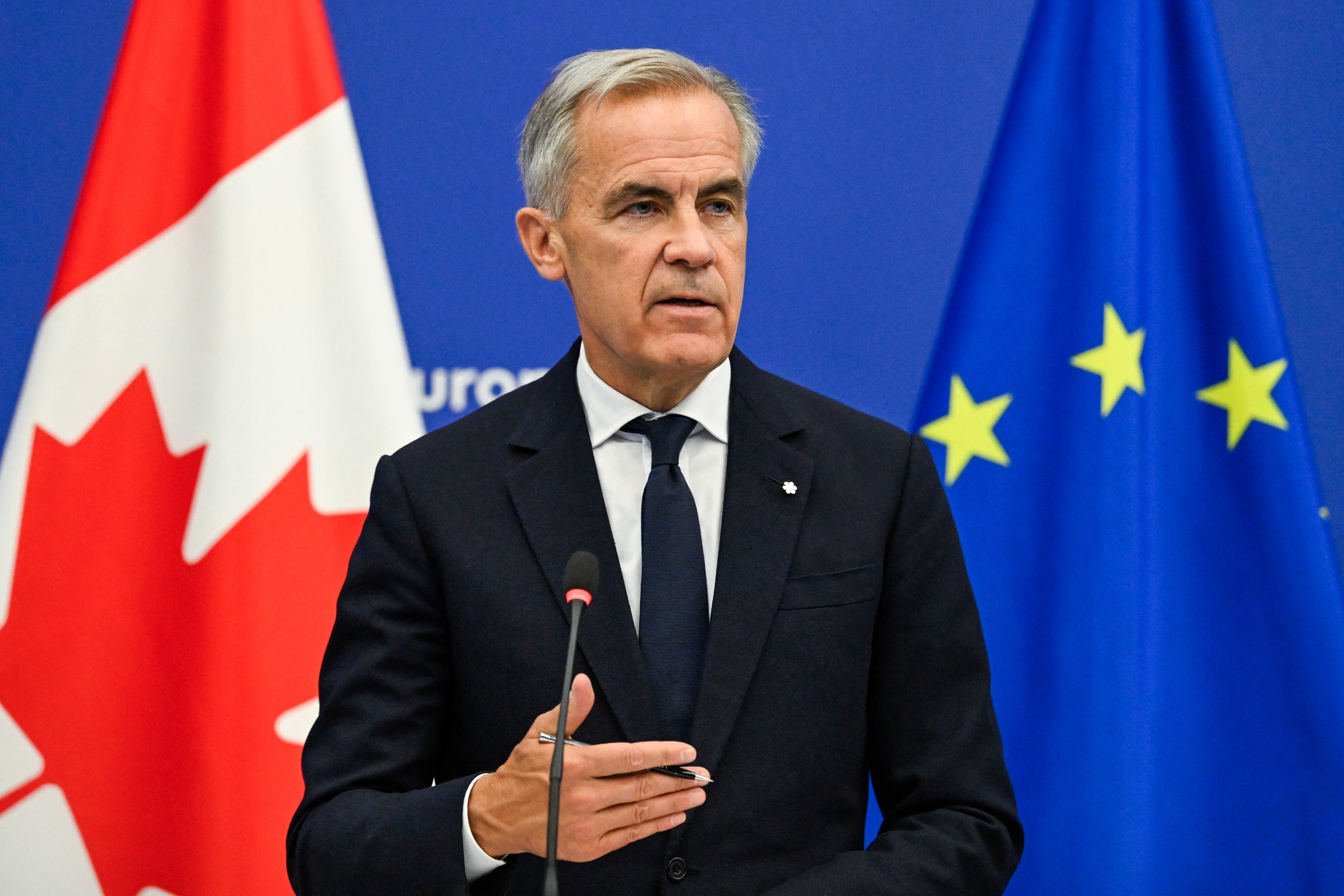 Canadian Prime Minister Mark Carney delivers a speech in the hemicycle of the European Parliament in Strasbourg, France, on September 17 (AFP via Getty Images)
AFP via Getty Images
Canadian Prime Minister Mark Carney delivers a speech in the hemicycle of the European Parliament in Strasbourg, France, on September 17 (AFP via Getty Images)
AFP via Getty Images
 independent.co.uk
Trump used the UN rostrum to threaten Iran with “annihilation” on Tuesday, then said US envoys Jared Kushner and Steve Witkoff held a three-hour meeting with Iranian officials on the sidelines in New York. The Independent reports the Iranian delegation walked out during the speech, even as Trump later described the talks as “very good”. A senior Iranian official told Reuters that Tehran would reopen the Strait of Hormuz within seven days if the US lifts military pressure and its blockade on Iranian ports.
The episode compresses two different channels of diplomacy into a single day: public threats aimed at domestic and allied audiences, and private meetings aimed at testing what concessions are actually on offer. The practical lever is not the rhetoric but the shipping lane. When Hormuz is treated as a switch that can be turned on and off, the immediate costs show up in insurance, freight availability, and the willingness of shipowners to take bookings—effects that can bite faster than sanctions legislation. Iran’s offer is framed as a timeline and a condition: seven days, but only after reduced pressure and an end to port restrictions, a sequencing problem that leaves both sides demanding proof first.
The Independent’s live coverage also folds in the war’s leadership aftershocks, stating that Ayatollah Ali Khamenei was killed when the US and Israel began striking Iran months ago and that Mojtaba Khamenei replaced him. That claim, presented as background, underscores how much of the negotiation now runs through a government whose internal legitimacy and external deterrence are both being tested at once. Exiled crown prince Reza Pahlavi, speaking to Fox News, used the moment to argue there can be no peace under the current regime, a reminder that every escalation creates a parallel market for would-be successors.
For Washington, the Strait’s status becomes a way to translate military pressure into economic pressure without having to win a naval battle: if traffic slows, prices move, and allies call. For Tehran, the same geography offers a way to impose costs on others while bargaining for relief at home, particularly when port access and fuel pricing are part of the domestic political equation. That is why a meeting described as “productive” can coexist with language about driving an adversary “into hell”: the private ask is for concrete steps, while the public line is designed to keep room for reversal.
After the UN speech, Trump attended a reception at the Lotte Palace Hotel in Manhattan and again framed the choice as a deal or rapid destruction of the Islamic Republic. Iran’s stated offer remained the same: reopen Hormuz within a week, but only if the blockade and military pressure are lifted first.