
Trump threatens Iran in UN speech
Iranian delegation walks out during deal-or-annihilation passage, war politics follow him into the hall
Images
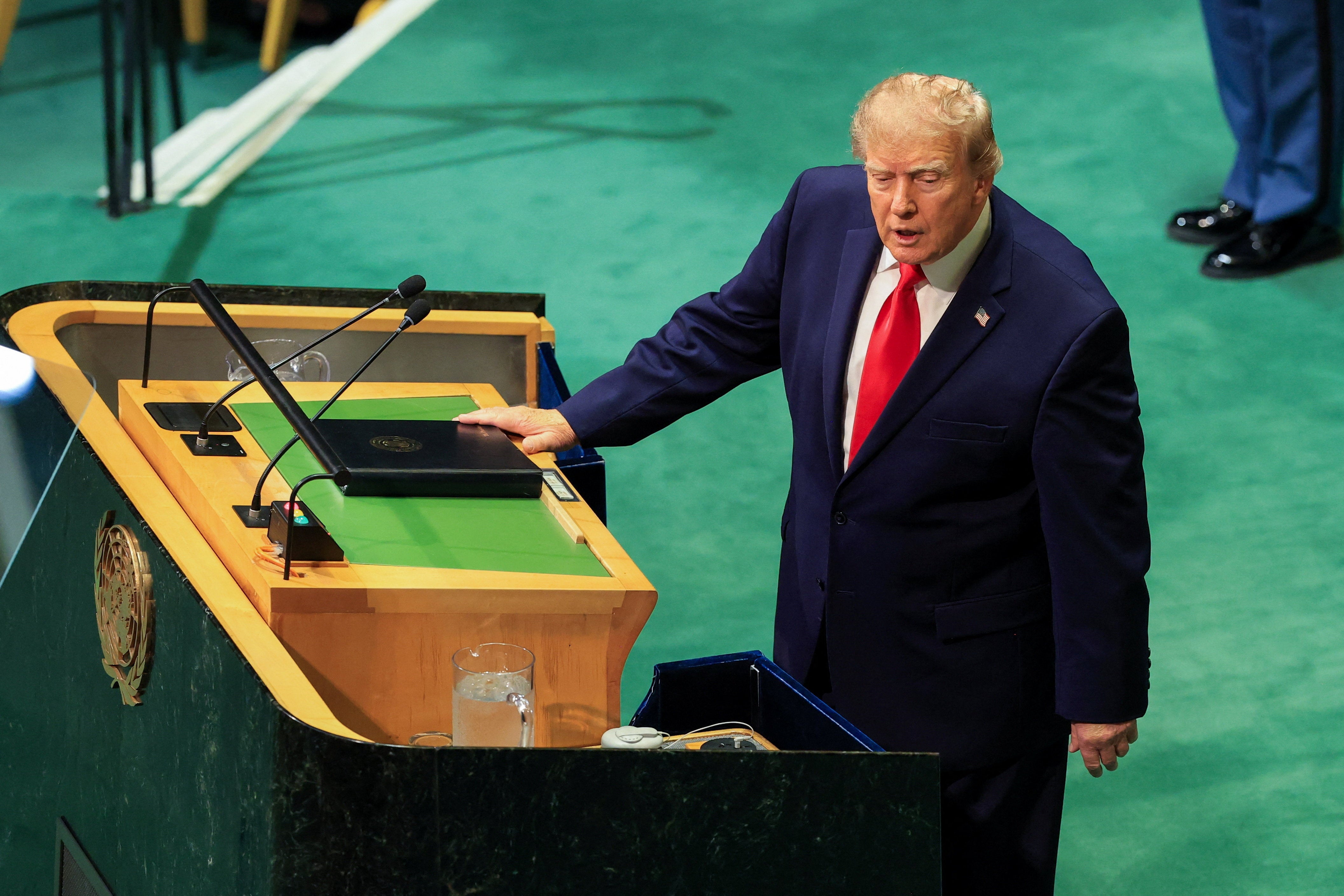 President Donald Trump on Tuesday delivered a speech to the United Nations that sounded more like a State of the Union address (Reuters)
Reuters
President Donald Trump on Tuesday delivered a speech to the United Nations that sounded more like a State of the Union address (Reuters)
Reuters
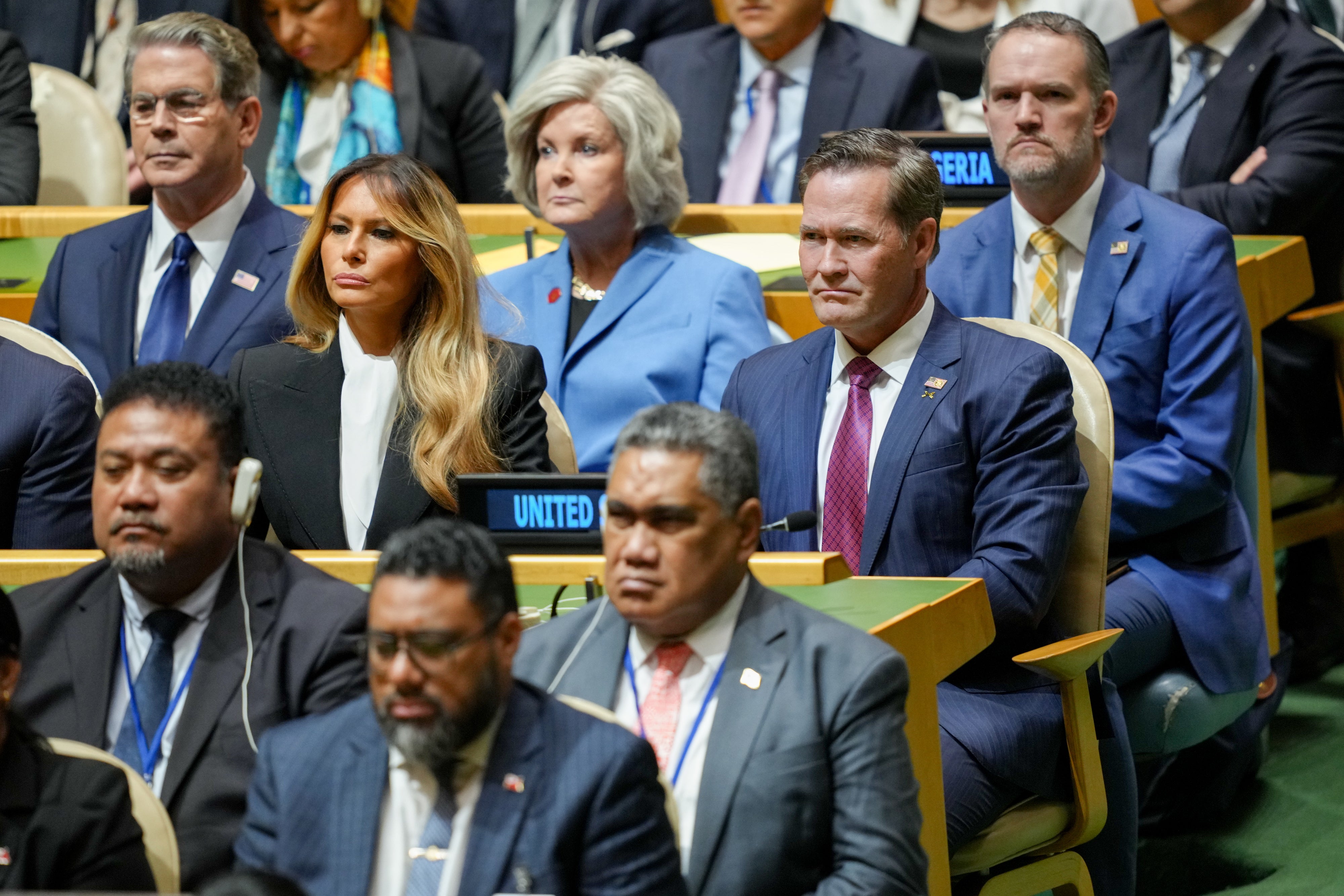 First lady Melania Trump sits next to UN Ambassador Mike Waltz and in front of chief of staff Susie Wiles and Treasury Secretary Scott Bessent as her husband address the General Assembly (Getty)
Getty
First lady Melania Trump sits next to UN Ambassador Mike Waltz and in front of chief of staff Susie Wiles and Treasury Secretary Scott Bessent as her husband address the General Assembly (Getty)
Getty
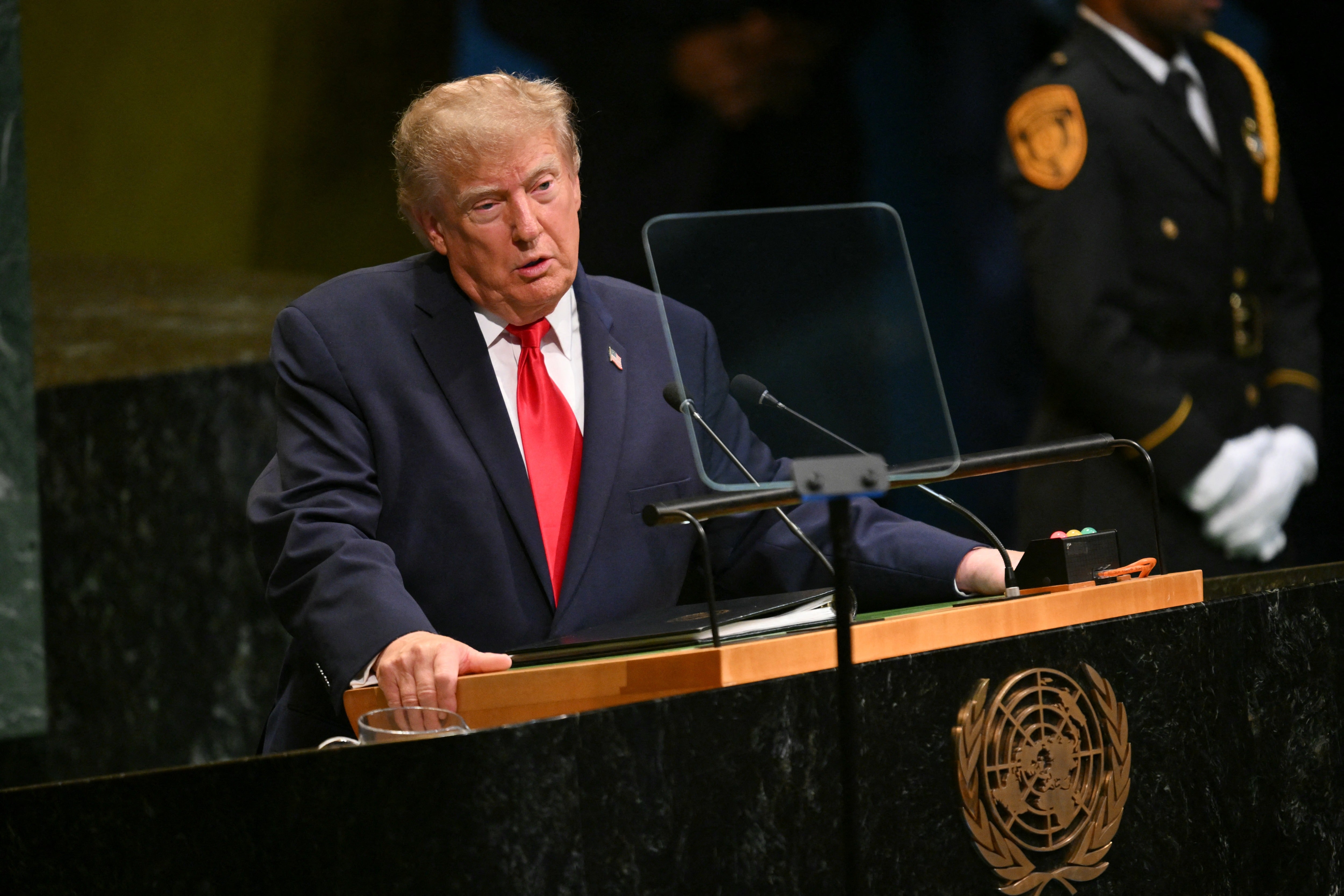 Despite Trump’s boasts to the world body that he and America are at the top of their game, polling shows Trump is at historic lows for public approval of both himself and the war he started in Iran (AFP via Getty Images)
AFP via Getty Images
Despite Trump’s boasts to the world body that he and America are at the top of their game, polling shows Trump is at historic lows for public approval of both himself and the war he started in Iran (AFP via Getty Images)
AFP via Getty Images
Trump threatens Iran at UN General Assembly, Iranian delegation walks out during deal-or-annihilation line, domestic polling weakness shadows foreign-policy theatre
Donald Trump delivered a 40-minute address to the United Nations General Assembly on Tuesday in New York, opening with nearly 10 minutes on US domestic conditions and stock markets, according to The Independent. The speech escalated when Trump presented Iran with a choice between making a deal and “annihilat[ing] the Islamic Republic,” prompting Iran’s delegation to walk out.
The Independent describes a set piece that mixed triumphal claims with open-ended threats. Trump called the war launched nearly seven months earlier against Iran an “unprovoked war” and a “massive geo-strategic blunder,” while also portraying it as action that “solv[es] decades of intractable challenges” and “sett[les] years of unfinished business.” He cast Tehran’s nuclear program as a danger neglected by predecessors, then framed himself as the leader willing to decide quickly rather than allow risks to “fester.”
The address also folded in other targets. Trump accused Cuba of “coordinating” with left-wing and communist networks in the United States, including the Democratic Socialists of America, and threatened regime change, saying “freedom will be coming to Cuba,” The Independent reports. On technology, he praised artificial intelligence but suggested it should be renamed “Super Intelligence,” a rhetorical flourish that aligns with his administration’s broader posture of treating regulation as suspicion rather than governance.
The staging matters because the UN hall is one of the few venues where US presidents can speak as if they represent a global consensus, even when they do not. The Independent reports the speech came amid sustained political weakness for Trump at home, with polling at the lowest point of his political career and majorities turning against the war he started. The people seated behind him—First Lady Melania Trump, UN Ambassador Mike Waltz, Chief of Staff Susie Wiles and Treasury Secretary Scott Bessent—underscored that the message was aimed as much at domestic audiences and allies as at adversaries.
Diplomacy at the General Assembly typically turns on narrow language: what is promised, what is threatened, and what is left ambiguous. Trump’s formulation—deal or annihilation—compresses that ambiguity into a single headline. It also makes the next steps easier to interpret as either concession or escalation, because the public framing leaves little room for quiet bargaining.
Iran’s delegation did not wait for the closing paragraph. It stood up and left when the “big decision” was described from the podium.