
AMD reaches trillion-dollar valuation
AI data-centre revenue drives rerating, chip boom concentrates value in a few listed winners
Images
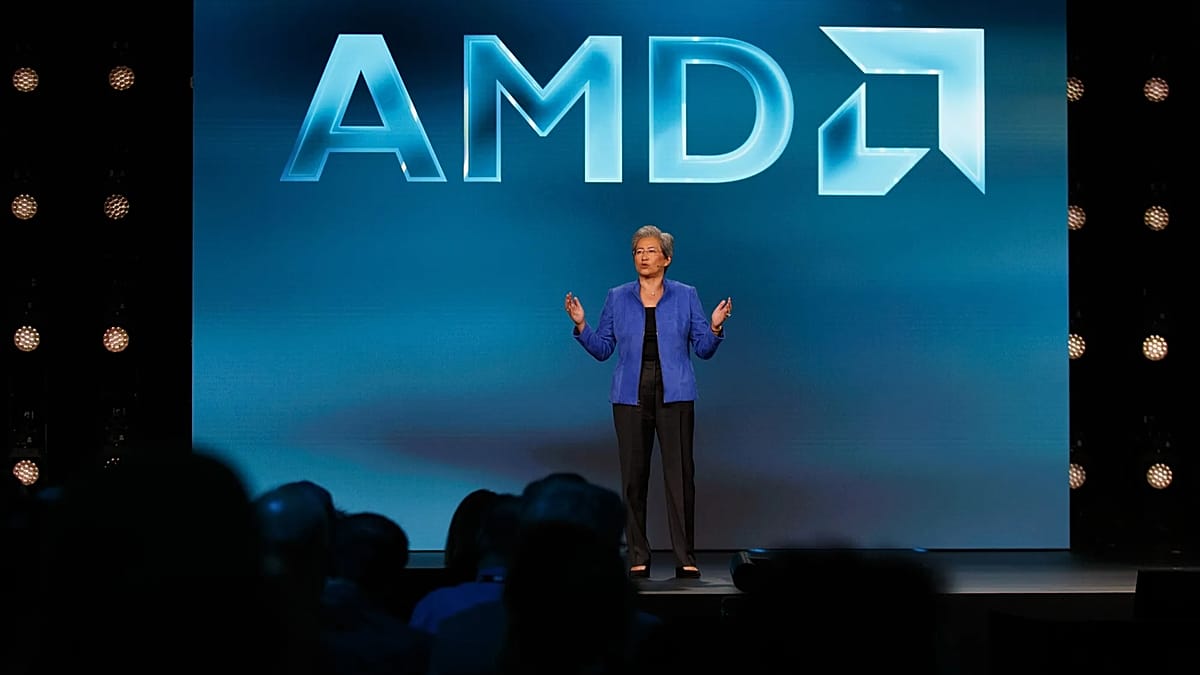 AMD joins trillion-dollar chipmaker club as AI demand surges
euronews.com
AMD joins trillion-dollar chipmaker club as AI demand surges
euronews.com
AMD’s market value crossed the $1 trillion mark this week after a sharp rally tied to artificial-intelligence spending, according to Euronews. The outlet reported the shares were up 9.4% at around 5:10 p.m. CEST on Monday, taking the US chipmaker into a club dominated by far larger peers. The move follows a week in which AMD’s valuation rose by roughly $200 billion.
Euronews frames the surge as another symptom of an AI capex cycle that is now large enough to re-rank the semiconductor industry in public markets. AMD reported a 50% year-on-year increase in second-quarter revenue to $11.5 billion, with growth driven by more than doubling data-centre revenue, and it expects data-centre sales to accelerate in the second half of 2026. Those numbers matter because the market is no longer valuing chip firms primarily on consumer PCs or cyclical handset demand; it is pricing them on whether they can secure a place inside data-centre buildouts that are constrained by power, networking, and access to the biggest customers.
The same report notes AMD has announced ventures with OpenAI and Anthropic, placing it closer to the buyer side of the AI boom than many suppliers that must infer demand from distributors. But the comparison investors keep making is not with Intel-era incumbency; it is with Nvidia, which Euronews describes as the pace-setter and values at roughly $5.5 trillion. That gap illustrates how the AI market is being treated as a winner-takes-most arena where software ecosystems, developer tooling, and supply chains can matter as much as raw silicon performance.
For policymakers and central bankers, the valuation jump is also a reminder that “AI investment” is being expressed through concentrated capital flows into a small set of listed names, while the physical bottlenecks sit elsewhere: grid connections, cooling, and the permitting of new data-centre capacity. When the constraint is electricity and sites rather than venture funding, the marginal dollar can inflate asset prices faster than it expands real-world output.
Euronews’ snapshot ends with a simple asymmetry: AMD has reached $1 trillion on a week of buying, while Nvidia sits several multiples above it—an industry where the benchmark is no longer the last cycle’s leader.