
Typhoon Dujuan kills at least two in Japan
1.6 million urged to evacuate across six prefectures, cleanup work and saturated ground keep landslide risk high
Images
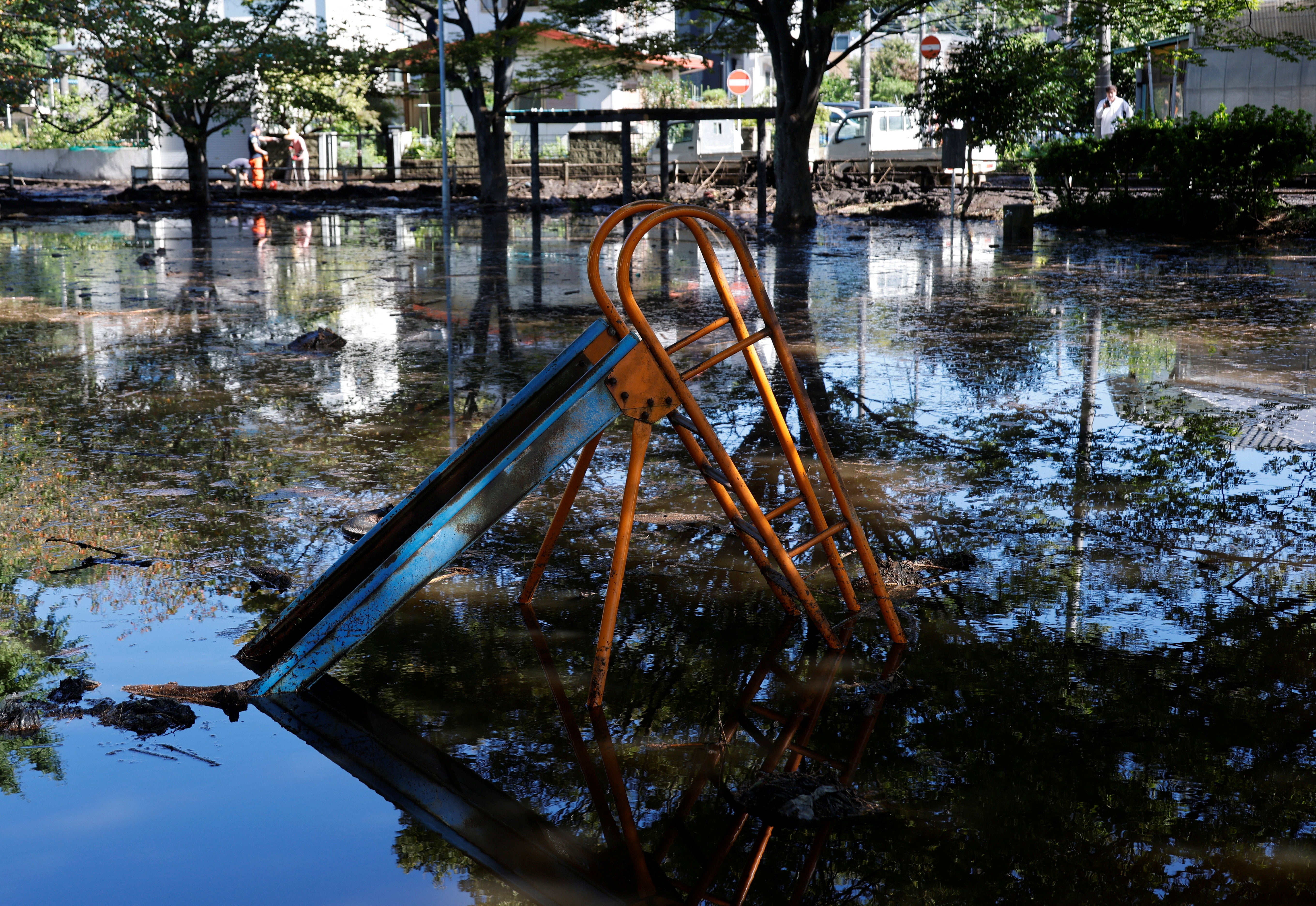 Floodwater covers a children's playground near a house hit by a landslide triggered by Typhoon Dujuan, in Miura on 22 September 2026 (Reuters)
Reuters
Floodwater covers a children's playground near a house hit by a landslide triggered by Typhoon Dujuan, in Miura on 22 September 2026 (Reuters)
Reuters
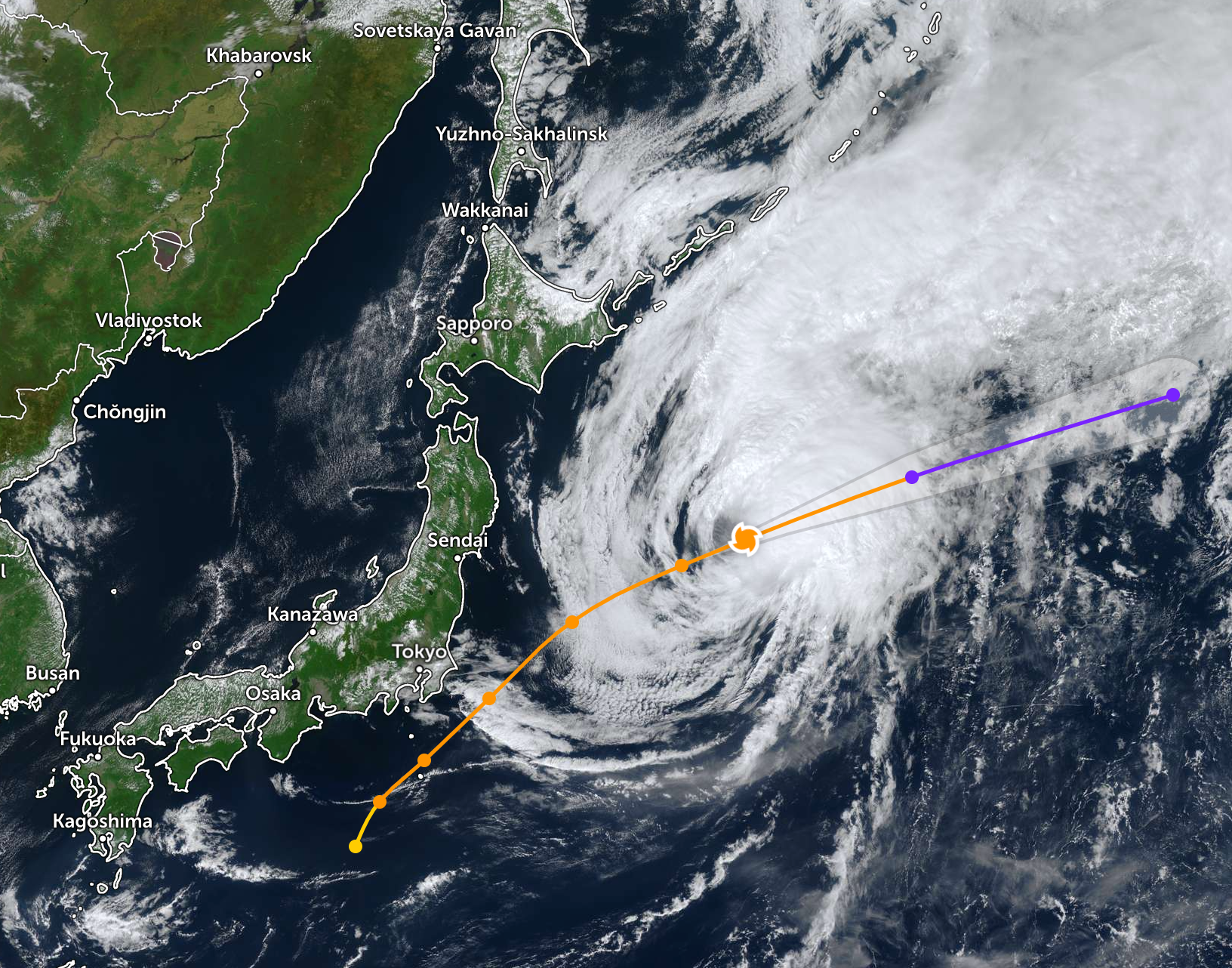 Typhoon Dujuan is seen on Tuesday morning as it heads northeast away from the Japanese mainland (Zoom Earth)
Zoom Earth
Typhoon Dujuan is seen on Tuesday morning as it heads northeast away from the Japanese mainland (Zoom Earth)
Zoom Earth
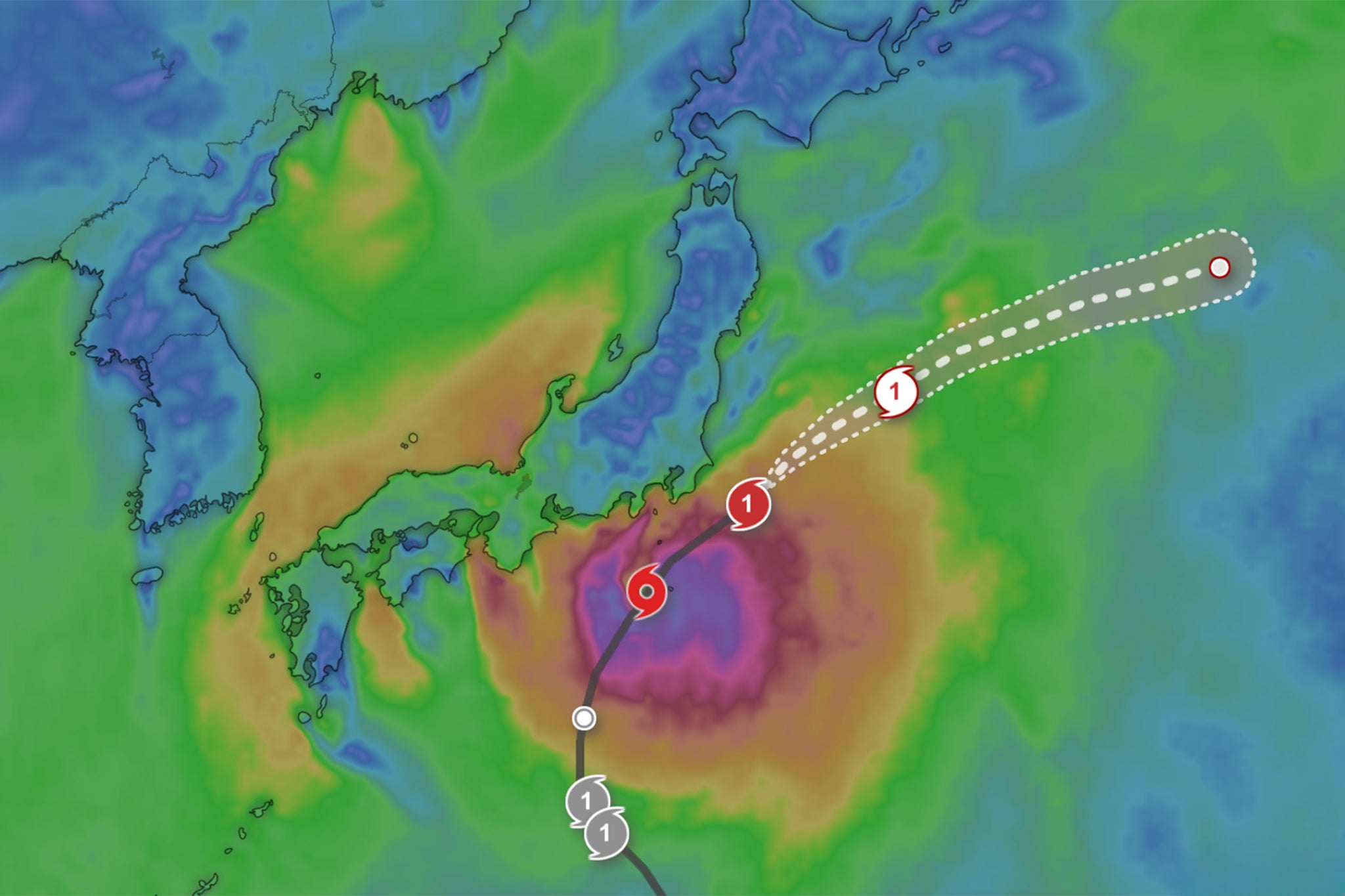 The typhoon brought extreme rainfall to the south of Tokyo before following its expected path away from Japan’s east coast (Windy.com)
Windy.com
The typhoon brought extreme rainfall to the south of Tokyo before following its expected path away from Japan’s east coast (Windy.com)
Windy.com
Typhoon Dujuan swept along Japan’s Pacific coast with winds reported at around 80 mph, leaving at least two people dead and four missing, according to The Independent. Authorities urged roughly 1.6 million residents across six prefectures to evacuate as record rainfall triggered landslides and flooded streets, with transport disruptions rippling through the Tokyo metropolitan area.
The immediate casualties were tied to the work of living in the aftermath. The Independent reports that a woman was found dead in Yokosuka after mud and debris struck her home, while a man in Chiba died after falling into a bamboo grove while operating heavy machinery to clear mud and debris. Police and firefighters were still searching for survivors in Kanagawa prefecture, where landslides crushed homes, while the Japan Meteorological Agency (JMA) warned that saturated ground kept the danger high even as the storm moved northeast away from the mainland.
Dujuan’s track mattered as much as its intensity. The storm skirted the coastline rather than making a direct landfall, yet still produced torrential rain south of Tokyo before moving away, with eight locations logging record-breaking rainfall over 24 hours and one city recording more than 15 inches, The Independent reports. That pattern—extreme rainfall concentrated into short windows—pushes risk into slopes, drainage systems, and older housing stock, then turns cleanup itself into a hazard when heavy machinery and emergency crews work in unstable terrain.
The economic effects were visible in the basics: flights and timetables. Around 400 flights were cancelled or suffered major delays amid turbulent winds, while events were postponed, including an equestrian competition at the Asian Games in central Aichi prefecture, according to The Independent. Evacuation orders on this scale also impose a quieter cost that does not show up in storm images: workplaces closing, families relocating temporarily, and local governments running shelters and emergency communications for days.
By Tuesday morning the JMA had downgraded several warnings, leaving one active landslide warning for Oshima Town in the Izu Islands, but forecasters cautioned that dangerous conditions could continue as rain bands formed over already-soaked ground. Japan counted Dujuan as its 25th typhoon of the year.
The storm had already moved away from the mainland when rescue teams in Kanagawa were still searching through landslide debris in heavy rain.