
US TV networks suspend White House pool coverage
Trump ban blocks CNN from assigned rotation and triggers solidarity boycott, helipad ribbon cutting airs with engine noise instead of remarks
Images
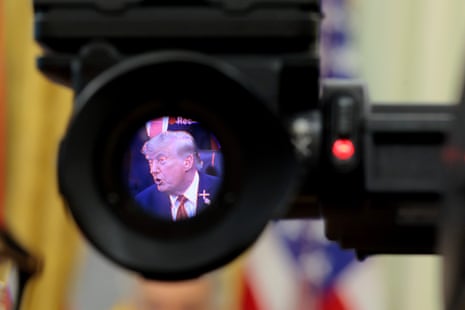 Trump in the viewfinder of a television camera in the Oval Office on Friday. Photograph: Chip Somodevilla/Getty Images
theguardian.com
Trump in the viewfinder of a television camera in the Oval Office on Friday. Photograph: Chip Somodevilla/Getty Images
theguardian.com
Major US TV networks suspend White House pool coverage, solidarity boycott follows Trump ban of CNN Politico and MS Now, presidential feed runs with helicopter noise instead of remarks
Major US television networks have suspended White House pool coverage after the Trump administration barred several outlets from the White House grounds, according to The Guardian. The move left CNN unable to perform its scheduled role as the designated pool broadcaster on Monday, prompting ABC, CBS, Fox News and NBC to refuse to provide pool coverage in solidarity.
The immediate effect was practical rather than symbolic. Viewers who tuned into the White House feed during a midday ribbon-cutting for a new helipad could see the event but could not hear the president’s remarks; the audio carried only the helicopter’s engine, The Guardian reports. The television boycott did not stop information from flowing entirely: the print, radio and wire-service pool continued to file reports that tracked Trump’s movements throughout the day. But it did fracture a long-running arrangement that exists precisely because access is scarce and the costs of continuous coverage are high.
Pool systems are a kind of private coordination mechanism imposed on journalists by physical constraints and security rules. When the White House removes one participant from the rotation, it changes the value of the bargain for the rest: networks are asked to underwrite a shared public service while accepting that membership can be revoked for disfavored reporting. Fox News’s Washington bureau chief Bryan Boughton, serving as the TV pool chair, told members in an email that the pool would not cover events designated as pool coverage of the president starting Monday, according to The Guardian.
Other parts of the press corps widened the protest in ways that target the White House’s own distribution channels. The Washington Post, the New York Times and the Associated Press said they would not publish or distribute images taken by the White House photography pool on Monday until midnight eastern, describing it as a collective effort in support of the banned outlets. The five networks issued a joint statement arguing that the public has a vital interest in accurate, independent information about its government and that no administration should restrict a news organization because it objects to its reporting.
The administration’s stated rationale is familiar: Trump said on Truth Social that the ban was not an assault on the free press but a response to “national security” threats, The Guardian reports. The same justification has recently been invoked for other White House projects, including plans for a triumphal arch and a ballroom. In this case, the ban was announced on Friday, naming CNN, Politico and MS Now as targets; staff from those organizations were denied access on Saturday.
The dispute is now moving from press galleries to court filings. CNN, MS Now and Politico filed a lawsuit on Monday seeking a temporary order to block enforcement of the ban and restore reporters’ passes. For the moment, the White House can still stage events, and the public can still watch them—just not necessarily hear them.