
Ethiopian armed groups form alliance to topple Abiy Ahmed
TPLF joins former enemy Fano and Oromo Liberation Army in seven-group coalition, Pretoria peace terms unravel into multi-front pressure
Images
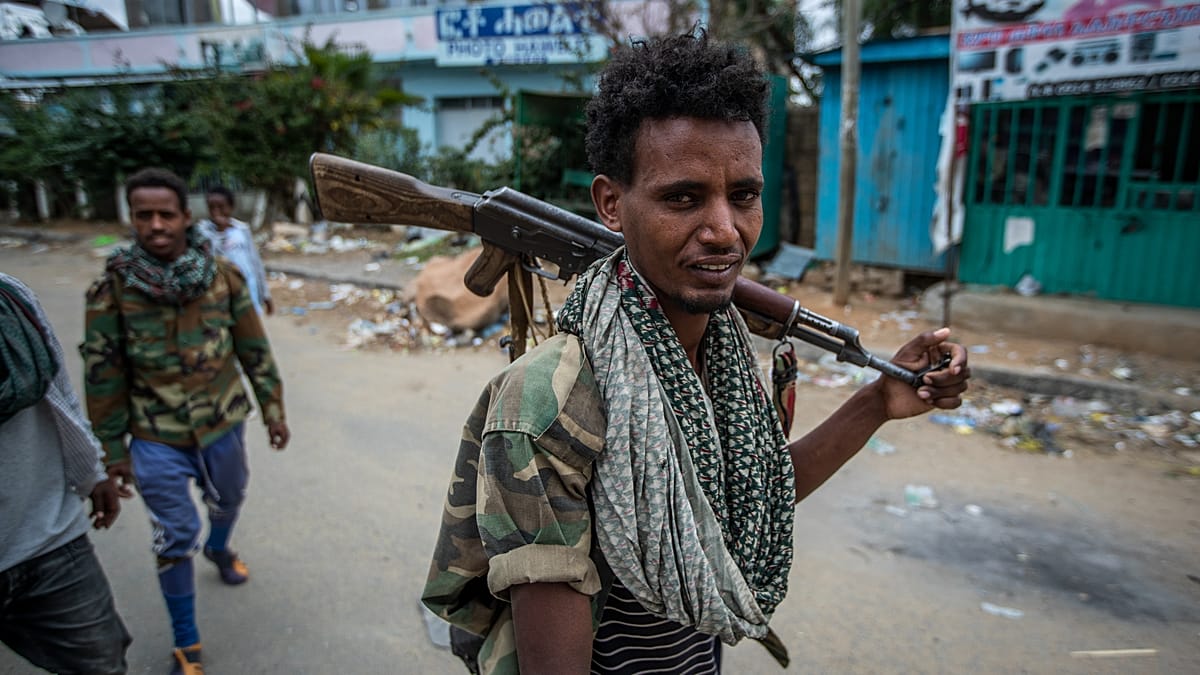 Former enemies form alliance to overthrow Ethiopia's Abiy Ahmed
euronews.com
Former enemies form alliance to overthrow Ethiopia's Abiy Ahmed
euronews.com
Seven armed groups that fought on opposite sides of Ethiopia’s recent civil war have announced a joint alliance aimed at overthrowing Prime Minister Abiy Ahmed and installing a transitional administration. The coalition—named the Ethiopian Peoples’ Forces Alliance for Survival—brings together the Tigray People’s Liberation Front (TPLF), Amhara nationalist Fano militias, and the Oromo Liberation Army (OLA), alongside four other groups from three additional regions, according to Euronews. TPLF vice president Amanuel Assefa said the groups have been coordinating for more than a year, and that Fano leader Zemene Kasse will chair the alliance.
The announcement formalises a convergence that has been visible in fragments since the post-war settlement began to fray: armed movements that once treated each other as existential enemies now share a short-term objective of stretching federal power across multiple fronts. During the Tigray war, Fano militias fought alongside federal forces against the TPLF; the OLA has fought the federal government in Oromia since 2018 and has been designated a terrorist organisation by Addis Ababa. Euronews notes that both the Ethiopian government and the TPLF have massed troops near Tigray’s border in recent months, a build-up the African Union has flagged as raising fears of renewed war. The Pretoria Agreement signed in November 2022 was meant to end the two-year conflict and required the TPLF to demobilise and refrain from military mobilisation, but the group did not demobilise and later reinstated its pre-war regional council, effectively voiding key terms.
The alliance also puts unresolved territorial and political disputes under the same roof. Control of Western Tigray—administered by Amhara nationalists since the end of the war—remains a flashpoint between Tigrayan and Amhara forces, even as they now present a shared command structure on paper. Amanuel Assefa said the groups would later seek peaceful solutions to their problems, but the immediate logic of cooperation is military: forcing the federal government to respond in several regions at once. Kjetil Tronvoll of Oslo New University College told Euronews he doubts the alliance can overthrow the federal government outright, pointing to the government’s drone capabilities, while acknowledging that coordinated operations could still impose significant strain.
The timing lands amid fresh violence elsewhere in the country. Doctors Without Borders said at least 12 people were killed and dozens injured in clashes in the Gambella region near the South Sudan border, an area hosting more than 400,000 refugees, mostly South Sudanese, with MSF teams treating an influx of wounded patients at Kule health centre. Ethiopia’s conflicts are no longer neatly separable by region; they overlap through displacement, contested administration, and armed groups that shift from local grievances to national ambitions when an opening appears.
The coalition’s chairmanship, Euronews reports, will be held by a Fano leader who only recently fought as an auxiliary of the federal state. The same government that won a peace deal in Pretoria is again watching troops mass on the roads leading back to Tigray.