
United Russia wins Duma supermajority after election
New parliament includes 49 Ukraine war veterans, opposition party Yabloko barred from running
Images
 United Russia, the party led by Vladimir Putin before his presidency, won 355 of 450 Duma seats. Photograph: Vyacheslav Prokofyev/Pool Sputnik Kremlin/AP
theguardian.com
United Russia, the party led by Vladimir Putin before his presidency, won 355 of 450 Duma seats. Photograph: Vyacheslav Prokofyev/Pool Sputnik Kremlin/AP
theguardian.com
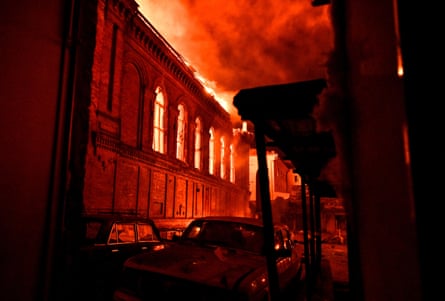 As Russia counted the votes from its widely criticised election, Kremlin forces attacked targets in Ukraine, damaging the historic Zaporizhzhia National University. Photograph: Ukrinform/Shutterstock
theguardian.com
As Russia counted the votes from its widely criticised election, Kremlin forces attacked targets in Ukraine, damaging the historic Zaporizhzhia National University. Photograph: Ukrinform/Shutterstock
theguardian.com
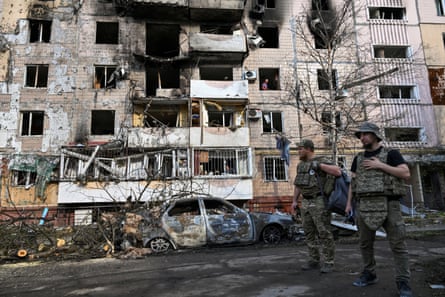 Aftermath of a Russian drone attack in Zaporizhzhia. Photograph: Reuters
theguardian.com
Aftermath of a Russian drone attack in Zaporizhzhia. Photograph: Reuters
theguardian.com
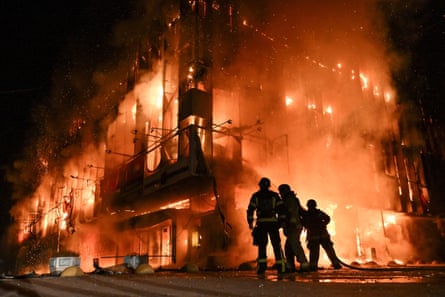 A shopping centre, struck during Russia’s drone attack on in Zaporizhzhia. Photograph: Reuters/Stringer
theguardian.com
A shopping centre, struck during Russia’s drone attack on in Zaporizhzhia. Photograph: Reuters/Stringer
theguardian.com
Russia’s ruling United Russia party has secured 355 of the Duma’s 450 seats in the first parliamentary election held since Vladimir Putin launched the full-scale invasion of Ukraine in 2022, according to The Guardian. The new parliament will include 49 deputies who have participated in the war, a cohort the Kremlin is presenting as a political asset rather than a temporary mobilisation. Western governments have condemned voting held in Russian-occupied parts of Ukraine as illegitimate.
The scale of the supermajority matters less for day-to-day legislation—where the Kremlin already sets the agenda—than for what it signals about staffing and succession. War veterans entering parliament give the state a new layer of loyalists whose public standing is tied to the continuation of the campaign and to the benefits that flow from it. The Guardian reports that United Russia’s general secretary Vladimir Yakushev initially suggested a higher figure for veterans elected before revising it down, a small illustration of how the war’s symbolism is being managed in real time.
The election also narrowed the space for dissent by administrative means. Russia’s supreme court banned Yabloko, an opposition party that opposes the war, from participating, leaving liberal voters without an obvious ballot-box channel for protest, according to The Guardian. Other parties that won seats—the Communist Party, the LDPR and New People—are described as supporting the “special military operation”, turning pluralism into a distribution of roles inside a single policy line.
Outside Russia, the vote feeds directly into Europe’s sanctions-and-recognition calculus. The EU’s top diplomat Kaja Kallas called the election a setback for Russian democracy and said dissent had been silenced and international election monitors excluded, The Guardian reports. Inside Ukraine, the election weekend coincided with continued attacks: the paper says Russian strikes damaged Zaporizhzhia National University as votes were being counted, while Ukraine carried out deep strikes on targets including Moscow’s oil refinery. The war is not paused for domestic political theatre; it is used to justify it.
Speculation about further mobilisation hangs over the result. The Guardian notes talk that Putin could announce a large call-up in autumn, and cites Ukrainian President Volodymyr Zelenskyy suggesting the Kremlin aims to recruit hundreds of thousands more troops. A parliament increasingly populated by veterans is structurally better placed to sell that step at home, and less likely to question the costs.
United Russia’s seat count is a number that can be printed on a results graphic. The more concrete change is that dozens of men who fought in Ukraine now have desks in the Duma.