
Ukraine launches weekend drone wave toward Russia
Russia answers with strikes on Zaporizhzhia and other regions, Moldova closes airspace as jamming blurs attribution
Images
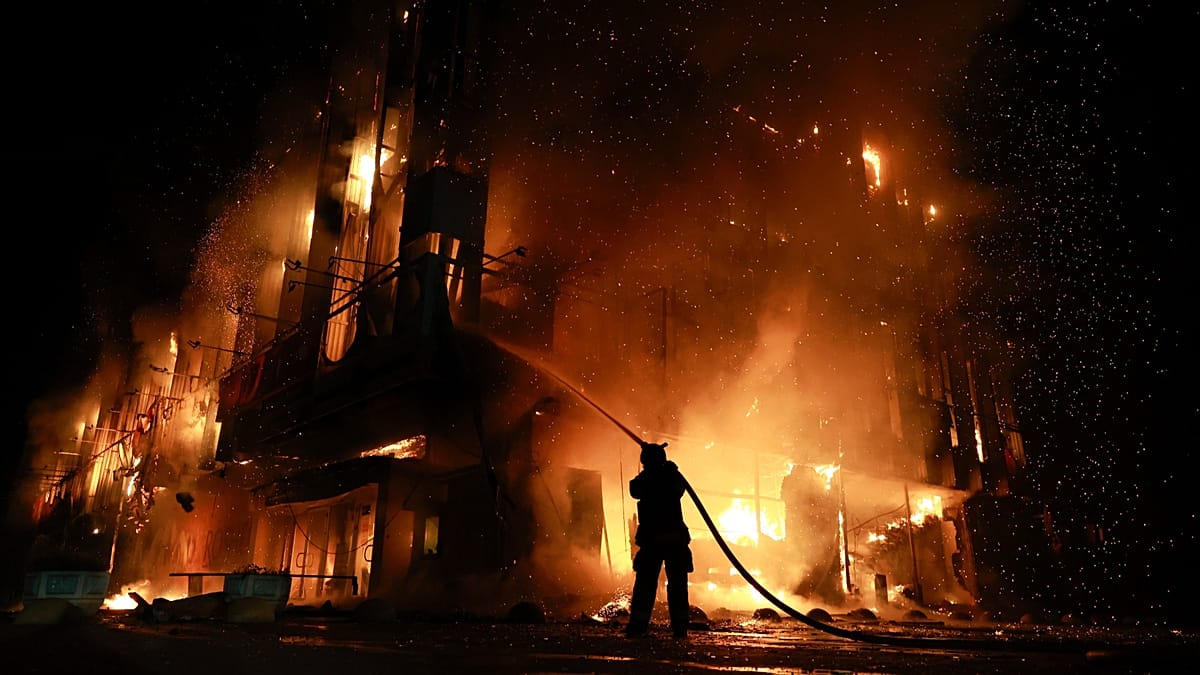 Russian drones slam southern Ukraine after Kyiv's weekend barrage
euronews.com
Russian drones slam southern Ukraine after Kyiv's weekend barrage
euronews.com
More than 1,000 Ukrainian drones were launched toward Russia over a single weekend, according to Euronews, followed hours later by Russian strikes on the southern Ukrainian city of Zaporizhzhia that hit apartment blocks, a university and a shopping mall. Ukrainian President Volodymyr Zelenskyy said five people were wounded in the overnight attack, while Russia said it was targeting logistics hubs, warehouses and ports. Moscow’s Defence Ministry claimed its air defences downed 244 Ukrainian drones over Russian regions and the Black Sea, and Ukraine’s air force said it shot down or suppressed 148 Russian drones.
The numbers are contested and come from opposing militaries, but the direction of travel is clear: both sides are pushing volume. Drones have become the cheapest way to impose continuous costs—forcing air-defence units to stay on alert, consuming interceptors, and turning civilian airspace into a recurring risk zone. The spillover is already measurable outside the battlefield. Moldova’s Defence Ministry said it temporarily closed part of its northern airspace after an “aerial object” entered shortly after midnight, adding to recent weeks in which drone debris has been found on Moldovan territory.
Moldovan officials have often blamed Moscow for airspace violations, and President Maia Sandu has condemned Russia’s war; earlier this month she said the conflict was reaching Moldova’s border after strikes along the frontier with Ukraine. Yet the same Euronews report notes that electronic jamming can send drones off course, leaving it unclear whether objects crossing into Moldova are Russian or Ukrainian. That ambiguity matters because it turns each incident into a political choice as much as a technical assessment: close airspace, issue warnings, assign blame—or keep flights moving and accept the risk.
The weekend barrage also underlines how the war’s centre of gravity is shifting toward systems that can be produced and launched at scale. A large drone wave is not only an attempt to hit targets; it is also a test of how many tracks a defender can handle before something gets through, and how long a society tolerates repeated disruptions. Russia’s response—striking multiple regions and framing targets as logistics—signals its own effort to degrade Ukraine’s ability to sustain long-range attacks.
Diplomacy is running in parallel but not ahead of events. Zelenskyy said he expects to meet US President Donald Trump at the UN General Assembly in New York; Russian President Vladimir Putin is not scheduled to attend. European leaders want to pressure Putin to withdraw, but the reporting notes no indication from Moscow of abandoning its goals.
Over one night, Moldova closed airspace for an unidentified object, while Russia and Ukraine each published tallies of drones shot down that were large enough to be their own news cycle.