
Patrick Clancy speaks on 60 Minutes after Lindsay Clancy mistrial
Online conspiracy claims collide with postpartum psychosis defence, unresolved verdict leaves a vacuum for content
Images
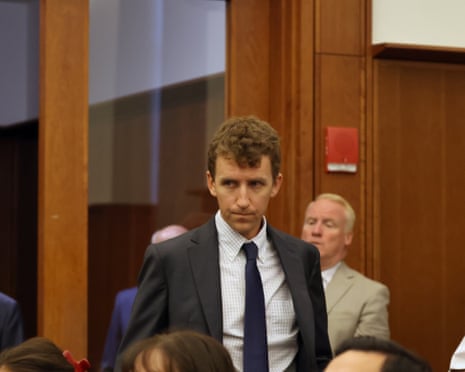 Patrick Clancy enters the courtroom during the murder trial of his ex-wife, Lindsay Clancy, in Massachusetts. Photograph: David L Ryan/Pool The Boston Globe/AP
theguardian.com
Patrick Clancy enters the courtroom during the murder trial of his ex-wife, Lindsay Clancy, in Massachusetts. Photograph: David L Ryan/Pool The Boston Globe/AP
theguardian.com
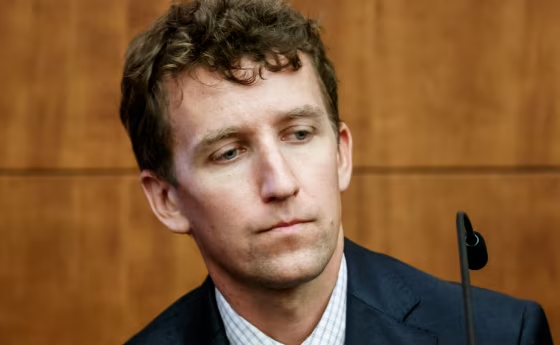 Patrick Clancy on the stand.
nbcnews.com
Patrick Clancy on the stand.
nbcnews.com
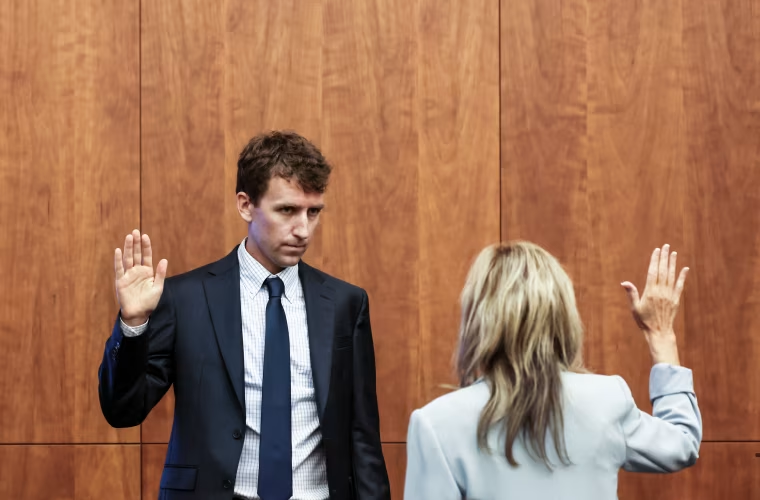 Patrick Clancy is sworn in at Plymouth Superior Court in Plymouth, Ma., on July 29, 2026.David L. Ryan / The Boston Globe via Getty Images file
nbcnews.com
Patrick Clancy is sworn in at Plymouth Superior Court in Plymouth, Ma., on July 29, 2026.David L. Ryan / The Boston Globe via Getty Images file
nbcnews.com
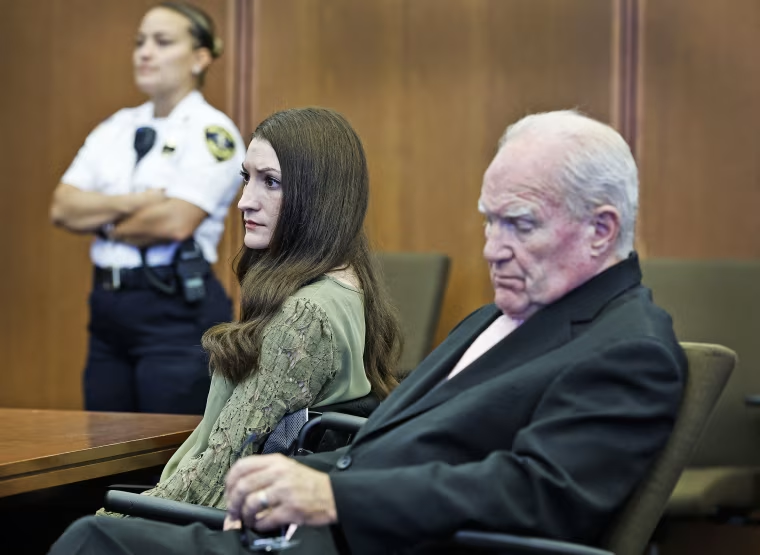 Lindsay Clancy and her attorney Kevin Reddington listen as the judge declares a mistrial in her murder trial in Plymouth, Mass., on Sept. 4. Greg Derr / Pool AFP via Getty Images file
nbcnews.com
Lindsay Clancy and her attorney Kevin Reddington listen as the judge declares a mistrial in her murder trial in Plymouth, Mass., on Sept. 4. Greg Derr / Pool AFP via Getty Images file
nbcnews.com
Patrick Clancy gives first TV interview after mistrial, 60 Minutes revisits Massachusetts child killings and online conspiracy claims, family tragedy becomes content supply chain
Patrick Clancy’s first televised interview since a mistrial in the case against his ex-wife Lindsay Clancy aired on CBS’s 60 Minutes, bringing a private family catastrophe back into national circulation. According to The Guardian, he described the hours surrounding the 2023 killings of their three children and the aftermath, including the online accusations and conspiracy theories that have targeted him. NBC News reports that the trial ended with a split jury and a mistrial declared earlier this month, and that prosecutors are still considering whether to retry the case.
The interview sits at the intersection of criminal justice, mental health, and the modern attention economy. Both The Guardian and NBC describe how the defense argued Lindsay Clancy was suffering from postpartum psychosis, while prosecutors argued she knew what she was doing; the deadlock left the legal system without a verdict that could settle public narratives. Into that vacuum moved a parallel court: social media, where Clancy says repeated claims about his alleged responsibility have spread and persisted, and where he argues the noise has become “a huge distraction” from perinatal mental health.
The details reported are stark and specific, and they explain why the story keeps being repackaged. NBC recounts Clancy returning home to find his ex-wife injured after an apparent suicide attempt and then finding the children with exercise bands around their necks; he later spent days at a hospital with the youngest child before the child died. The Guardian reports that Clancy has forgiven his ex-wife and rejects tabloid-style labels that reduce the case to a villain archetype. That combination—graphic facts, unresolved legal outcome, and a morally complicated framing—creates the conditions for recurring media cycles: each new procedural step, lawsuit, or interview becomes a new “chapter” that can be sold as clarity.
There is also money and liability in the background. Both outlets report that medical malpractice lawsuits have been filed by both parents against doctors and hospitals involved in Lindsay Clancy’s care, shifting part of the dispute from criminal responsibility to institutional decision-making. That adds another set of incentives for carefully curated public messaging, even when participants insist the goal is awareness rather than vindication.
The interview aired as prosecutors weigh their next move, but the case is already being retried elsewhere—by headlines, clips, and comment threads that will outlast any single court date.