
ICE agent shoots man in Austin
City says local police were not present and details remain preliminary, mayor calls for independent investigation as courts tighten arrest rules
Images
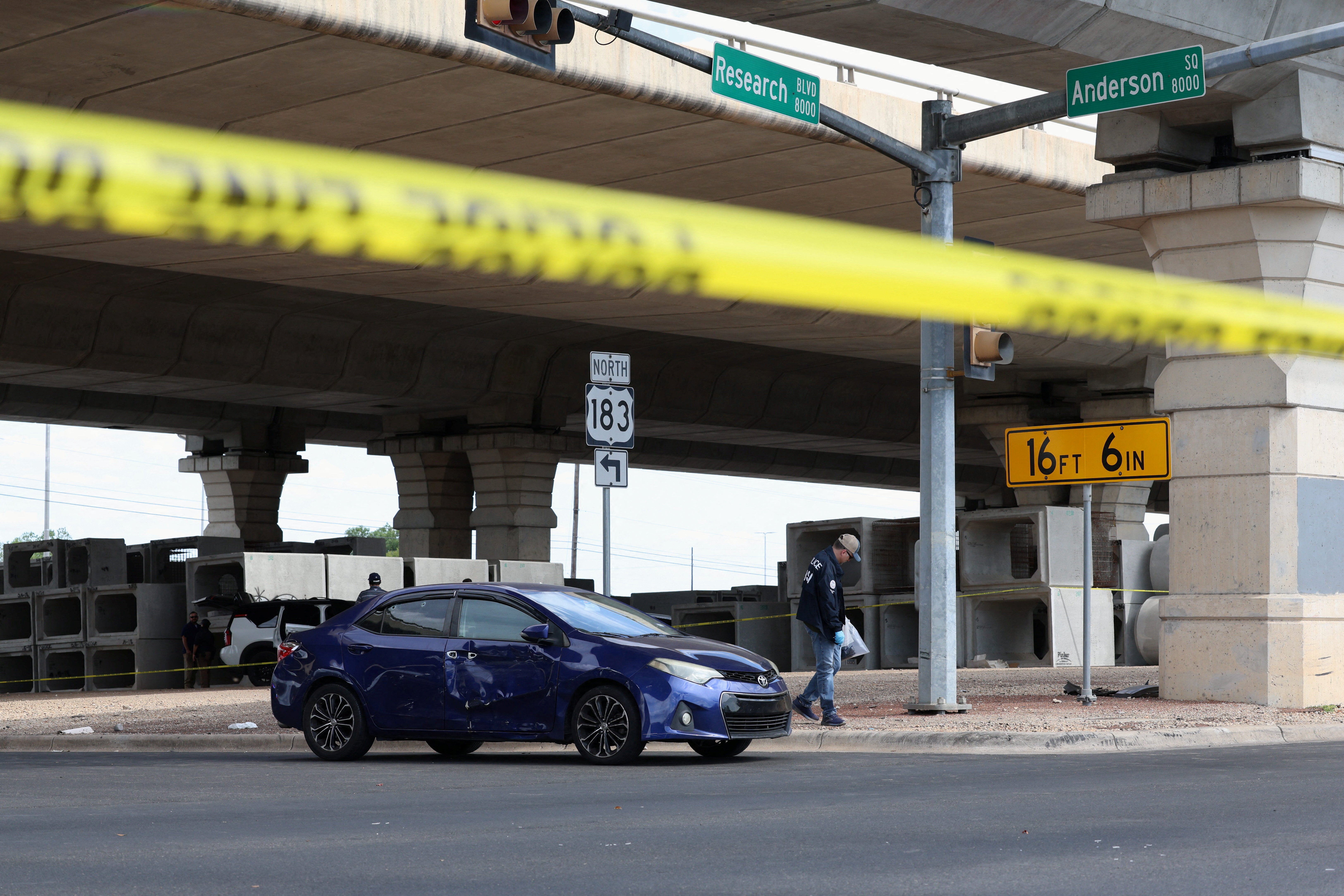 A car at the scene appears to have bullet holes in it (Reuters)
Reuters
A car at the scene appears to have bullet holes in it (Reuters)
Reuters
A federal Immigration and Customs Enforcement (ICE) agent shot and wounded an unidentified man in Austin, Texas, early Sunday afternoon, according to The Independent. The shooting happened near a highway overpass in the 800 block of Anderson Square at about 12:55 p.m. local time. The victim was hit once in the torso and taken to a local trauma center in serious but stable condition, Austin-Travis County EMS Chief Robert Luckritz said at a news conference.
Local officials say they are still piecing together what happened because the federal agency has not publicly briefed them. Austin Police Chief Lisa Davis said city officers were not present during the shooting and that she had been told the shooter was an ICE agent, while stressing that her information was preliminary. She said the agent was on foot and there was a “small foot pursuit,” but she could not confirm reports that a vehicle was sideswiped or that multiple shots were fired through a rear windshield. Photographs from the scene, The Independent reports, showed a dark blue Toyota Corolla with damage along the passenger side and two apparent bullet holes in the rear window.
The immediate political fight is over who investigates. Austin Mayor Kirk Watson called for an independent, third-party investigation and said it would not be appropriate for ICE to investigate itself. Democratic Representative Greg Casar, whose district includes the area, said the community’s anger reflects earlier incidents involving ICE elsewhere in the country and urged the agency to end what he described as a surge of officers in Austin.
The episode lands amid a broader tug-of-war over how immigration enforcement is conducted on the ground. In the same week, a judge limited ICE arrests without a warrant in parts of southern California, requiring officers to assess and document factors such as flight risk rather than treating unlawful presence alone as sufficient. That kind of judicial pushback does not stop operations, but it does change the paperwork burden and the margin for error—especially when agents act without local police on scene and when the first public account comes from city officials who say they have not been briefed.
For ICE, the incentives pull in opposite directions: demonstrate visible enforcement in politically salient cities, while avoiding incidents that invite outside review and tighter procedural constraints. For city leaders, the cost of federal activity is often paid locally—through emergency response, public trust, and the practical question of who answers for use-of-force when the chain of command runs to Washington.
As of Sunday, ICE and the Department of Homeland Security had not responded to inquiries from The Independent. Austin police said more information was expected as the investigation develops, but the first official statements in the case came from agencies that were not present when the shot was fired.