
Haiti Moïse assassination suspects flown to Florida for trial
US prosecutors expand case built on US-linked planning, Port-au-Prince remains without a president
Images
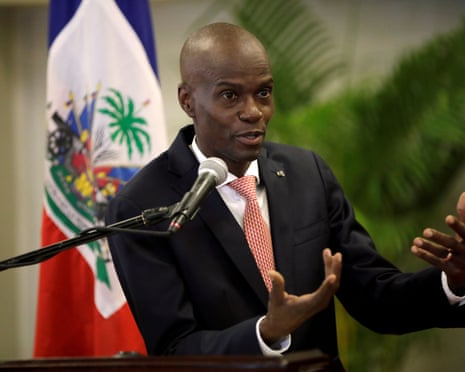 Haiti's president Jovenel Moïse speaks during a press conference in March 2020. Photograph: Andrés Martínez Casares/Reuters
theguardian.com
Haiti's president Jovenel Moïse speaks during a press conference in March 2020. Photograph: Andrés Martínez Casares/Reuters
theguardian.com
Eighteen suspects linked to the 2021 assassination of Haiti’s president Jovenel Moïse have been arrested and taken to Florida to stand trial, according to US officials cited by Agence France-Presse via The Guardian. Federal prosecutor Jason Reding Quinones said the group was transported by military plane from Haiti to face proceedings in the southern district of Florida. The arrests add to a US case that has already produced convictions in Miami and a growing list of indictments.
Moïse was shot dead at his private residence in July 2021, in an attack carried out by a hired team of military-trained Colombian mercenaries, AFP reports. His security detail did not intervene. US prosecutors have argued that key parts of the plot were organised through US-linked networks, giving American courts jurisdiction over conspiracy and related charges even though the killing occurred in Port-au-Prince.
The Florida venue is not incidental. In May, four men were convicted in federal court in Miami on charges including conspiracy to kill or kidnap Moïse, conspiracy to provide material support, and violating the US Neutrality Act by engaging in an illicit military operation abroad, according to AFP. Prosecutors said the men were connected to CTU, a private security company based in Florida, and were drawn in by the prospect of lucrative contracts if Moïse was removed. The case turns less on battlefield politics than on paperwork: who recruited whom, who paid, and which meetings and phone calls happened on US soil.
US authorities say 30 suspects have been indicted so far. Five people have been sentenced to life in prison, including a former Colombian soldier, a former Haitian senator, a Haitian Chilean businessman, a retired Colombian soldier and a Haitian American, AFP reports. The FBI’s Brett Skiles said the multi-location arrests show a commitment to pursuing all participants. Haiti’s own judicial system, by contrast, has struggled to impose consequences at home as state capacity erodes.
That erosion is the backdrop to the extraditions. Since Moïse’s killing, Haiti has sunk deeper into chaos and currently has no president, AFP reports. Gangs are estimated to control much of Port-au-Prince, while kidnappings and armed robberies remain common. A UN-backed force announced last year was supposed to scale up over months, but by mid-year it remained far below its planned strength.
Haiti is preparing for its first presidential and legislative elections since 2016, alongside a constitutional referendum, scheduled for December if security conditions allow. For now, the most consequential courtroom for the country’s most consequential political murder is in Florida.