
North Korea fires additional projectile toward the sea
South Korea raises surveillance and coordinates with US and Japan, scaled-back drills do not slow the launch cycle
Images
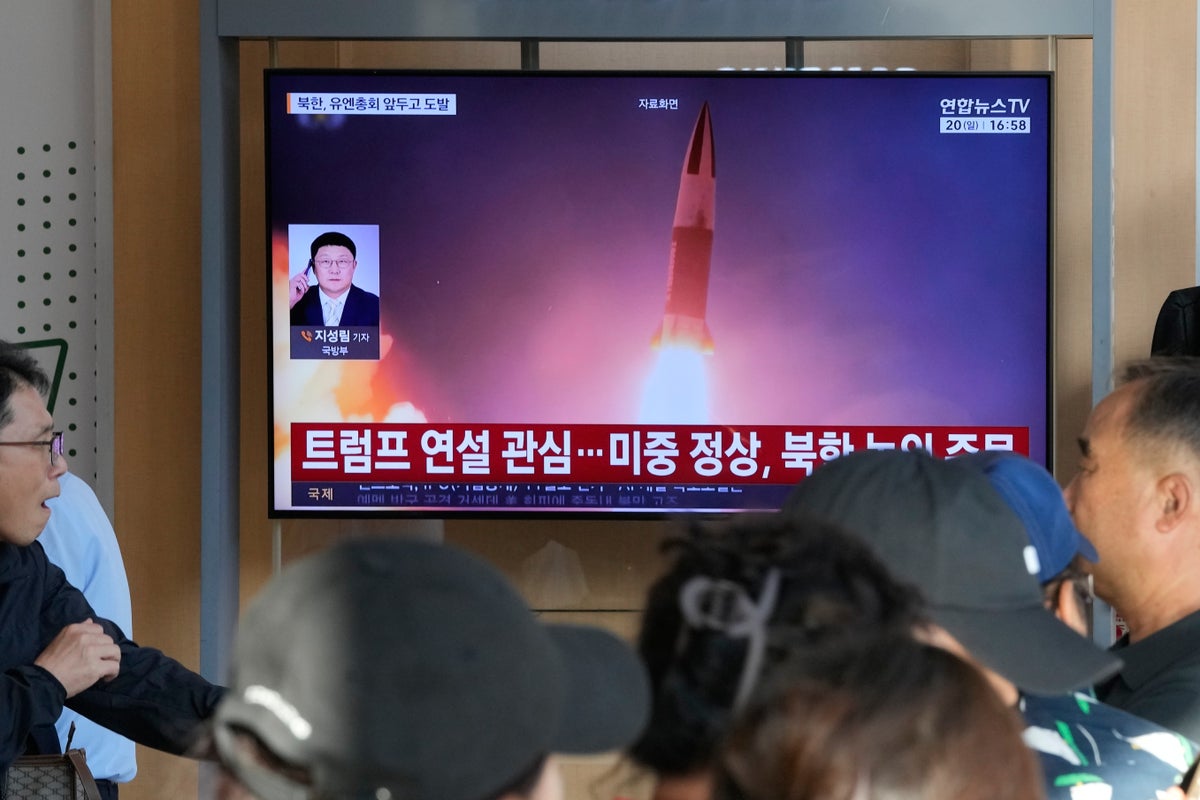 South Korea says North Korea has launched an additional projectile toward the sea
independent.co.uk
South Korea says North Korea has launched an additional projectile toward the sea
independent.co.uk
North Korea fired a short-range ballistic missile toward its eastern waters on Sunday, and later launched an additional projectile, according to South Korea’s military. Seoul said it raised surveillance and was sharing information with the United States and Japan, while Japan’s defence ministry said a suspected missile did not land in its territorial waters.
The launches land in a familiar slot in the region’s calendar: allied drills, a North Korean demonstration, then a round of statements about deterrence and sovereignty. South Korea’s presidential office cited U.N. Security Council resolutions that ban Pyongyang’s ballistic missile activity and convened an emergency national security council meeting, a reminder that even “routine” tests force real-time decision-making and consume attention across capitals.
The political backdrop is equally mechanical. The Independent reports that U.S. President Donald Trump recently scaled back a major military exercise with South Korea in what was described as an effort to revive diplomacy with Kim Jong Un. Pyongyang did not treat the reduction as a concession. Kim Yo Jong, Kim’s sister and a senior official, said shortening drills would not change their “provocative, aggressive nature,” and on Friday criticised a separate U.S.-led maritime exercise, “Pacific Vanguard,” involving the U.S., South Korea, Japan, Australia, New Zealand and Canada.
For Washington and its allies, the steady launch tempo keeps missile defence, surveillance and trilateral coordination permanently switched on. For North Korea, it keeps the bargaining chip in view without requiring any new narrative: the country’s leadership can frame each test as a response to “hostile policy” and “war rehearsals,” while using the same events to refine its ability to saturate air defences. The pattern also travels well domestically—missile footage is a cheaper signal of strength than sustained economic improvement, and it does not depend on outside cooperation.
The Independent notes that Kim Jong Un has focused on expanding his nuclear arsenal since high-stakes diplomacy with Trump collapsed in 2019, and that analysts see Pyongyang as believing it has more leverage now, given advances in its capabilities and deepening ties with Russia and China. That leverage is partly procedural: each new launch creates a fresh set of facts for any future talks to “freeze,” and raises the price of any deal that would roll them back.
On Sunday, South Korea could only urge North Korea to stop, and Japan could only report where the missile did not land. The missiles still flew, and the emergency meetings still happened.