
Smoke rises at Riyadh King Khalid airport after air-raid alerts
Fuel tank fire and flight disruption follow warnings sent to multiple Saudi cities, capital’s infrastructure joins the target map
Images
 Flames and smoke spotted at Riyadh's King Khalid airport
euronews.com
Flames and smoke spotted at Riyadh's King Khalid airport
euronews.com
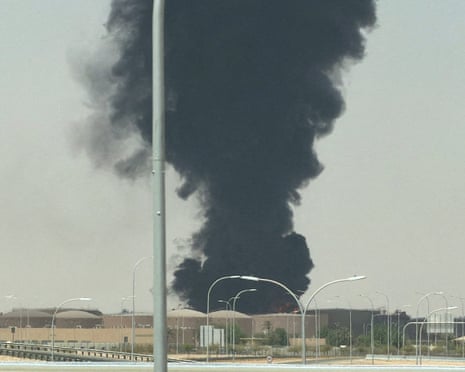 Smoke rises from a fuel storage near Riyadh’s King Khalid international airport. Photograph: Reuters
theguardian.com
Smoke rises from a fuel storage near Riyadh’s King Khalid international airport. Photograph: Reuters
theguardian.com
Flames and thick black smoke were reported at King Khalid International Airport in Riyadh on September 19, after overnight air-raid alerts were sent to residents in multiple Saudi cities. Euronews reported that Saudi Civil Defense warned people to stay indoors and away from windows before later issuing an all-clear, while FlightRadar24 flagged “major problems” at the airport. The Guardian reported that the smoke came from a burning fuel tank near the airport and that firefighters were working to extinguish the blaze; an AFP journalist saw a burning fuel truck near the site.
The episode lands in a Saudi Arabia that is increasingly running domestic life on warning messages and disruption indexes rather than on the promise that critical infrastructure is insulated from regional wars. The Guardian notes this was the first time the government issued such alerts for Riyadh since fighting with the Houthis escalated in July, a shift that makes the capital look less like a protected administrative center and more like another node in a contested battlespace. The alerts also went to Jeddah and Yanbu, the latter a major industrial port with oil facilities, underlining that the country’s export apparatus is now part of the target set even when the immediate incident is a fire at an airport.
Both outlets place the Riyadh incident alongside a broader uptick in Houthi attacks from Yemen, including strikes on Saudi cities and shipping and the group’s declared naval blockade of Saudi Arabia. The Guardian adds that the Houthis have recently seized Red Sea islands and other positions around the Bab al-Mandab strait, a chokepoint that turns territorial gains into leverage over maritime routes. The UN Security Council condemned continued Houthi attacks against Saudi Arabia, including those affecting civilian and energy infrastructure, and called for practical cooperation to prevent the Houthis from acquiring arms and other support, according to the Guardian.
On the ground, the price of this posture is paid in interruptions that do not need to fully succeed to impose costs: an air-raid alert that rattles windows, an airport that moves from routine operations to “maximum disruption,” and emergency services deployed to fuel storage and transport. When the warning system becomes the first line of defense, the economic system starts to behave as if disruption is normal, with airlines, insurers, and logistics planners forced to treat Saudi nodes as intermittently unavailable.
By morning, Saudi Civil Defense had issued an all-clear, but firefighters were still working near the airport fuel storage as flight tracking sites continued to show disruption.