
Protesters surround Washington’s Kennedy Center
Trump-aligned board votes to close venue indefinitely as court orders notice before major changes, a building can be altered faster than a lawsuit can be heard
Images
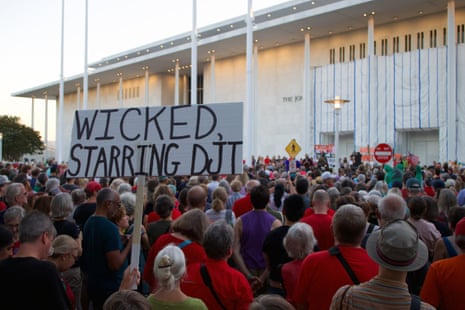 Thousands of demonstrators gather outside the John F. Kennedy Center for the Performing Arts in Washington. Photograph: Zoraida Diaz/ZUMA Press Wire/Shutterstock
theguardian.com
Thousands of demonstrators gather outside the John F. Kennedy Center for the Performing Arts in Washington. Photograph: Zoraida Diaz/ZUMA Press Wire/Shutterstock
theguardian.com
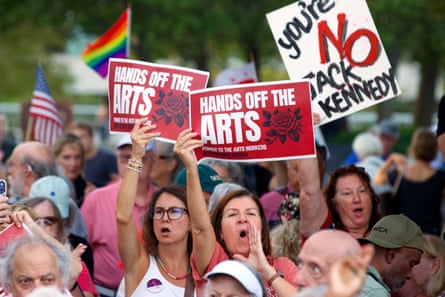 Thousands of demonstrators gather outside the Kennedy Center on Friday. Photograph: Zoraida Diaz/ZUMA Press Wire/Shutterstock
theguardian.com
Thousands of demonstrators gather outside the Kennedy Center on Friday. Photograph: Zoraida Diaz/ZUMA Press Wire/Shutterstock
theguardian.com
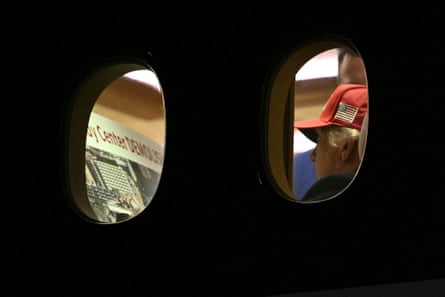 Donald Trump is seen aboard Air Force One checking a Kennedy Center printout. Photograph: Brendan Smialowski/AFP/Getty Images
theguardian.com
Donald Trump is seen aboard Air Force One checking a Kennedy Center printout. Photograph: Brendan Smialowski/AFP/Getty Images
theguardian.com
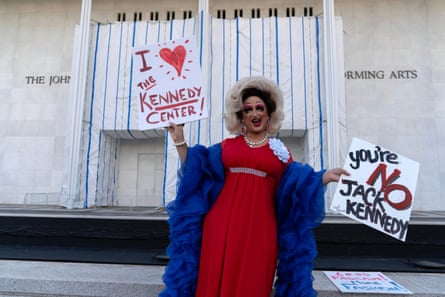 Drag Queen Tara Hoot holds up signs as she rallies against the closing of the Kennedy Center. Photograph: José Luis Magaña/AP
theguardian.com
Drag Queen Tara Hoot holds up signs as she rallies against the closing of the Kennedy Center. Photograph: José Luis Magaña/AP
theguardian.com
Thousands of protesters gathered outside Washington’s Kennedy Center on Friday evening, according to The Guardian, after the venue’s Trump-aligned board voted earlier in the week to close the institution indefinitely for “repairs.” The demonstration—billed as “Hands Around the Kennedy Center”—came amid court filings and public fears that the building could be physically altered or even demolished.
The Kennedy Center is not just an arts venue; it is a federally entangled cultural symbol with a governing structure that can be reshaped through appointments. The Guardian reports that since 2025 Donald Trump has been installing allies onto the center’s board, and that late last year his name was placed on the building—an act a judge later ruled illegal and ordered removed. This week’s closure vote landed hours after US District Judge Christopher Cooper blocked plans to restore Trump’s name, and a subsequent order required 30 days’ notice before any “major physical changes,” including demolition.
That sequence matters because it turns a familiar culture-war argument—who gets to control elite institutions—into a dispute over property, process, and the leverage that comes with governance. A board can vote to close a building far faster than courts can resolve whether the closure is a pretext, and far faster than donors, artists, or the public can organise alternatives. Once a venue is shuttered, the practical questions shift from programming to contractors, permits, and what counts as “repairs” versus irreversible redesign.
The protest itself reflected that institutional vulnerability. Demonstrators crowded streets in Foggy Bottom, locking down traffic as they walked, and carried signs aimed at both symbolism and procedure: “Hands off the arts” alongside warnings about sudden changes to the structure. The Guardian quotes organiser Chris Raleigh pointing to a “large hole” that had appeared in the East Wing, feeding concern that physical work could move ahead before the court is notified. The paper also notes an AFP photograph taken Wednesday showing Trump on Air Force One holding a placard with the partially obscured text “Kennedy Center DEMOLIS…”, which protesters took as a signal—even if the word was cut off by the window frame.
In Washington, where major cultural institutions live close to government funding and political appointment power, the line between artistic stewardship and administrative control is thin. Courts can order names removed and demand notice, but they do not run buildings day to day. Boards do.
On Friday night, the crowd’s chant was “hands off.” The building they were circling remains closed by board vote while a federal judge counts down notice periods.