
US secures Greenland security pact with Denmark
Trump says deal grants permanent control and blocks adversary bases and investments, sovereignty stays Danish on paper while approval power shifts to Washington
Images
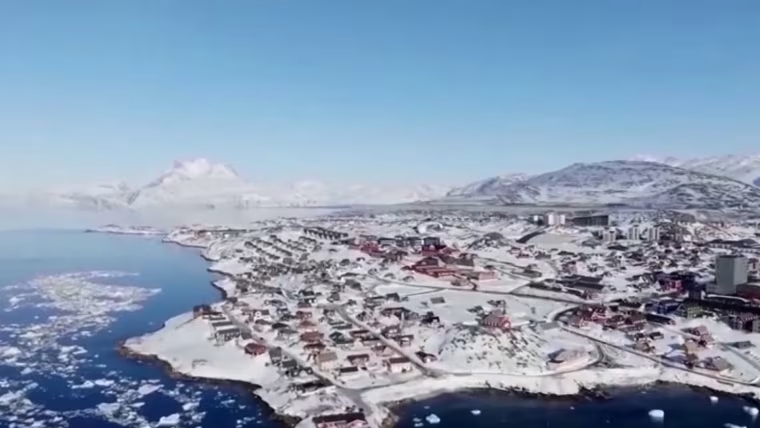 nbcnews.com
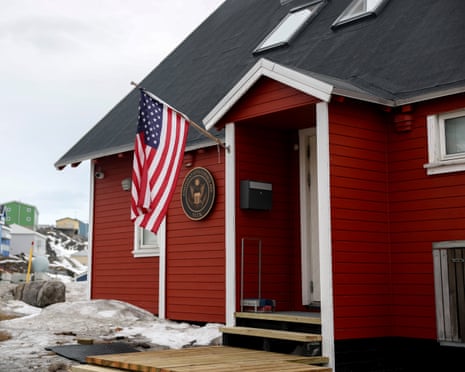 Trump called the new security pack ‘very important, historic, and special’ on his Truth Social. Photograph: Joe Raedle/Getty Images
theguardian.com
Trump called the new security pack ‘very important, historic, and special’ on his Truth Social. Photograph: Joe Raedle/Getty Images
theguardian.com
President Donald Trump says the United States has struck a security agreement with Denmark and Greenland that gives Washington “permanent control” over Greenland’s security, with the three governments expected to sign the deal next week on the sidelines of the United Nations General Assembly in New York City. According to NBC News, the arrangement would bar U.S. adversaries from establishing a base or military presence in Greenland or making “sensitive” investments without U.S. written approval. Denmark’s prime minister, Mette Frederiksen, said the agreement does not grant U.S. sovereignty over Greenland, while Greenland’s government leader, Jens-Frederik Nielsen, described it as strengthening security for Greenland, Denmark, the U.S. and the wider Western alliance.
The text as described by NBC and the Guardian reads less like a short-term basing update and more like a standing veto power over the island’s external ties. A State Department official told NBC the agreement explicitly bans any non-NATO base or troop presence in Greenland and includes screening mechanisms aimed at blocking investments from Russia and China. Rubio, in NBC’s account, framed Greenland as part of the strategic defence area of North America “forever,” language that stretches beyond the usual NATO phrasing about shared responsibilities.
Greenland is not a blank slate. The Guardian notes the U.S. already has a military base at Pituffik dating to the Cold War and rights to expand through NATO. That history makes the new “permanent” label politically useful: it turns what has been an alliance arrangement into something closer to an American guarantee that survives changes in Greenland’s constitutional status. NBC reports a State Department official saying the agreement would remain fully in effect even if Greenland becomes fully independent from Denmark.
For Denmark, the immediate payoff is to defuse a dispute that had moved from rhetoric into open coercion. Both NBC and the Guardian tie the pact to Trump’s earlier threats to take Greenland “one way or the other,” and the Guardian reports that Copenhagen set up a “night watch” in the foreign ministry to track Trump’s statements overnight. A deal that reasserts Danish sovereignty in formal language while granting Washington permanent access and approval rights can be sold domestically as crisis management—especially if the alternative was an unbounded confrontation with the alliance’s largest military.
For Greenland, the bargain is harder to price. The agreement is presented as protection and partnership, but the constraints fall on the island’s future room to manoeuvre: investment screening and written-approval requirements mean that economic development—ports, mining projects, telecoms, dual-use infrastructure—can be treated as a security question by a foreign capital. Trump said the U.S. would “immediately begin developing a large military presence” in an “appropriate part” of Greenland, according to both outlets, signalling that the pact is intended to be visible on the ground.
The Arctic is already crowded with overlapping claims, and the deal’s design suggests Washington wants fewer ambiguities, not more. A permanent framework reduces transaction costs for the U.S. military while shifting political risk onto Danish and Greenlandic institutions that must process the agreement through parliamentary procedures, as the Guardian notes. The public argument is about keeping Russia and China out; the practical effect is to make American approval a prerequisite for major outside engagement.
The signing is expected next week in New York. The U.S. already has a base at Pituffik, and now it is also negotiating language meant to outlast the flags above it.