
Trump bans CNN MS Now and Politico from White House access
Announcement posted on Truth Social and described as immediate, access control replaces rebuttal as the enforcement tool
Images
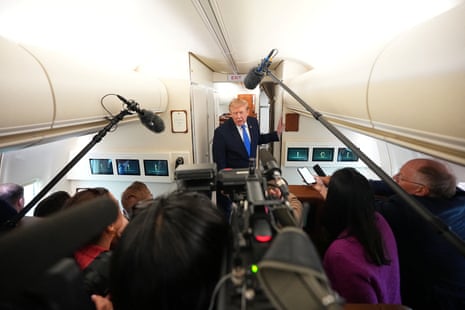 Donald Trump speaks to the press aboard Air Force One on 2 August 2026. Photograph: Aaron Schwartz/AFP/Getty Images
theguardian.com
Donald Trump speaks to the press aboard Air Force One on 2 August 2026. Photograph: Aaron Schwartz/AFP/Getty Images
theguardian.com
Donald Trump said on Truth Social that CNN, MS Now and Politico are barred from White House access “effective immediately,” casting the move as punishment for what he called years of “FAKE NEWS” reporting, according to The Guardian. The White House ban was followed by Trump remarks at an Oval Office event promoting healthcare policies, where he defended the decision and suggested other outlets could be next.
The immediate consequence is practical: access is a scarce resource controlled by the institution being covered, and the cost of losing it is borne by the newsroom competing for interviews, briefings and the daily rhythm of White House content. A ban does not need a courtroom to change coverage; it changes who is in the room, who can ask questions, and which clips get produced on deadline. The Guardian reports that Trump praised Breitbart and offered qualified approval of some Fox News coverage, framing access as contingent on “a semblance of truth,” while also complaining that courts should not allow “fake news” to be written repeatedly. That pushes disputes that are normally handled through corrections, competing reporting and defamation law into an administrative decision: credentials granted or revoked.
The timing also underlines how access can be used as a pressure point when stories are uncomfortable. The Guardian notes that the same day included reporting across the targeted outlets on sensitive subjects, including the Washington Post on US service member deaths in the war on Iran, CNN on a false AI-generated intelligence report that nearly started a war, and Politico on a Hill investigation into sensitive fighter-jet technology reaching Hong Kong. Trump said the ban was not about any single report but about accumulated coverage over the years; the mechanism, however, is built for immediacy. If access can be withdrawn instantly, the appeal process is political rather than procedural, and smaller outlets without legal budgets or substitute reporting networks face a sharper risk than national brands.
A CNN spokesperson called the ban an illegal assault on constitutionally protected rights, while MS Now and Politico did not immediately respond to requests for comment, The Guardian reports. Democrats and free-speech groups condemned the move, including Senator Chris Coons, who described it as a punishment of the free press.
Trump told reporters he was frustrated with what he called “fake news,” and then appeared unsure about details when questioned about the ban. The effect, for now, is concrete: three major newsrooms are being told they cannot do their jobs from inside the building they cover.