
Two-headed diamondback terrapin hatchling turns up on Cape Cod
Wildlife center monitors rare bicephaly case, threatened species meets social-media medicine
Images
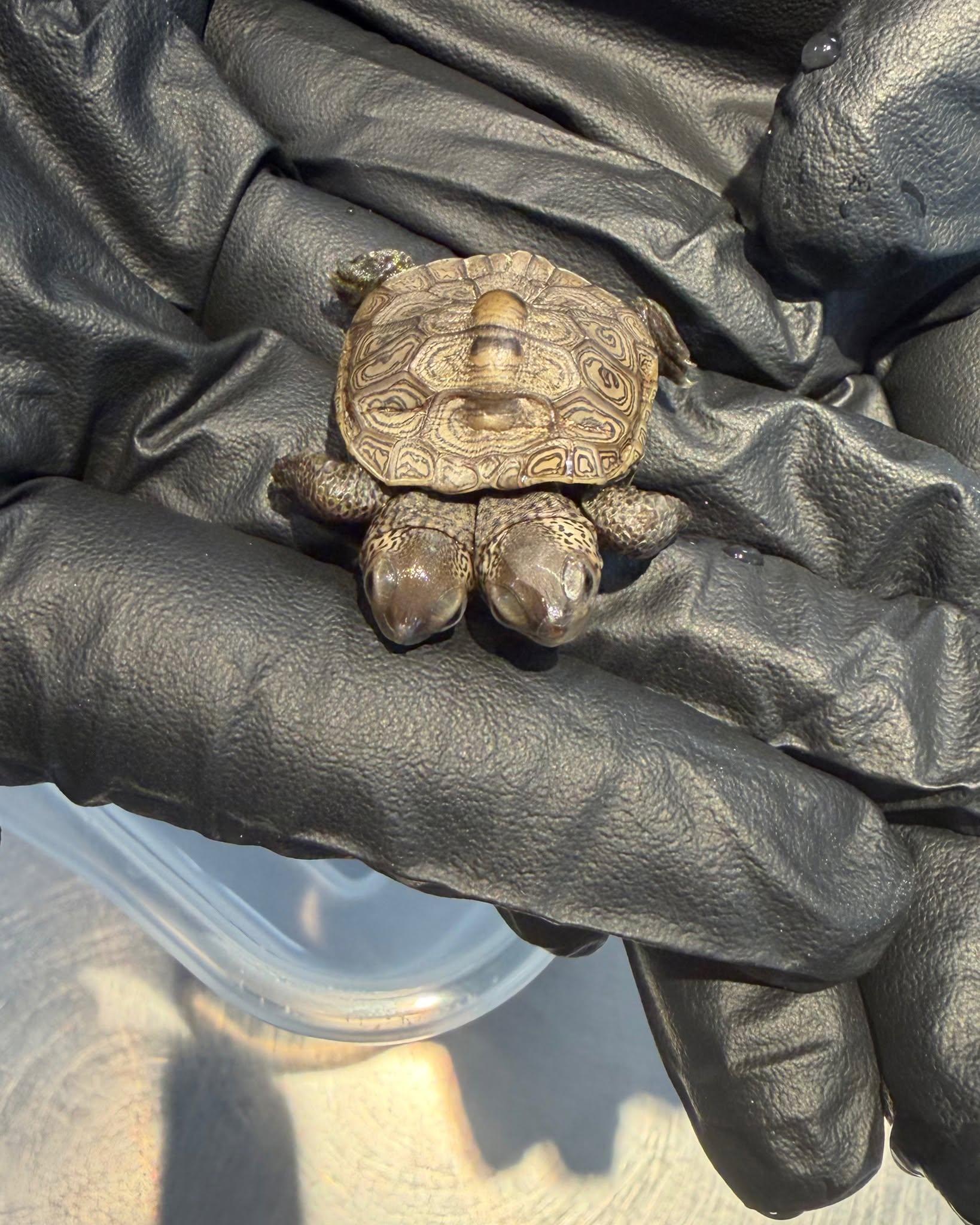 The hatchling’s two heads are the result of a rare developmental condition known as bicephaly that can occur in reptiles and other animals (Cape Wildlife Center)
Cape Wildlife Center
The hatchling’s two heads are the result of a rare developmental condition known as bicephaly that can occur in reptiles and other animals (Cape Wildlife Center)
Cape Wildlife Center
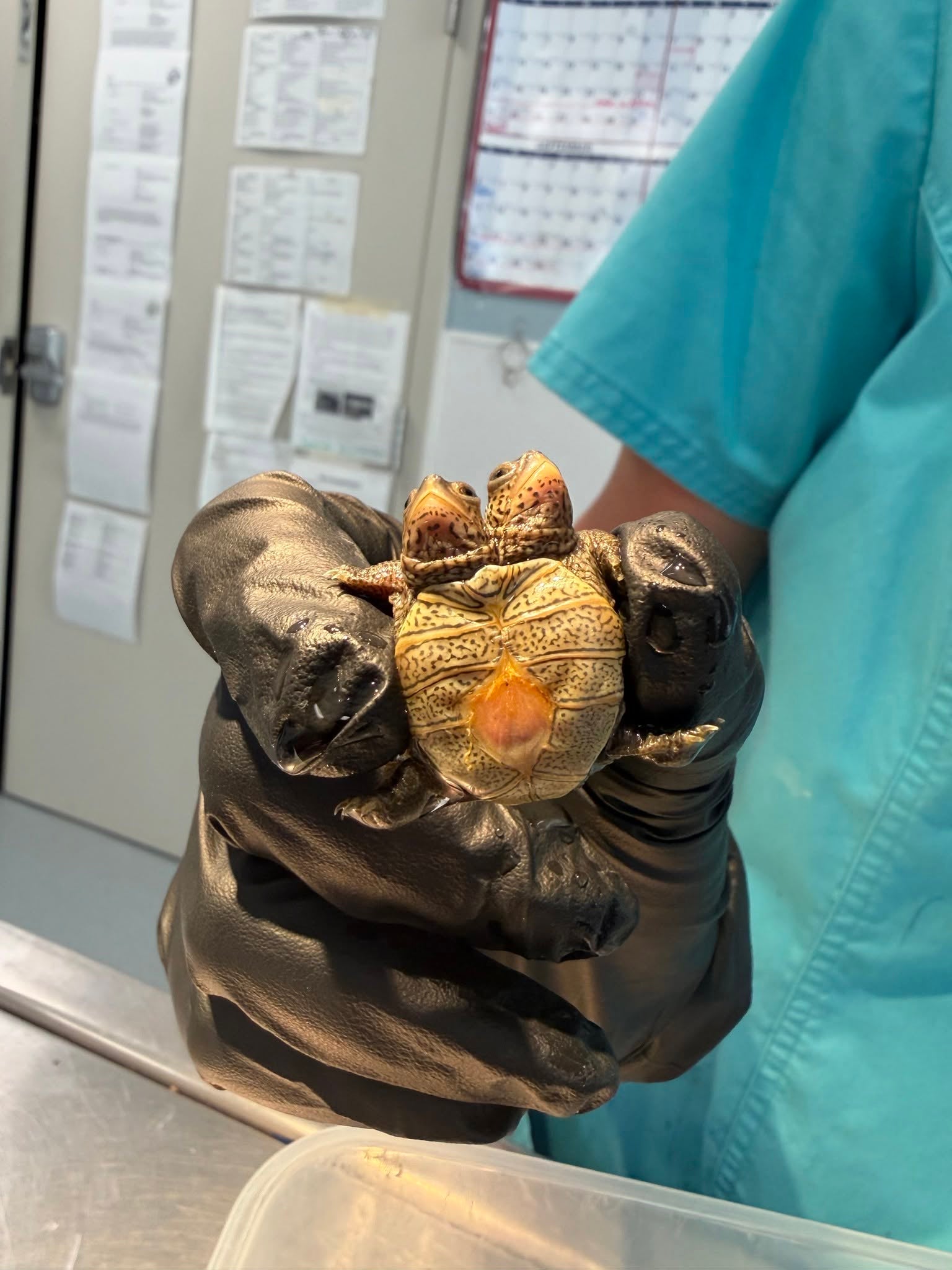 The baby turtle is only the second case of bicephaly that the Cape Wildlife Center has seen in five years (Cape Wildlife Center)
Cape Wildlife Center
The baby turtle is only the second case of bicephaly that the Cape Wildlife Center has seen in five years (Cape Wildlife Center)
Cape Wildlife Center
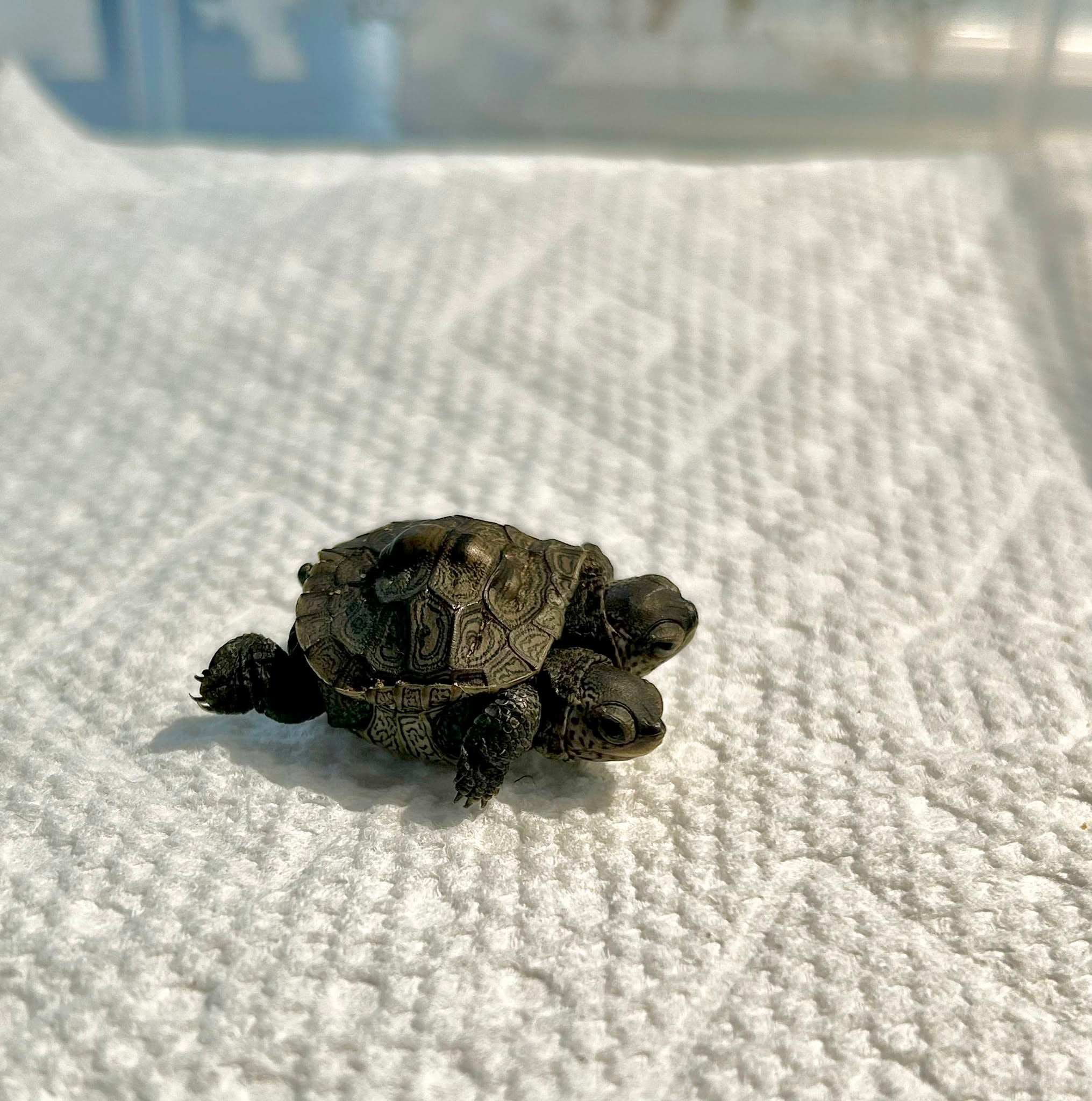 The turtle is reportedly behaving normally, according to New England Wildlife Center CEO Zak Mertz (Cape Wildlife Center)
Cape Wildlife Center
The turtle is reportedly behaving normally, according to New England Wildlife Center CEO Zak Mertz (Cape Wildlife Center)
Cape Wildlife Center
Two distinct heads emerged from a single hatchling at a protected nesting site in Wellfleet on Cape Cod this week, according to The Independent. The baby diamondback terrapin weighs 5.2 grams and was transferred by Mass Audubon’s Wellfleet Bay Wildlife Sanctuary to the Cape Wildlife Center, which published photos of the animal on Facebook.
The condition, known as bicephaly, occurs when conjoined twins fail to fully separate during development. For wildlife rehabilitators it is both a clinical challenge and, occasionally, a public spectacle: the center says this is only the second bicephalic animal it has seen in five years, after a widely reported two-headed turtle found in 2021. The attention is not cost-free. Two-headed animals often die young because basic tasks—feeding, coordinated movement, avoiding self-injury—become a negotiation between two nervous systems sharing one body. The Cape Wildlife Center says it is monitoring appetite, growth and behavior, and in practice that means staff time, specialist care and a long tail of follow-up for an animal with uncertain odds.
The hatchling’s species adds another layer of constraint. Diamondback terrapins are listed as threatened in Massachusetts, and the state’s conservation effort relies heavily on protected nesting sites and volunteer monitoring—systems designed to increase hatchling survival in the first place. When an anomaly appears, it tests the boundary between conservation and rehabilitation: the terrapin’s rarity makes it valuable as a learning case, but the same rarity limits the margin for error if the animal cannot be returned to the wild. Zak Mertz, identified by The Independent as CEO of the New England Wildlife Center, said the turtle is “behaving normally” and that both heads “look very good,” a cautiously optimistic assessment that still leaves the hard part—whether the animal can feed and grow without the two heads competing.
The story also illustrates how modern wildlife care increasingly functions as a hybrid of medicine, education and social media. The center’s Facebook post turns a biological accident into a public-facing event, and the public response can help: visibility brings donations, volunteers and political support for habitat protection. But it also creates pressure to keep unusual animals alive longer than nature would, and to present a clean narrative of rescue even when the outcome is likely to be loss. The Cape Wildlife Center notes it has handled other unusual cases in recent years, from a screech owl found in a bathroom to a coyote pup mistaken for a dog—episodes that draw attention precisely because they are exceptions.
For now, the Wellfleet hatchling remains in veterinary observation, small enough to fit on a fingertip and unusual enough to become a symbol of a threatened species’ fragile pipeline from nest to adulthood.