
Russia begins three-day Duma election
Voting held in occupied Ukrainian territories as Kremlin watches turnout, anti-war Yabloko excluded from party-list ballot
Images
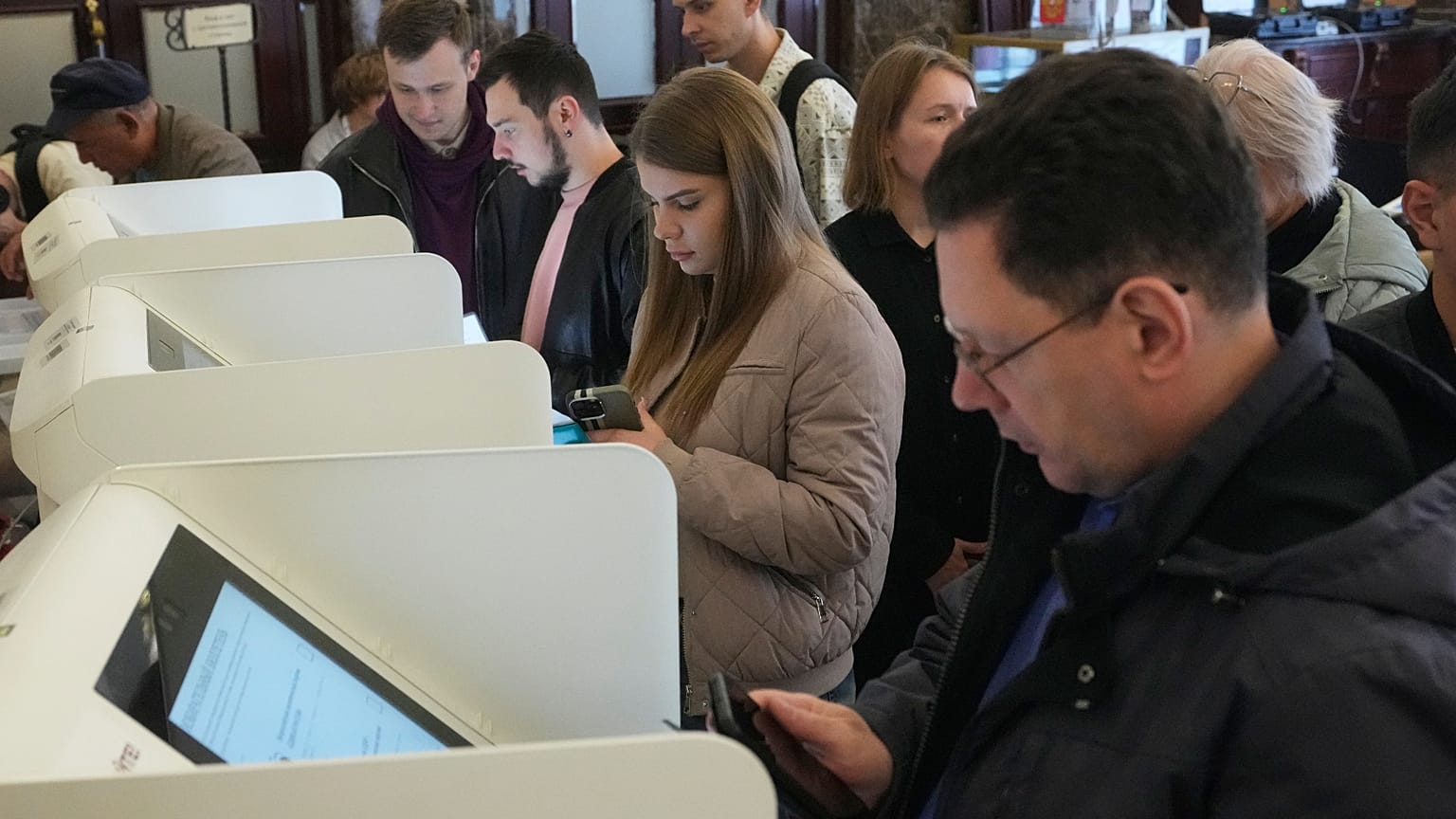 Voters use an electronic voting system in the parliamentary election in Moscow
euronews.com
Voters use an electronic voting system in the parliamentary election in Moscow
euronews.com
Russia opened its three-day State Duma election on Friday, with voting starting first in far-eastern regions such as Kamchatka, Chukotka and Magadan, according to Euronews. The ballot will fill all 450 seats in parliament, with around 111 million people eligible to vote. Polling is scheduled to run through Sunday evening. Outside Russia, Euronews reports that hundreds of polling stations are operating across more than 150 countries.
The mechanics of the vote are familiar, but the authorities’ focus is on turnout as a political product. Euronews says the Kremlin is closely monitoring participation, and President Vladimir Putin has framed high turnout as evidence of national unity and support for the war in Ukraine. That makes the election less a contest between platforms than a nationwide measurement exercise, where the headline figure matters as much as who sits in the chamber. Local officials in the east urging residents to vote fits that logic: the state needs visible compliance, not persuasion.
The field of competition has been narrowed in ways that reduce uncertainty. Euronews reports that the anti-war party Yabloko was excluded from the national party-list ballot, with some of its candidates attempting to run in individual constituencies while many were barred. The election also includes remote electronic voting in several regions, a method that can increase convenience while moving counting further from local observers. Meanwhile, voting is being held in Russian-occupied Ukrainian territories including Donetsk, Luhansk, Kherson, Zaporizhzhia and Crimea, which Ukraine and Western governments consider illegal.
The war is now part of the election environment inside Russia, not only in speeches but in daily disruptions. Euronews points to drone attacks, fuel shortages, economic pressure and renewed fears of mobilisation as factors shaping the backdrop to the vote. Those pressures also explain why turnout is being treated as a strategic variable: when life is constrained by war, a public display of participation becomes a substitute for genuine consent.
On Friday, as polls opened in the Far East, the election’s first measurable output was not a policy debate but the number of people who showed up.