
Bank of Japan raises benchmark rate to 1.25%, first step to 31-year high
As oil-driven inflation bites, yen support merges monetary policy with energy war spillovers
Images
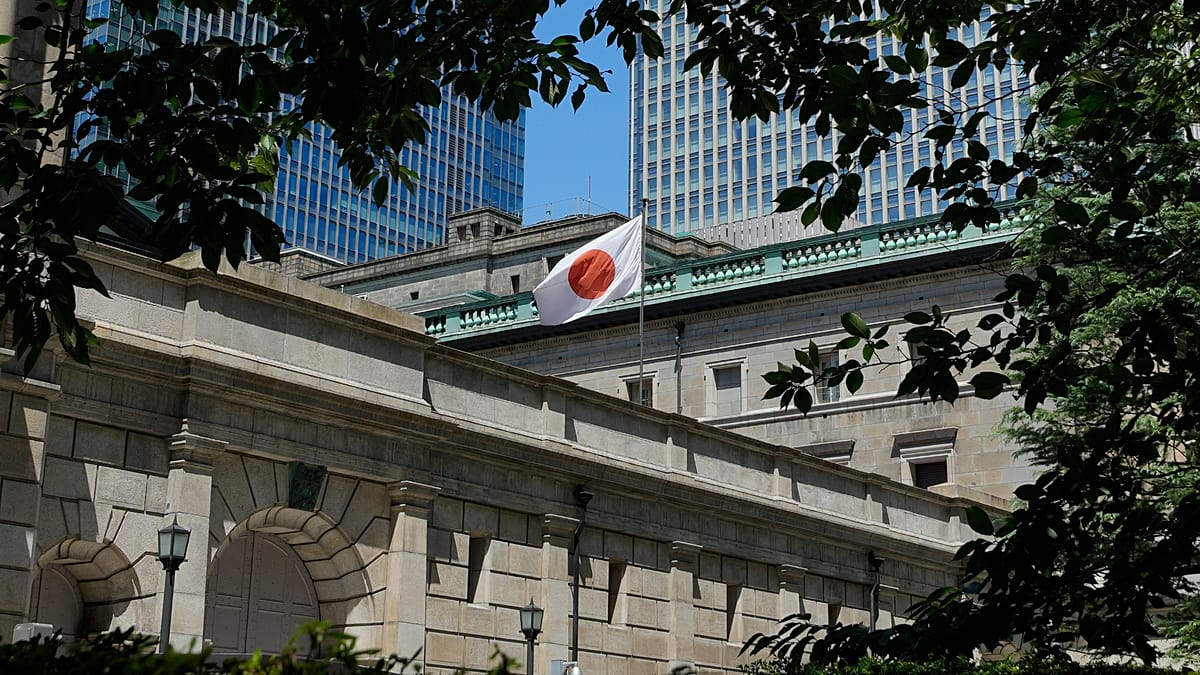 Japan's central bank raises benchmark interest rate to 1.25%
euronews.com
Japan's central bank raises benchmark interest rate to 1.25%
euronews.com
Japan’s central bank raised its benchmark interest rate to 1.25% on September 18, ending a two-day policy meeting with the country’s highest rate level in more than three decades, according to Euronews. The move lifts the rate from 1.0% and comes as Japanese households face renewed price pressure from energy, with oil costs rising amid the war in Iran.
For most of the past generation, the Bank of Japan has tried to coax the economy out of deflation with near-zero or even negative rates, making cheap credit a standing feature rather than a temporary emergency measure. That approach worked as long as imported inflation stayed muted and the yen’s weakness could be tolerated as a side effect of domestic stimulus. Euronews reports that Japan imports nearly all of its oil, leaving it exposed when global energy prices jump; in that setting, low rates stop looking like support and start looking like a subsidy for higher import bills.
The hike was widely expected and already priced into markets, a reminder that central banks now communicate as much through managed anticipation as through the decision itself. Still, the direction matters: Japan is trying to “normalize” policy after decades of exceptional settings, even as other major economies are also tightening again. The US Federal Reserve raised its key rate earlier in the same week for the first time since 2023, Euronews notes, and Washington has pressed Tokyo to act over concern about a weakening yen.
That external pressure sits awkwardly beside the Bank of Japan’s formal mandate. The bank targets inflation of around 2%, and Euronews puts current inflation at roughly that level, while consumers complain about sharp increases in gasoline and other oil-linked prices. When inflation is being driven by imported energy rather than domestic overheating, higher rates cannot pump more oil or refine more fuel; they can, however, change the exchange-rate arithmetic and cool demand elsewhere in the economy.
Currency politics has already moved from rhetoric to action. Euronews reports that Japan and the US have recently intervened together in currency markets to support the yen, after the dollar traded above 160 yen earlier in 2026 and sits around 155 yen now. Analysts cited by Euronews expect further increases later in 2026 or early 2027, which would extend the shift from one-off adjustment to a new baseline.
After the decision, Tokyo’s Nikkei 225 rose, according to Euronews. Japan’s policy rate is now 1.25%, while the country still buys almost all the oil that feeds its inflation problem.