
Indonesia welcomes its first aircraft carrier, ex-Italian Giuseppe Garibaldi due to enter service as KRI Gajah Mada
Disaster-response pitch meets open-ended retrofit and operating bills
Images
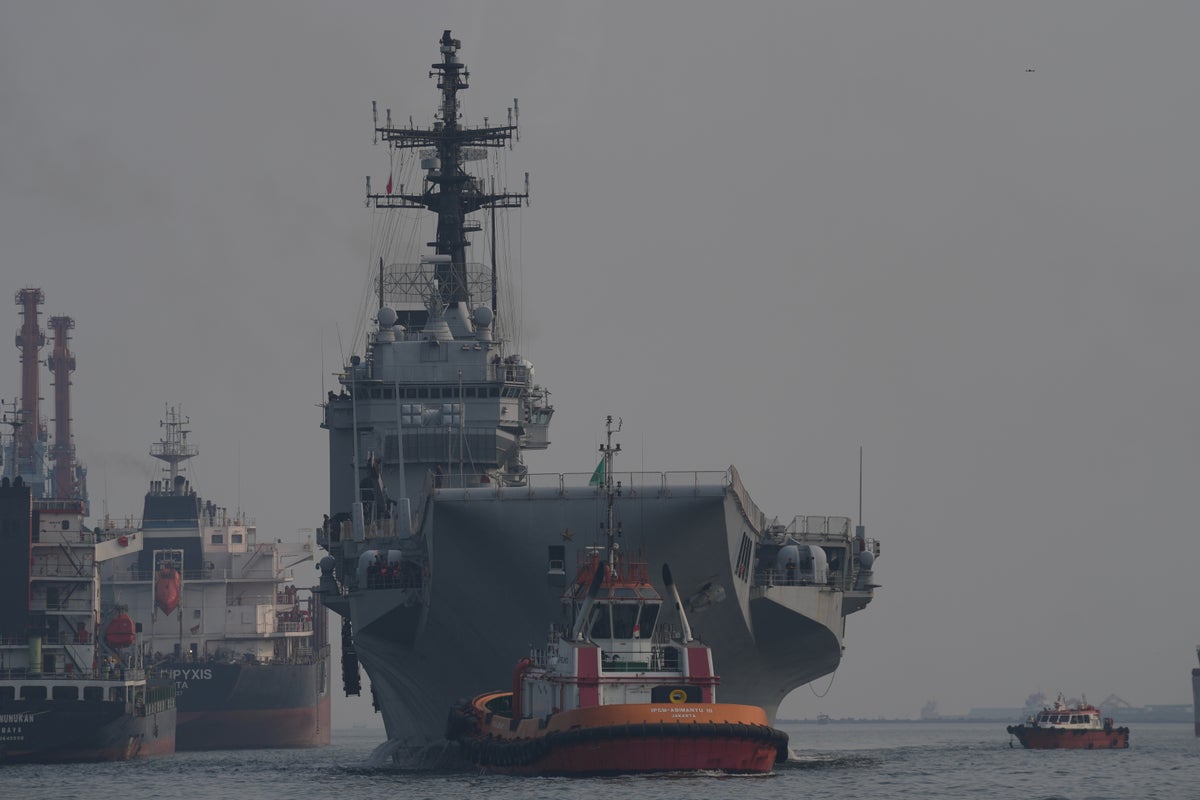 Indonesia welcomes its first aircraft carrier, prompting debate over cost and military ambitions
independent.co.uk
Indonesia welcomes its first aircraft carrier, prompting debate over cost and military ambitions
independent.co.uk
Indonesia commissions first aircraft carrier, former Italian Giuseppe Garibaldi arrives in North Jakarta ahead of KRI Gajah Mada renaming, disaster-response branding competes with refurbishment and operating costs
Indonesia welcomed its first aircraft carrier at Tanjung Priok in North Jakarta on Friday morning, staging a military ceremony for the arrival of the former Italian warship ITS Giuseppe Garibaldi, according to The Independent. The 41-year-old ship is due to be formally commissioned into the Indonesian Navy next week under a new name, KRI Gajah Mada. Italy agreed in March to transfer the retired vessel, which left service in 2024.
The handover sits at the intersection of two budgets: Rome’s and Jakarta’s. For Italy, giving away an aging carrier avoids decommissioning costs while deepening defence engagement with a large customer that is shopping for submarines and aircraft. For Indonesia, the carrier is a prestige acquisition that also comes with a long tail of refurbishment, crewing, maintenance and aviation integration—expenses that do not end once the ship is painted and renamed. The Independent reports that Indonesia’s finance ministry approved $450 million in financing for the carrier programme in 2025, while some lawmakers warn the total could be far higher; one member of parliament, TB Hasanuddin, has put retrofitting costs at 16 trillion rupiah.
President Prabowo Subianto’s administration is framing the ship less as a power-projection platform than as a tool for a disaster-prone archipelago. Officials say the carrier will be converted to support helicopters, drones and maritime operations, and marketed as a mobile command centre that can respond to natural disasters and even fight forest and peatland fires that drive hazardous haze across Southeast Asia. Prabowo has described a role carrying water for firefighting and supporting helicopter operations—capabilities that can be useful in a country that regularly deals with earthquakes, volcanic activity and severe weather.
But the carrier’s specifications and its political symbolism pull in a different direction. The ship was designed for short takeoff and vertical landing aircraft and helicopters, and Indonesia would become only the second Southeast Asian country to operate an aircraft carrier after Thailand. Even if Jakarta emphasises disaster response, a carrier is still a naval asset whose value depends on training cycles, spare parts, aviation support and sustained readiness—areas where costs are harder to cap than a one-off purchase. The same government is also funding a free nutritious meals programme and other initiatives, and economists cited by The Independent have warned about slowing growth and weaker state revenue.
The question raised by critics is less whether Indonesia can find uses for a large flight deck than whether those uses justify building a permanent operating budget around a ship acquired at the end of its original service life. The carrier arrived with ceremony; the invoices will arrive more quietly.
Next week the Indonesian Navy is expected to commission the ship as KRI Gajah Mada. It will still be the same 41-year-old hull.