
Bank of England holds rates at 3.75%
MPC warns Middle East war could still force hikes as inflation forecast rises, central bank seeks bond sales back to Treasury to avoid gilt turbulence
Images
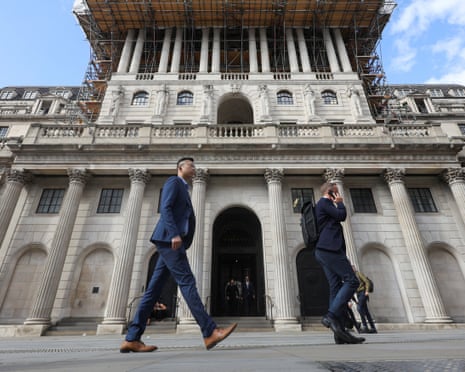 Financial markets expected the Bank of England would keep interest rates unchanged. Photograph: Corey Rudy/Reuters
theguardian.com
Financial markets expected the Bank of England would keep interest rates unchanged. Photograph: Corey Rudy/Reuters
theguardian.com
The Bank of England kept its base rate unchanged at 3.75% as policymakers weighed rising inflation against a weakening economy, while warning that a prolonged Middle East war could still force borrowing costs higher. According to The Guardian, the Monetary Policy Committee voted 6–3 to hold rates, even as the Bank projected inflation could reach 4% early next year on the back of higher energy prices.
The decision landed alongside a second, more technical move that points to the same constraint: the Bank said it wants to sell billions of pounds of UK government bonds back to the Treasury to avoid turbulence in the gilt market. The Guardian reports the central bank’s bond portfolio peaked at £895bn during quantitative easing, and has already been reduced to about £488bn under quantitative tightening since 2022. Under the updated plan, the Bank would sell £146bn of bonds to the government at roughly £20bn a year until 2034, subject to agreement with the chancellor, while retaining about £120bn to back notes and coins in circulation.
This is the narrow path central banks walk when inflation is being pushed by geopolitics rather than domestic demand. Governor Andrew Bailey said higher global energy costs have so far had limited effects on UK price and wage setting, but that persistent volatility would make rate rises more likely to meet the 2% target. The Bank said there is little evidence so far of material “second-round” inflation effects, and it pointed to signs of weaker food price inflation even as energy prices surged.
Yet the split vote shows the internal pressure: three MPC members backed an immediate quarter-point rise. Holding rates steady keeps some relief for households and businesses already exposed to higher mortgage and credit costs, but it also leaves the Bank relying on the hope that energy-driven price shocks do not embed themselves in wages and expectations. Meanwhile, the bond plan underlines how monetary policy is now entangled with market plumbing: the Bank said selling to the Treasury is designed to avoid disorderly moves in gilts that could spill into broader financial conditions.
If the Treasury does not agree to the buyback, the Bank said it would pause active gilt sales for now but could resume selling back into the market later. For a central bank trying to look predictable, the next step depends on whether the government will take the bonds off its hands.