
Federal judge limits warrantless immigration arrests in Southern California
Order requires documented escape risk assessment across Los Angeles region, enforcement speed collides with court demanded paperwork
Images
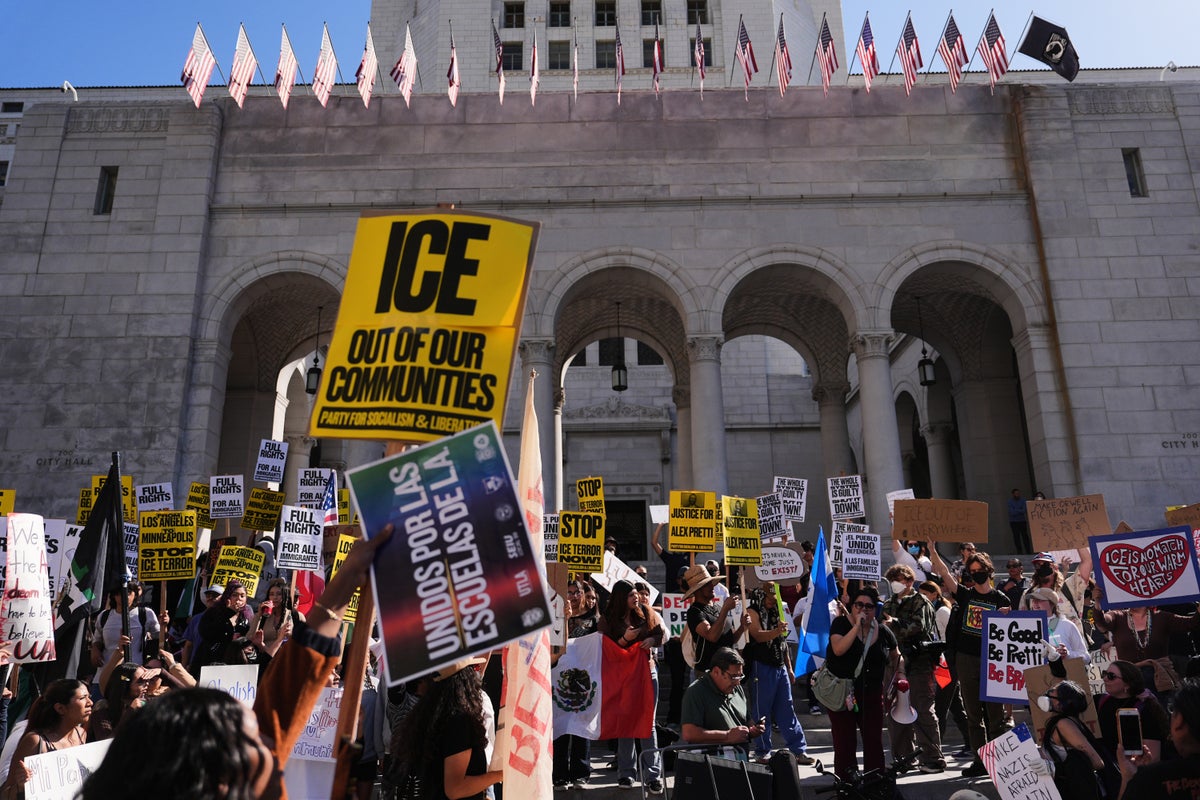 Federal judge restricts warrantless immigration arrests in Southern California
independent.co.uk
Federal judge restricts warrantless immigration arrests in Southern California
independent.co.uk
A federal judge has restricted when US immigration officers can make warrantless civil arrests across Southern California, ordering agents to assess and document whether a person is likely to escape before taking them into custody, according to The Independent. The preliminary injunction, issued earlier this month and unsealed on Wednesday, applies across the Central District of California, including Los Angeles and several surrounding counties.
US District Judge Maame Ewusi-Mensah Frimpong wrote that unlawful presence alone is not enough to justify a warrantless arrest. The government must consider the “totality of the circumstances” known to the officer about escape risk, and must thoroughly document the probable cause that led to the arrest before a warrant could be obtained. The judge also denied the government’s request to delay the order while it appeals.
The case was brought by the ACLU of Southern California, Public Counsel and local immigrant advocacy groups after what the plaintiffs described as an unprecedented surge in enforcement operations in the region. Beyond warrantless arrests, the lawsuit sought limits on roving patrols accused of making stops based on race, language and occupation, and sought to protect access to counsel for people in detention.
In court filings, plaintiffs argued that in many tracked arrests officers produced no documentation showing they had assessed escape risk. A federal attorney, Daniel Mummolo, said there is no statutory requirement to document such determinations and that practices vary by officer. The government also pointed to a January memo from former acting ICE director Todd Lyons allowing “on-the-spot” determinations.
Frimpong cited what she called a large record—government directives, arrest narratives, agent depositions and video evidence—indicating that the current practice was either to treat unlawful status as a proxy for escape risk, to rely on false assertions, or to skip an escape-risk assessment altogether. The Independent described one episode in which the government claimed an individual was “running away” before being questioned, while video showed the person walking at a normal pace and texting before an agent approached.
Similar limits on warrantless immigration arrests have been imposed by federal judges in other jurisdictions, including Portland, Colorado, Washington DC and the Eastern District of California, The Independent reported. In Southern California, the plaintiffs’ lawyer said the order should end “hundreds or more” unlawful arrests, and the ACLU said it would monitor compliance.
The injunction does not end enforcement, but it raises the paperwork cost of speed. The order’s practical test will be whether agents can still move quickly while producing the contemporaneous documentation the court now expects.