
US announces visa restrictions on some South Africans
Trump administration cites alleged anti-white discrimination and land policy, names withheld as escalation ladder begins
Images
 Afrikaners in Pretoria showing support for Donald Trump after he signed an executive order granting them refugee status in the US in February 2025. Photograph: Kim Ludbrook/EPA-EFE/Shutterstock
theguardian.com
Afrikaners in Pretoria showing support for Donald Trump after he signed an executive order granting them refugee status in the US in February 2025. Photograph: Kim Ludbrook/EPA-EFE/Shutterstock
theguardian.com
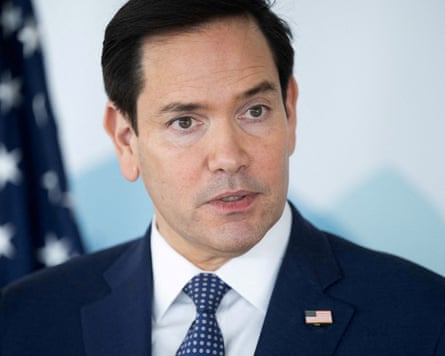 Marco Rubio said the restrictions would target those who ‘enact or enable policies that promote race-based discrimination, incite violence, or enable land confiscation without compensation’. Photograph: Saul Loeb/Reuters
theguardian.com
Marco Rubio said the restrictions would target those who ‘enact or enable policies that promote race-based discrimination, incite violence, or enable land confiscation without compensation’. Photograph: Saul Loeb/Reuters
theguardian.com
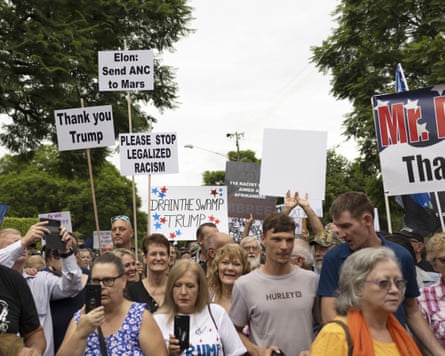 Afrikaner farmers in Pretoria demonstrate their support for Donald Trump in February 2025. Photograph: Kim Ludbrook/EPA-EFE/Shutterstock
theguardian.com
Afrikaner farmers in Pretoria demonstrate their support for Donald Trump in February 2025. Photograph: Kim Ludbrook/EPA-EFE/Shutterstock
theguardian.com
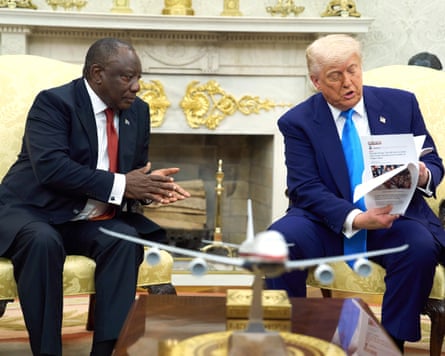 Donald Trump shows Cyril Ramaphosa articles purporting to show violence against white minority during a meeting in the Oval Office. Photograph: Evan Vucci/AP
theguardian.com
Donald Trump shows Cyril Ramaphosa articles purporting to show violence against white minority during a meeting in the Oval Office. Photograph: Evan Vucci/AP
theguardian.com
The United States has announced visa restrictions on unspecified South Africans, citing allegations that the South African government discriminates against white Afrikaners and other minorities, The Guardian reports. The policy, presented by the Trump administration as a response to “race-based discrimination”, comes after earlier steps including cuts to US aid to South Africa since the start of 2024 and Washington barring South Africa from the 2024 G20 summit in Miami.
The immediate practical effect is narrow—no names were published and the measure targets entry to the US—but the signalling is broad. Secretary of State Marco Rubio framed the move as aimed at foreign nationals who “enact or enable” discriminatory policies, incite violence, or enable land confiscation without compensation, according to the Guardian. The US ambassador to South Africa, Leo Brent Bozell III, described the restrictions as the first step in a series of escalatory measures, suggesting the administration is building a ladder of penalties rather than resolving a single consular dispute.
The choice of instrument matters because it is cheap to impose and hard to rebut. Visa bans require no court verdict and no public evidentiary file; they turn foreign policy into a compliance problem for individuals who may need US travel for business, finance, or family reasons. They also arrive alongside a selective humanitarian carve-out: the Trump administration has set up a refugee programme for Afrikaners and other South African racial minorities, even as it dismantles refugee and asylum pathways for people fleeing wars and persecution elsewhere, according to the Guardian. That contrast creates a pipeline where the US can simultaneously tighten the gate and decide, case by case, who gets waved through.
South Africa’s foreign ministry rejected the framing, saying its policies were being misrepresented by fringe groups claiming to represent minorities and Afrikaners. Spokesperson Chrispin Phiri said it was South Africa’s sovereign right to implement laws addressing racial injustice, while acknowledging the US may hold different views on the measures and their implementation. The dispute sits on top of a real, unresolved imbalance: the Guardian notes that white South Africans typically have about 20 times the wealth of Black South Africans, despite decades of post-apartheid efforts such as Black economic empowerment and land redistribution having only limited impact.
The result is a bilateral relationship increasingly run through domestic political narratives on both sides, with external penalties attached. Washington is using entry rights and refugee selection to pressure a government it accuses of racial grievance politics; Pretoria is defending redistribution tools that remain politically central even when delivery is slow and contested.
The US did not say which South Africans would be barred. South Africa’s foreign ministry did not name which groups it considers responsible for pushing the claims in Washington.