
Building collapses in Gaza City
Displaced families shelter in war-damaged structures, rescue crews dig with limited machinery as missing count rises
Images
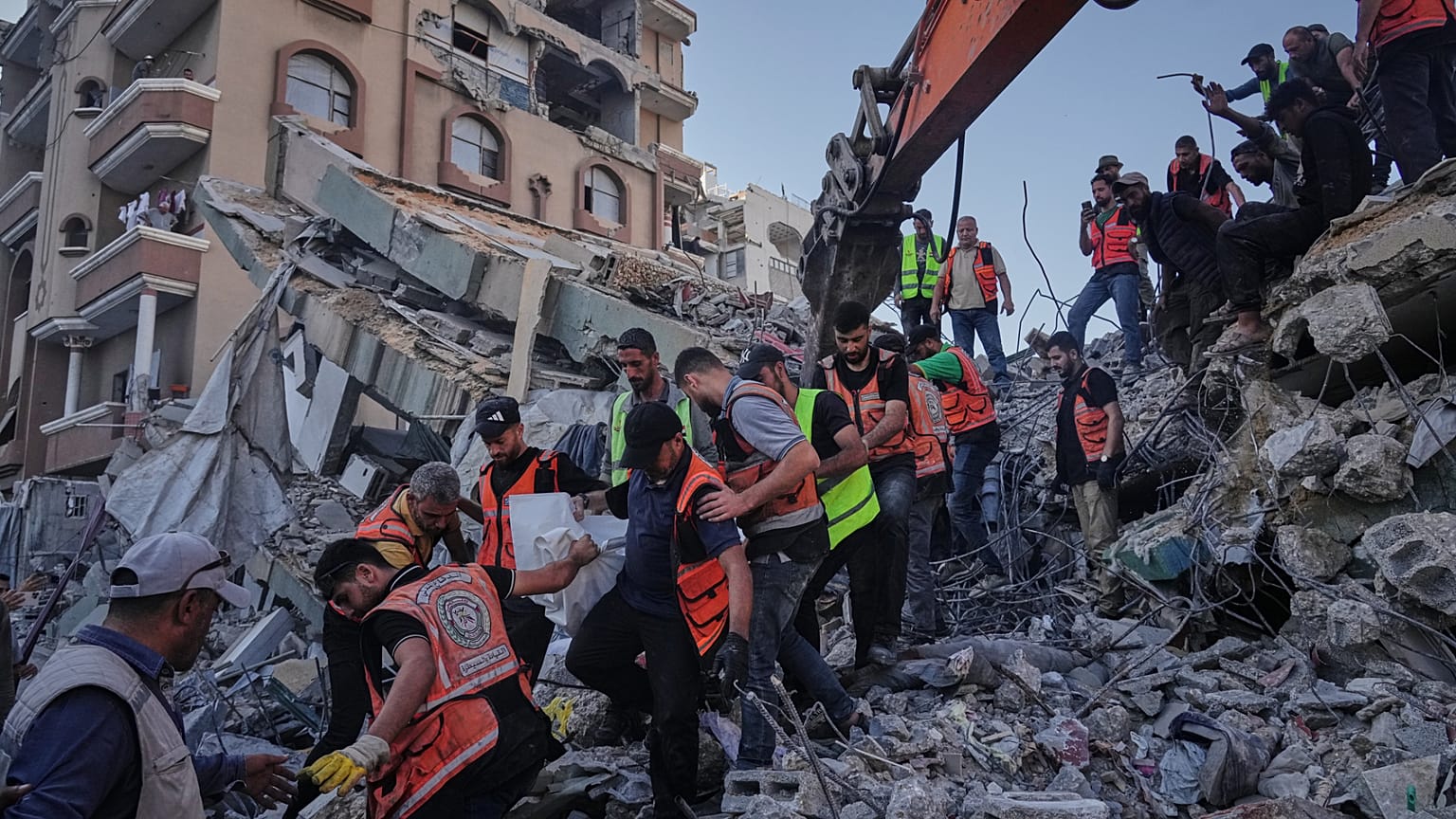 Palestinian civil defense crews carry a body from the rubble of a collapsed building that housed displaced Palestinians and was heavily damaged during the Israel-Hamas war
euronews.com
Palestinian civil defense crews carry a body from the rubble of a collapsed building that housed displaced Palestinians and was heavily damaged during the Israel-Hamas war
euronews.com
 Search and rescue operations in the rubble of the collapsed multi-storey building in Gaza City. Photograph: Anadolu/Getty Images
theguardian.com
Search and rescue operations in the rubble of the collapsed multi-storey building in Gaza City. Photograph: Anadolu/Getty Images
theguardian.com
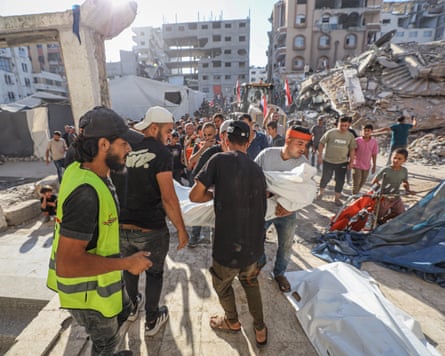 Rescue workers remove the body of a victim from the collapsed building in south-western Gaza City. Photograph: Hamza Z H Qraiqea/Anadolu/Getty Images
theguardian.com
Rescue workers remove the body of a victim from the collapsed building in south-western Gaza City. Photograph: Hamza Z H Qraiqea/Anadolu/Getty Images
theguardian.com
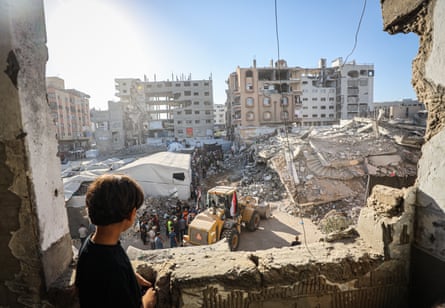 The search for survivors and the dead in the rubble continued on Wednesday. Photograph: Hamza Z. H. Qraiqea/Anadolu/Getty Images
theguardian.com
The search for survivors and the dead in the rubble continued on Wednesday. Photograph: Hamza Z. H. Qraiqea/Anadolu/Getty Images
theguardian.com
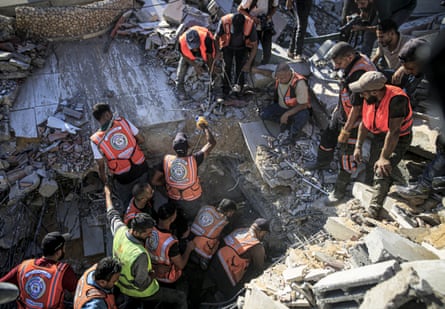 Civil defence and municipal teams conduct search and rescue operations. Photograph: Saeed M M T Jaras/Anadolu/Getty Images
theguardian.com
Civil defence and municipal teams conduct search and rescue operations. Photograph: Saeed M M T Jaras/Anadolu/Getty Images
theguardian.com
A multi-storey building in Gaza City collapsed before dawn on 16 September, killing at least 12 people according to Shifa Hospital and leaving dozens missing, Euronews reports. The building, in the Tal al-Hawa area of western Gaza City, had been damaged earlier in the war and was already cracked when displaced families moved in. Gaza’s civil defence said teams began digging shortly after receiving the report in the early hours, using heavy machinery where available.
The Guardian, citing medical and civil defence sources, put the death toll higher and said the building had housed displaced families and fell onto tents set up beside it. Rescue workers said they could hear voices under the rubble, and the search was slowed by limited equipment. Palestinian and UN officials told the paper that restrictions on Gaza have made it difficult to bring in machinery needed for large-scale rescue operations, while Israel says limits are meant to keep equipment from reaching militant groups.
The collapse is part of a quieter, compounding risk in a territory where large numbers of people are living in structures that were never repaired after being struck. The Guardian estimates tens of thousands of Palestinians are living in buildings damaged by airstrikes across Gaza, and describes repeated collapses over the past two years as families return to partly destroyed homes or move into abandoned buildings despite the danger. With many neighbourhoods still inaccessible and rents rising, the choice for displaced people is often between an unsafe roof and no roof at all.
For emergency services, the problem is not only the scale of destruction but the economics of scarcity: when heavy equipment, fuel, spare parts and safe access are uncertain, every hour of rescue becomes a negotiation over logistics rather than a straightforward response. In that environment, a cracked building can remain occupied for weeks because nobody has the capacity to enforce evacuation, provide alternatives, or shore up the structure.
Civil defence crews continued searching through the morning in Tal al-Hawa, pulling bodies from the debris while families waited nearby for names to be called out. The building had been visibly compromised long before it fell, and it still filled up with people who had nowhere else to sleep.