
EU invites Canada to become associate member
Von der Leyen unveils new status category with rules still undefined, regulatory alignment is offered before any voting rights are even discussed
Images
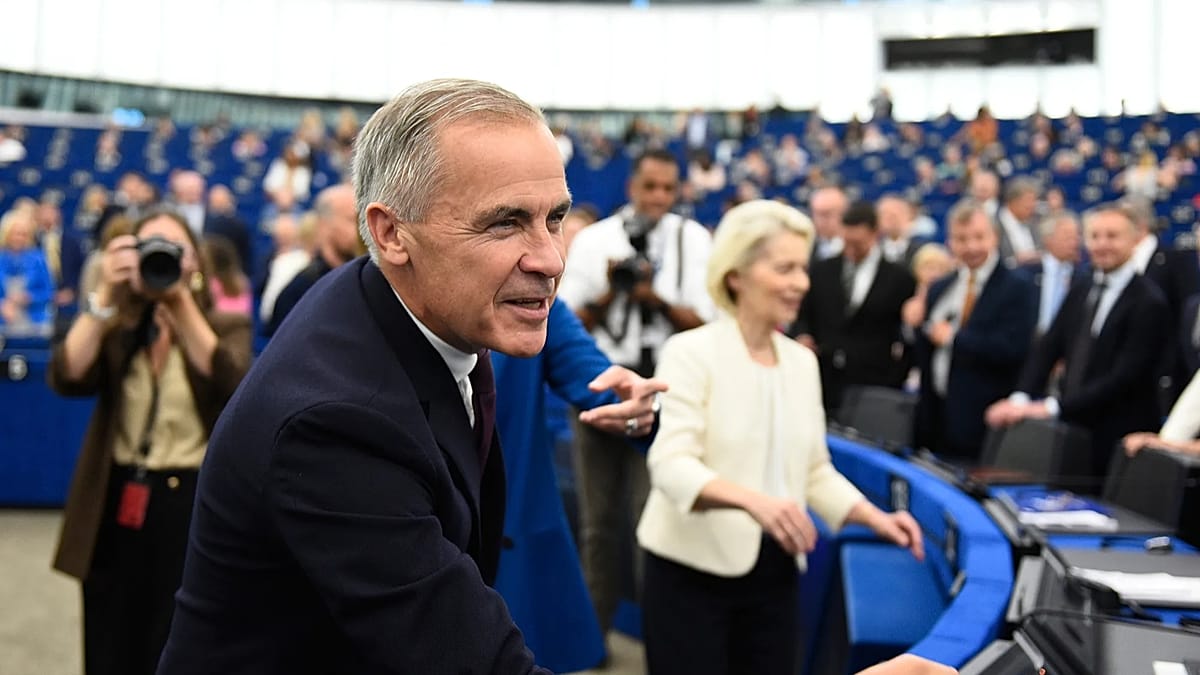 Canada invited to become first 'associate member' of the EU
euronews.com
Canada invited to become first 'associate member' of the EU
euronews.com
The European Commission has invited Canada to become the European Union’s first “associate member”, Commission president Ursula von der Leyen announced in Strasbourg on Wednesday during her State of the Union address. Euronews reports that Canadian prime minister Mark Carney attended the speech, and that the new category is not yet defined, including whether it would come with any voting rights. Canada cannot join the EU as a full member because it is not a European state.
The proposal reads like an attempt to square two constraints at once: growing geopolitical coordination needs, and the EU’s slow, treaty-bound machinery. Euronews says Ottawa has been seeking a closer relationship since late August, and talks have included joining Erasmus+, Horizon Europe and mutual recognition of qualifications—practical, technocratic steps that pull a country into the EU’s regulatory orbit without reopening the membership question. The EU already runs versions of this model with Norway and Switzerland, which participate in parts of the single market while accepting regulatory alignment without votes on the rules. The post-Brexit UK sits in a different box, with a broad trade and cooperation deal and participation in selected EU programmes.
What makes the Canadian case unusual is the political branding attached to it. Von der Leyen framed the invitation, according to Euronews, around shared values and a proposed “Alliance for the Future” spanning technology, defence, Arctic projects, energy, critical minerals and artificial intelligence. That shopping list points to supply-chain politics as much as diplomacy: critical minerals and Arctic cooperation are about who controls inputs and routes, not just who signs communiqués. The plan also builds on the EU–Canada trade agreement CETA, which Euronews notes removed tariff barriers in 2016; moving from tariff cuts to coordinated industrial policy is where the distributional fights begin.
The unanswered question is governance. Euronews notes that the details of “associate member” status remain unclear, including decision-making rights. Without votes, the offer resembles the EU’s standard bargain—market access and programme participation in exchange for alignment—only extended across an ocean. With votes, it would set a precedent other close partners will demand, and it would hand EU institutions a new way to expand their footprint without adding a member state.
Von der Leyen delivered the invitation from the lectern in Strasbourg. The category she named does not yet come with a rulebook.